
Anahit was eighty-something and barely came up to my shoulder. She was running a guesthouse in a back-street courtyard near Kond, in central Yerevan, and on my second night she sat me down at a wooden table in her kitchen and put a plate of dolma in front of me before I’d worked out how to ask if dinner was included. It wasn’t. She just decided I needed feeding. The grape leaves had been pickled in her cellar in October. The lamb was from a butcher she’d known since the Soviet years. There was a bowl of homemade matsun, lavash she’d baked that morning in a tonir set into the corner of the kitchen, and a glass of her son-in-law’s wine. She didn’t speak more than ten words of English and I had maybe three of Armenian, and we sat there for an hour grinning at each other while I worked through everything on the table.
That’s the thing about food in Armenia. You can read every guide ever written and still get blindsided by how much eating here is bound up with hosting, history, and what the soil and the season give you. The headline dishes are great. The way you end up eating them is what you remember.
This is a traveller’s guide, not a recipe book. What follows is what to order on day one, where to eat it in Yerevan, how the bread, the wine, and the sense of welcome fit together, and a few verdicts on what’s worth your time and what isn’t. Prices are in dram with rough USD equivalents. Take dram-to-dollar with a pinch of salt; the rate moves around 380 to 400 per dollar most of the year.
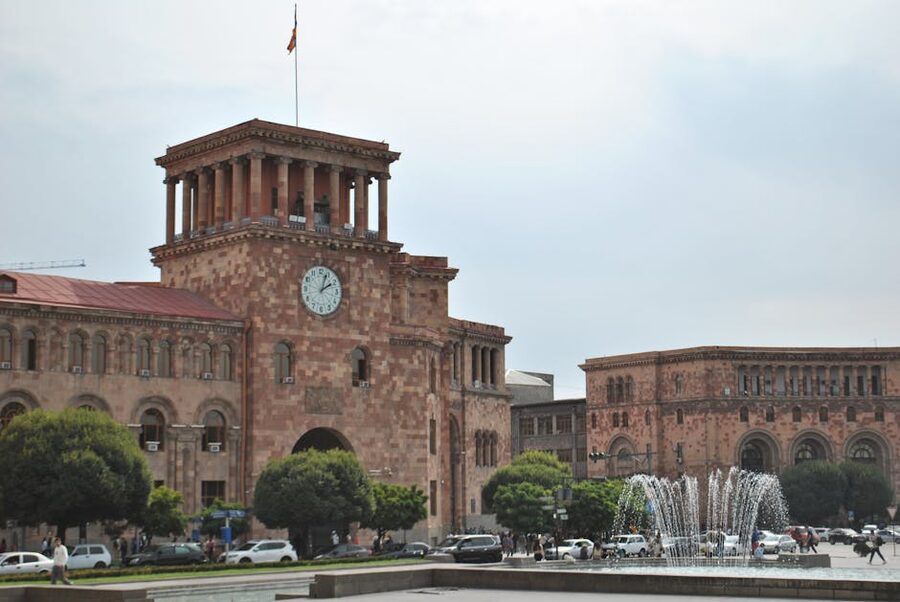
In This Article
- What Armenian food actually is
- Diaspora cooking changed Yerevan after 2020
- Lavash, the bread that runs the meal
- Other breads worth a slot
- Khorovats and the big plates
- Dolma, or rather tolma
- Manti, the small dumplings
- Khurjin and ghapama, the showpieces
- The smaller plates and breakfast
- Basturma omelette
- Herb-stuffed lavash and zhingyalov hats
- Aughtsan, the salads and crudites
- Spas and the soup family
- Harissa
- Pilaf
- Sweets, gata, and the dessert lineup
- Wine, brandy, and what else to drink
- Armenian brandy
- Tarragon lemonade and the soft drinks
- Coffee
- Where to actually eat in Yerevan
- For a proper Armenian dinner
- For a cheaper, livelier night
- For something Levantine or fusion
- For breakfast or coffee
- The markets and street food
- Street food, briefly
- What to skip
- Etiquette and how a meal actually works
- A practical day-one ordering guide
- Beyond Yerevan: where the food gets stranger and better
- One last thing
What Armenian food actually is
You’ll see Armenian food described as a crossroads cuisine, which is true and also a slight cop-out. It eats like its own thing. There’s grilled meat and there are stuffed vegetables, sure, like everywhere from Greece to the Caucasus. But the through-line is wheat, dairy, and fire. Lavash bread baked against the wall of an underground oven. Matsun (yoghurt) at almost every meal. Pomegranates and apricots that show up in savoury dishes the way lemons do in Italian cooking. Tarragon used so liberally it’s in the lemonade.
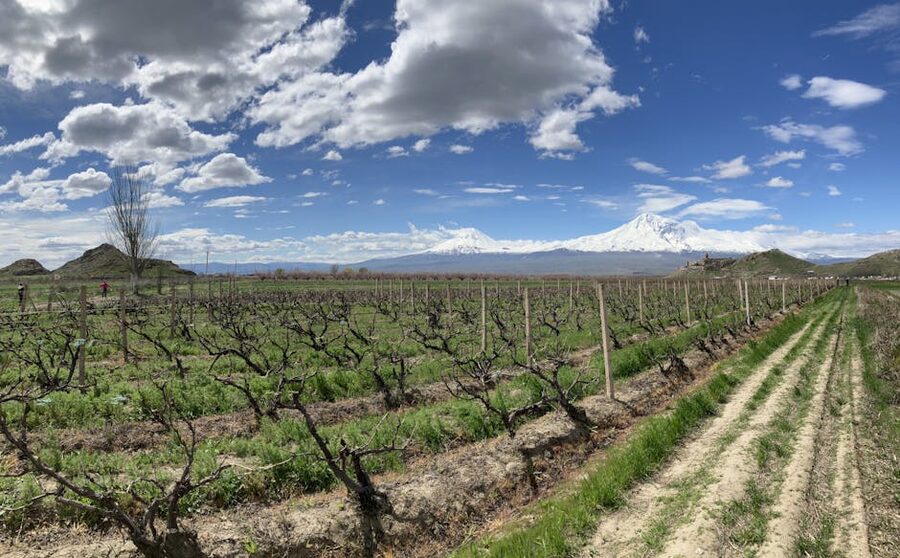
The geography did the cooking. Armenia sits on a high plateau, mostly between 1,000 and 2,000 metres. Hot summers, brutal winters, volcanic soil, mountain water. The orchards in Ararat valley produce fruit you can taste from across the room. The wheat from the lowlands turned bread into a religion long before anyone needed a UNESCO listing to make it official. And because Armenians historically lived across a much bigger area than the modern republic, including in Cilicia, eastern Anatolia, Persia, Syria and Lebanon, the food carries traces of all those places. It’s why a Yerevan restaurant menu can have lahmajun next to khash next to pumpkin borani and have all three be authentic.
Diaspora cooking changed Yerevan after 2020
One thing not many older guides mention. Yerevan’s food scene has shifted noticeably in the last few years thanks to two waves of arrivals: Lebanese-Armenians fleeing Lebanon’s economic collapse, and Syrian-Armenians who came in earlier after the war. They’ve opened bakeries, falafel counters, family kitchens, and proper Levantine sit-down restaurants. The result is that you can now eat very good muhammara, fattoush, semsek meat pies, and lahmajun with pomegranate molasses in central Yerevan, and locals will tell you the city’s food got more interesting because of it. You’ll see “Beirut” on signage. The restaurant Zeituna in Missak Manouchian Park, run by Syrian-Armenian Christians, is the one I’d flag if you only have one Levantine meal in you.
Lavash, the bread that runs the meal
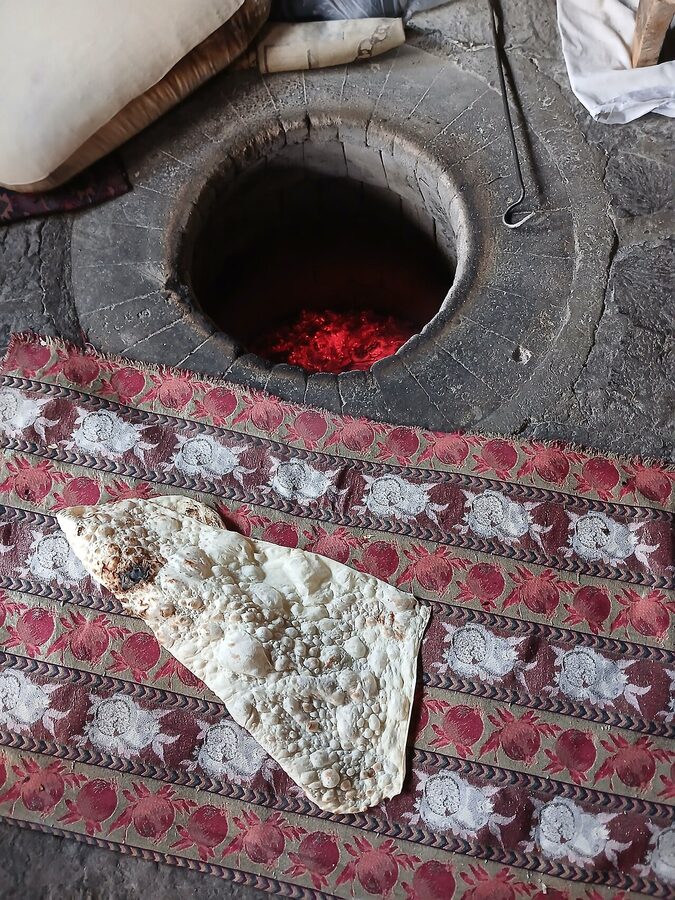
Start with lavash because everyone else does. It’s a thin, soft flatbread, paper-thin in the centre and slightly chewier at the edges, baked by slapping the dough against the inside wall of a clay oven called a tonir. The tonir is sunk into the ground or floor and heated with wood embers until it’s hot enough that the bread takes a minute, sometimes less. Pulled out, it’s blistered, faintly smoky, and floppy enough to wrap things in.
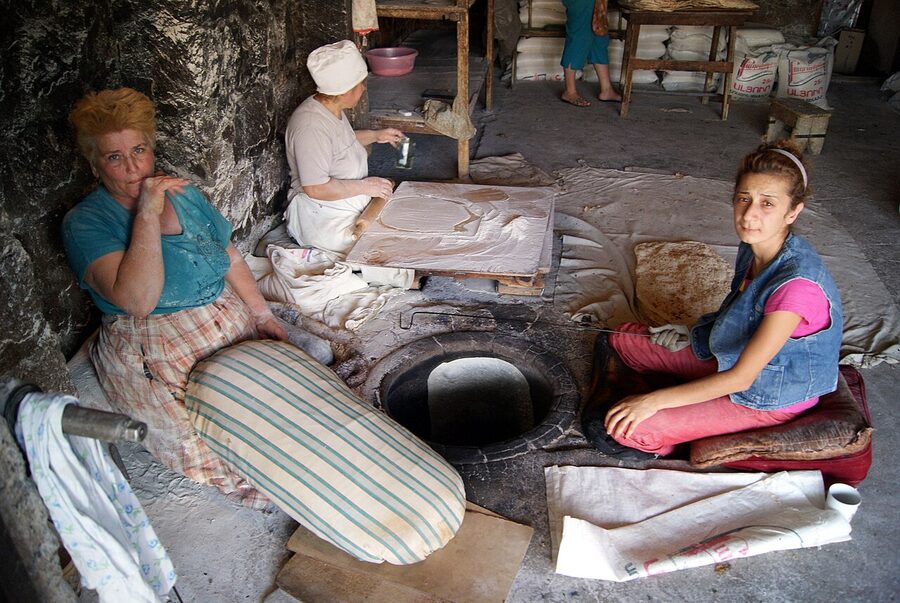
UNESCO put lavash on its Intangible Cultural Heritage list in 2014. That sounds like the kind of thing tourism boards repeat to puff up a brochure. In Armenia it’s just true. Watching a baker at work in a village or in a Yerevan restaurant kitchen is genuinely interesting, not because it’s gimmicky but because the technique is hard. The dough is hand-spun, stretched over a padded board called a batat, and slapped on with a flick that takes years to get right. Most lavash is still made by women, often in pairs or trios, with one shaping and one baking.
How you’ll actually eat it: as a wrap for grilled meat, torn into pieces and used like a spoon for dips and stews, dried and crumbled into khash, stuffed with herbs and cheese and rolled into a snack. Fresh lavash keeps about a day. After that it dries out and locals stack it in big plastic-covered bundles. To revive a dried sheet, you sprinkle it with water and let it sit for a few minutes; it comes back almost like new. Most restaurants bring you fresh.
If you want to see lavash made up close, the easiest place from Yerevan is Sergey’s Place in Garni village, about 27 km east of the capital and a short walk from the old stone bridges on the Azat river gorge. They run a hands-on lavash session in a leafy garden tonir setup. Touristy, yes, but the bakers are real and the bread you make goes onto your lunch plate.
Other breads worth a slot
Lavash is the headliner, but Armenia has more breads than you’d think.
- Matnakash: a thicker leavened loaf with finger-grooved channels along the top. Soft, slightly sweet. The default bread in most homes.
- Gata: bread that thinks it’s a cake. Buttery, flaky, sometimes filled with sugared flour or walnut paste, sometimes stamped with a wooden seal. Best with strong coffee. Geghard Monastery’s gata is the famous one, and the stalls outside the monastery still sell it warm.
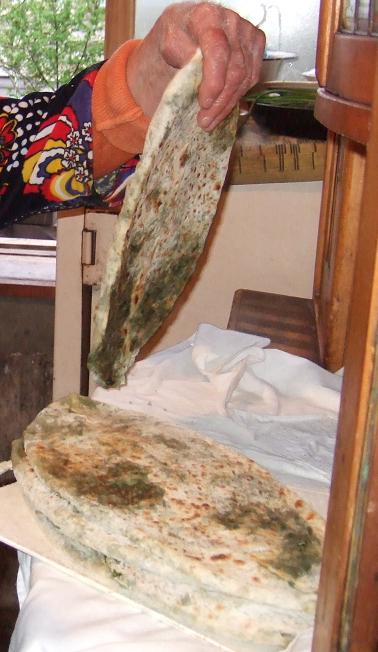
- Jingalov hats: a regional specialty from Artsakh and the Syunik south, a flatbread folded around as many as twenty-odd different fresh greens. Spinach, chard, sorrel, dill, parsley, plus several wild herbs you won’t recognise. Cooked on a flat griddle, eaten with your hands. There’s a festival in Goris in late summer if you time it right.
Khorovats and the big plates
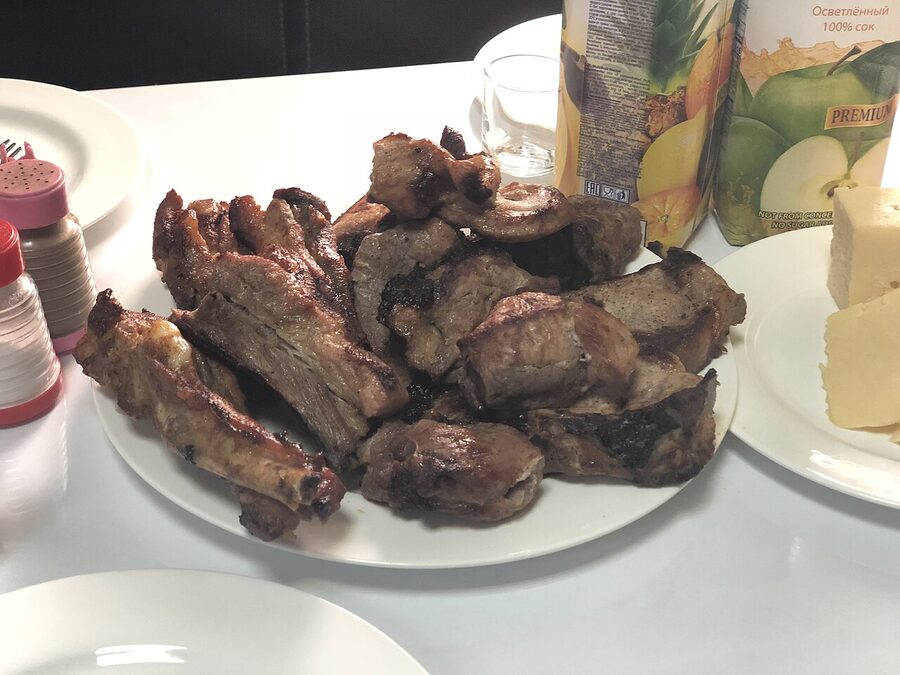
If lavash is the bread that anchors the meal, khorovats is the centrepiece you build it around. The word means barbecue. The version you’ll see most is skewered cubes of pork, lamb, or chicken, marinated lightly and grilled over wood embers, served on a long platter with charred onion, tomato, and aubergine, and the inevitable lavash on the side. Pork is the default in Yerevan, which surprises people who expect a former Soviet republic with a Christian majority to lean lamb. It does both, but the everyday weekend cookout is pork.
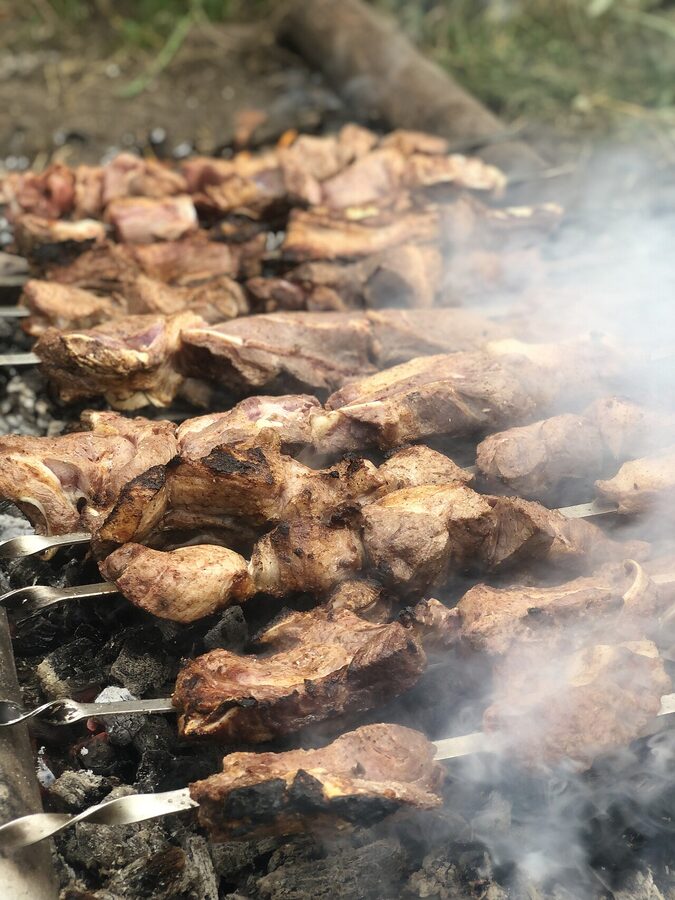
What separates a good khorovats from an average one isn’t the meat (it’s almost always good) but the smoke. Wood-fired grills give it that faintly bitter edge that gas can’t fake. A few places to look for proper wood-fired versions: Tavern Yerevan on Amiryan, Pandok Yerevan Riverside, Caucasus Tavern (Kavkaz) on Hanrapetutyan, and any roadside place between Yerevan and Lake Sevan that smells like a campfire from 200 metres away. On a holiday weekend, Armenian families pile into the hills around Mt Aragats with portable grills and spend the day cooking. If you get invited, go.
Beyond the standard skewers there are a few khorovats variants worth knowing:
- Ishkhan khorovats: trout, usually from Lake Sevan, grilled on the bone or stuffed with herbs. Worth ordering at any of the lakeside restaurants in summer.
- Vegetable khorovats: smoke-charred aubergine, tomato, and pepper, peeled and chopped into a relish-style salad. Usually called grilled vegetable salad on English menus. One of the best things on any Armenian table.
- Khurjin: lamb wrapped and slow-cooked inside a pouch of lavash dough that gets cut open at the table with kitchen scissors. The buttery juices spill out onto the platter. Sherep and Lavash Restaurant both do this; it’s a showpiece, made for sharing.
Dolma, or rather tolma
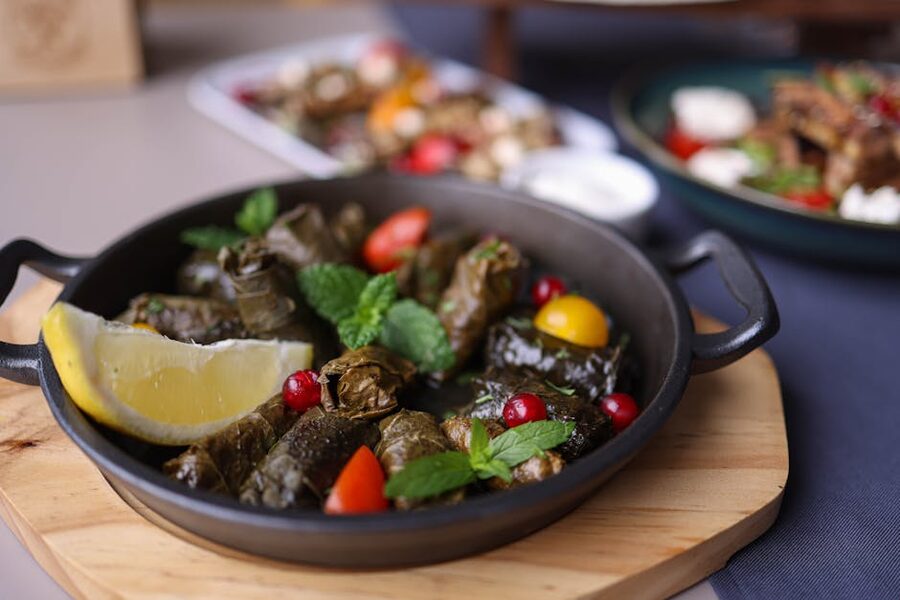
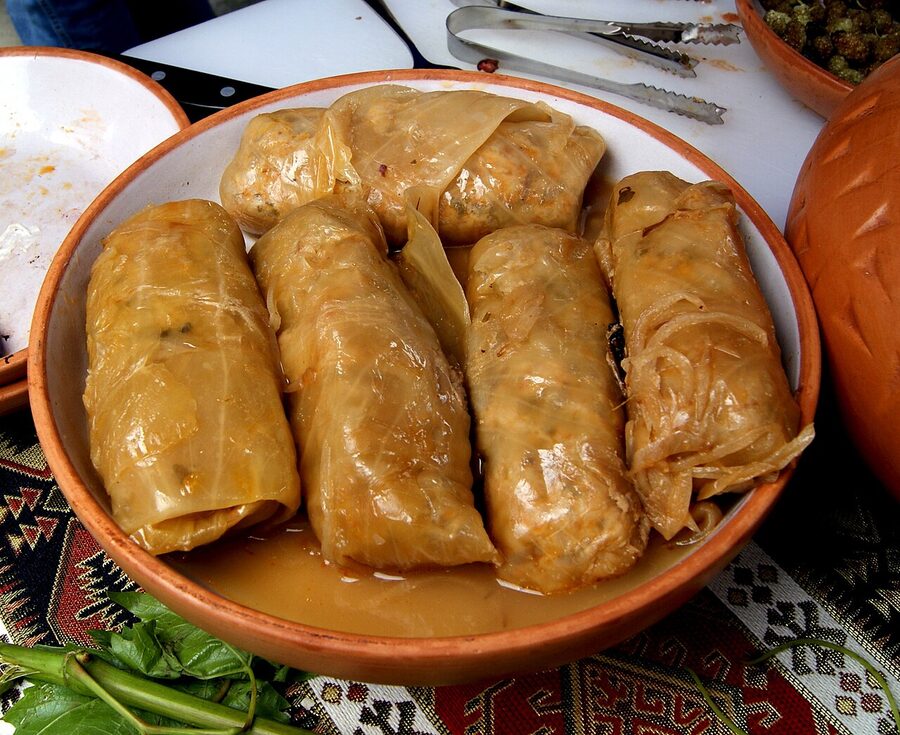
Pronounced “tolma” in Armenian, with a soft T that’s halfway to a D. The default version is grape leaves wrapped around a mince-and-rice filling, slow-cooked in a light tomato broth, eaten with a spoon of garlicky matsun on the side. There’s an annual Dolma Festival in Hnaberd village in May, where families compete with regional variants and you’ll see kinds of dolma you wouldn’t dream of: cabbage-leaf, quince, eggplant, hot pepper, even apple. The variant called pasus tolma is the meatless one, made for the long Lent fast: fermented cabbage leaves stuffed with bulgur, beans, and dried fruit. It’s better than it sounds.
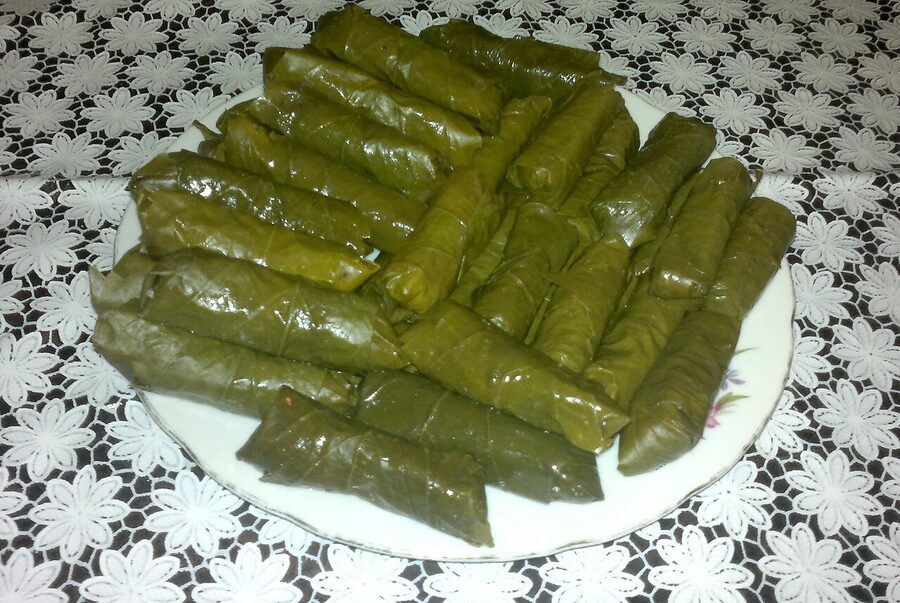
The classic Yerevan address for tolma is Dolmama at 10 Pushkin St. It’s old-school, slightly formal, expensive by local standards (mains in the 6,000 to 12,000 dram range, roughly $15 to $30), and absolutely delivers. Anthony Bourdain ate there. So did System of a Down’s frontman. Reservations help. If you want a less white-tablecloth version, The Tolma on Tumanyan does several variants for around 2,500 dram a portion.
Manti, the small dumplings
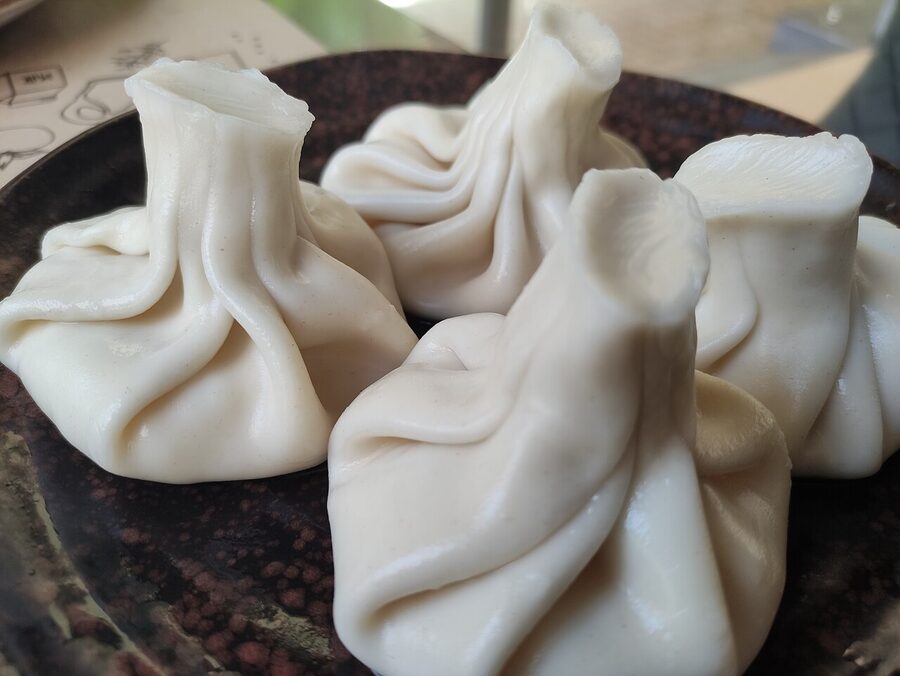
Manti are tiny boat-shaped dumplings of beef and lamb, baked in butter until the tops are crisp, then served swimming in a thin tomato broth with garlic-yoghurt poured over the top. They’re cousins to Turkish manti and Central Asian variants but the Armenian version is smaller, crispier, and less saucy than the Turkish. A plate is filling. Order one to share if you’re testing it.
Anteb, near the Cascade complex, specialises in manti and is roughly half the price of the centre’s bigger restaurants (manti around 2,000 to 2,500 dram). Tavern Yerevan also does a solid version. Some places confuse manti with Georgian khinkali, which are large hand-held boiled dumplings; the two get listed side by side on menus and they’re not the same dish at all. Khinkali is delicious but it’s a Georgian import.
Khurjin and ghapama, the showpieces
Two dishes you order if you want one big communal moment in the meal.
Khurjin I mentioned above: lamb wrapped in lavash dough and slow-baked, then snipped open at the table. Ghapama is the seasonal one: a whole pumpkin scooped out, stuffed with rice, dried apricots, walnuts, raisins, cinnamon, and honey, then roasted slowly until the flesh is soft and faintly sweet. There’s actually an Armenian folk song about it. You’ll mostly see it in winter, especially around Christmas and the New Year period in early January, but a few restaurants have it on year-round. Lavash Restaurant on Tumanyan is one. The serving is dramatic; they bring out the pumpkin whole and crack it open at the table.
The smaller plates and breakfast
Big communal dinners get the press, but Armenian food is also full of smaller things you’d order as starters or have for breakfast. Don’t fill up on bread and skewers and skip these.
Basturma omelette
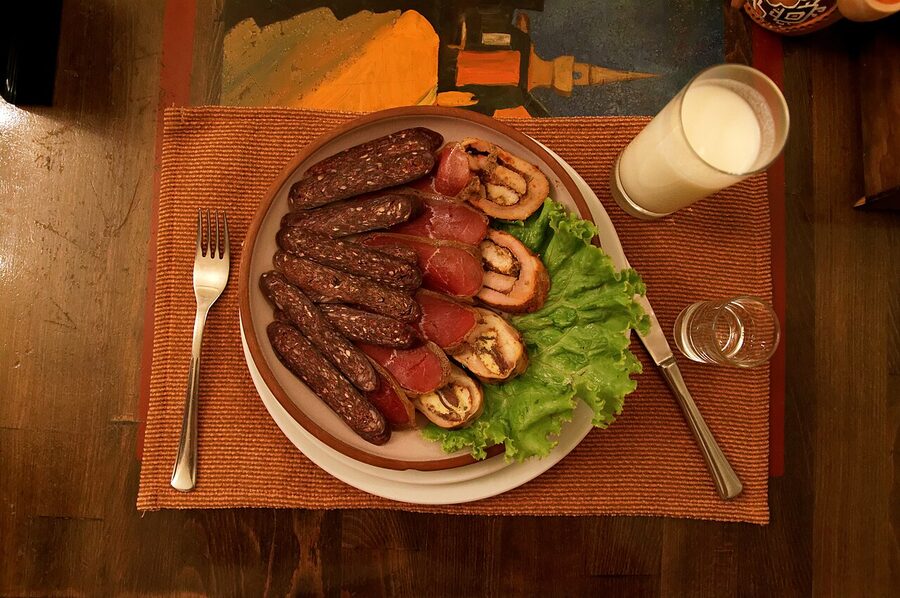
Basturma is air-cured beef coated in a thick paste of fenugreek, paprika, and garlic that turns the rind black-red. It’s pungent enough to clear a small room. Sliced thin on its own with bread it’s already a meal. Cooked into an omelette, the fat melts into the eggs and the whole thing turns deeply savoury. It’s a classic Armenian breakfast in any cafe that takes its mornings seriously. Allow yourself the rest of the morning, because the smell stays on your breath for hours and there’s no avoiding it. Locals just live with it.
If you want to take basturma home with you, the cured-meat counters in GUM Market on Movses Khorenatsi sell it by the gram, vacuum-packed if you ask. About 8,000 to 12,000 dram for a slab.
Herb-stuffed lavash and zhingyalov hats
The street snack version of lavash: a sheet wrapped around handfuls of herbs, sometimes with cheese, sometimes with crumbled basturma. You see it everywhere around Easter, when Armenians do a kind of green-heavy spring eating. It’s filling, healthy-feeling, and quick. Most cafes will make one to order for under 2,000 dram.
Zhingyalov hats, mentioned earlier under breads, doubles as a portable lunch. Eat it folded in half and standing up.
Aughtsan, the salads and crudites
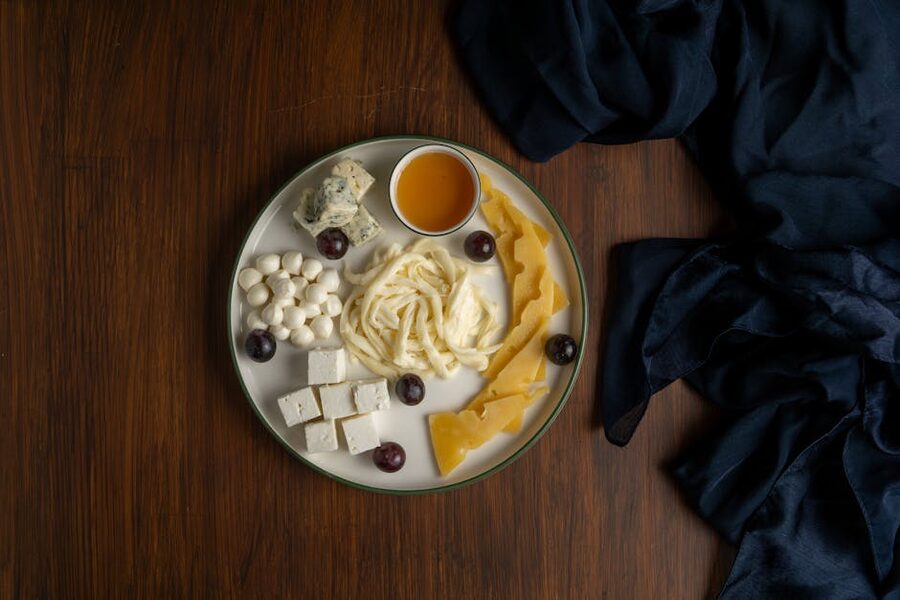
Most Armenian meals start with a plate of fresh herbs and chunks of cheese. Tarragon, basil, parsley, dill, mint, sorrel, sometimes the local purple “ruben” basil that smells faintly of aniseed. The cheese is usually a brined village cheese (chanakh) or a soft mountain cheese (motal). You eat it by tearing lavash, building little rolls of cheese and herb, and washing them down with whatever’s in your glass.
This is the part of the meal where the produce really shows off. The herbs aren’t garnish; they’re the dish. Order an “aughtsan” platter and you’ll get a small mountain of greens, almost too much, which is the point.
Spas and the soup family
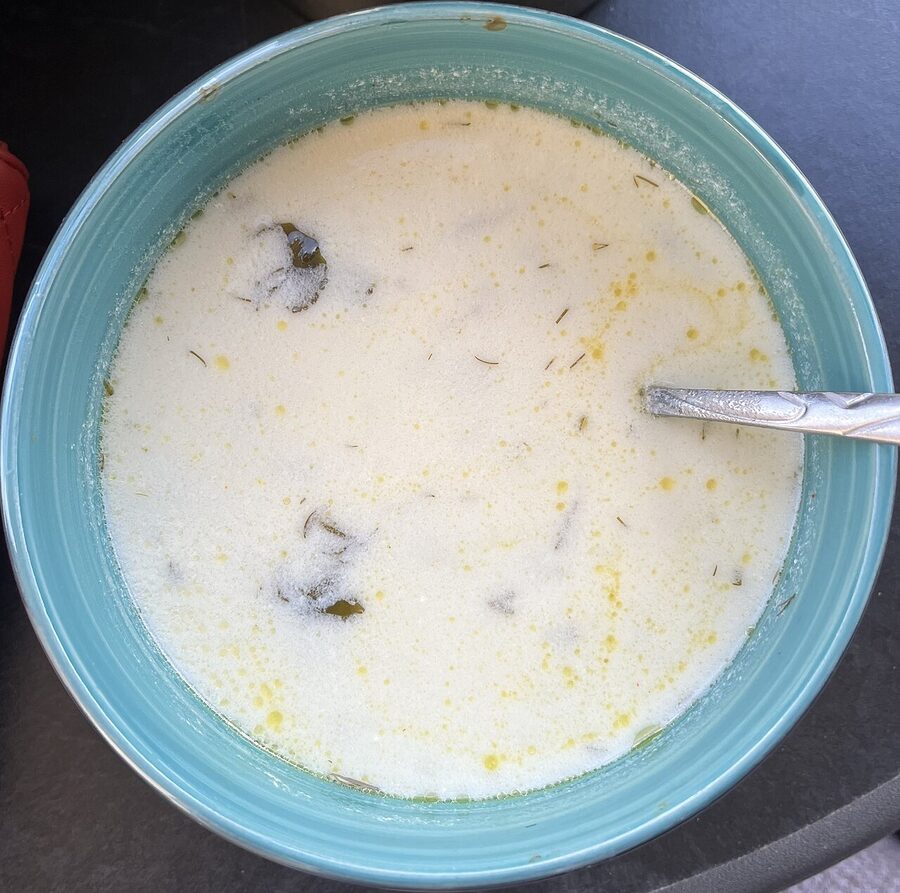
Soups are a meal of their own in Armenia, especially in winter. The most common ones you’ll see on menus:
- Spas: matsun yoghurt thinned with stock, simmered with shelled wheat berries (dzavar), onion, and dried mint. Served warm. It tastes like exactly what your stomach wants when you’ve had too much of everything else.
- Khash: cow trotters and shanks boiled overnight until the broth is thick with collagen, served with raw garlic, dried lavash, vodka, and a strict serving ritual that starts at breakfast time. November to March only. It’s not for everyone. If you can stomach an oxtail soup you’ll be fine; the smell is the bigger ask.
- Kololik: meatball soup with rice and herbs. Good winter comfort food.
- Lentil soup (vospapur): humble, vegetarian, every cafe has a version, all of them good.
- Qrchik: a sour-sharp soup made with sauerkraut and beans, sometimes with smoked meat. Strong flavour. Worth trying once.
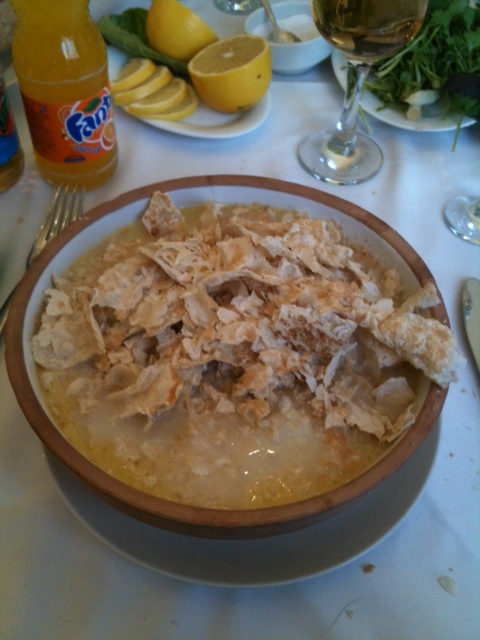
Harissa
Not the North African chilli paste. Armenian harissa is a slow-cooked porridge of cracked wheat and lamb or chicken, beaten until it goes silky and almost stretchy. It’s sustaining, mild-flavoured, and traditionally tied to a yearly memorial in the village of Musaler that commemorates the 1915 events. As food, it’s the thing you eat when you’re cold or recovering from something, finished with melted butter on top and a sprinkle of pepper.
Pilaf
Armenian rice pilaf is buttery, often with toasted noodles or vermicelli mixed in for texture. Sometimes the rice is studded with dried apricots, raisins, or nuts. Almost always served as a side rather than a main, but a good one is reason enough to order it on its own.
Sweets, gata, and the dessert lineup
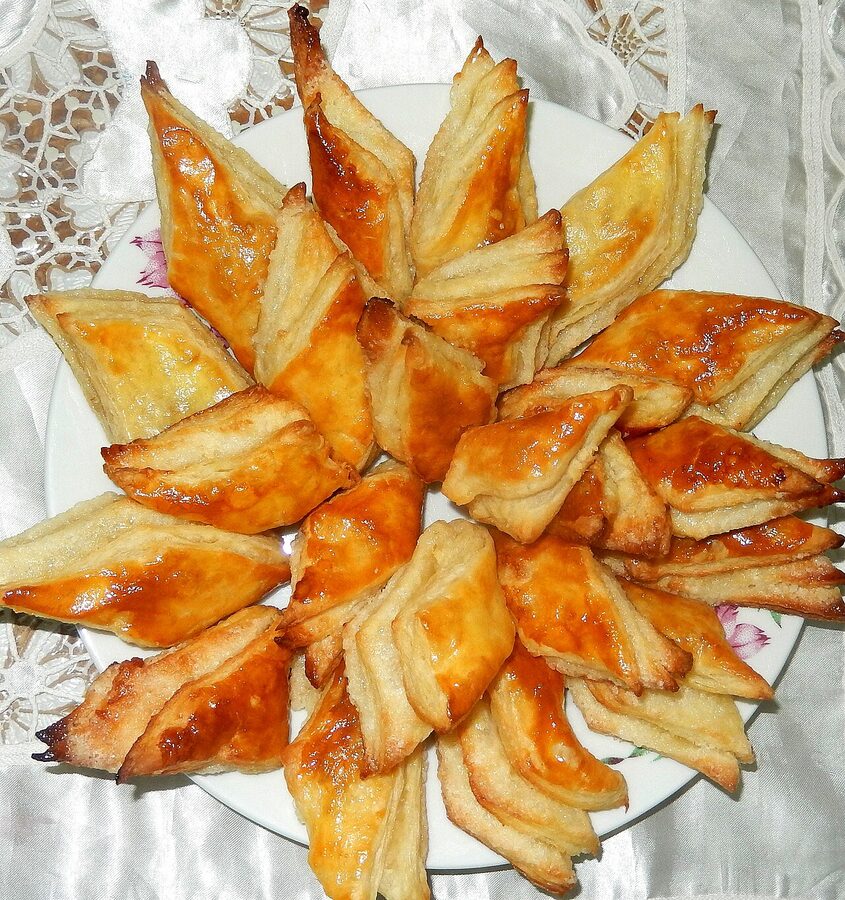
Gata is the everyday sweet. Bakeries make versions that range from a flat round disc the size of a dinner plate, often stamped with a wooden seal, to small palm-sized portions you can eat on a bench. The filling is usually khoriz, a sugared flour-and-butter paste; the top brushed with egg yolk for a glossy finish. Geghard Monastery’s gata is the well-known one and you can buy it from stalls outside the gates. The version at Gata Tavern on Tumanyan in central Yerevan lets you watch the baker stamp the dough.
Beyond gata, the rest of the Armenian sweet lineup leans heavily on dried fruit, nuts, and honey:
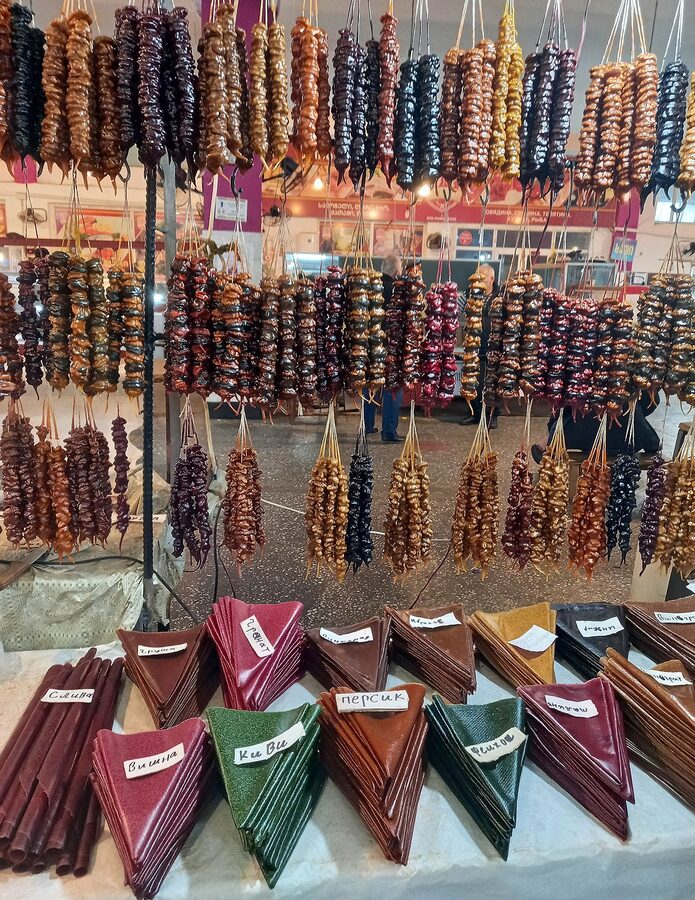
- Churchkhela: walnuts threaded onto a string and dipped repeatedly into a thickened grape must until they wear a candy coat. Originally Georgian, ubiquitous in Armenia. Sold by the metre in markets. The Armenian version is sometimes called sujukh (different from the cured-meat sujukh) or sharots. Don’t bite straight in expecting chocolate; it’s tarter and chewier than it looks.
- Pakhlava: the local baklava, layered phyllo with walnuts and honey syrup. Less sweet than the Turkish version, more buttery.
- Alani: dried peaches stuffed with sugared walnuts and cinnamon. A bag from a market is the best souvenir you’ll buy.
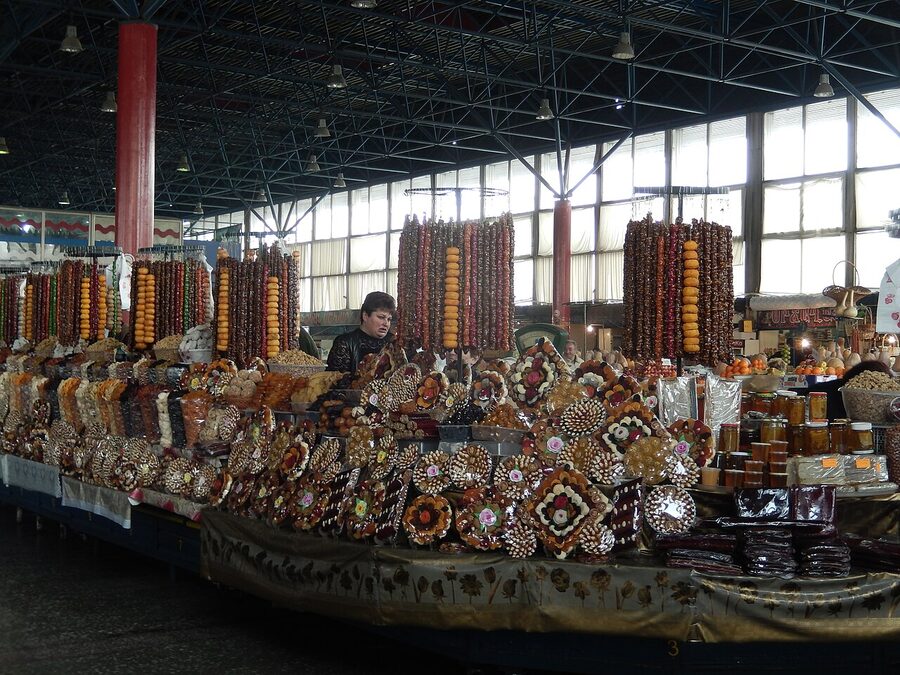
- Dried fruit and pastegh: Armenia is fruit country; the sun-dried apricots, peaches, plums, and pastegh (fruit-leather rolls) you’ll see piled up at GUM Market are not a tourist gimmick, they’re what people eat in winter when fresh fruit is gone.
Wine, brandy, and what else to drink
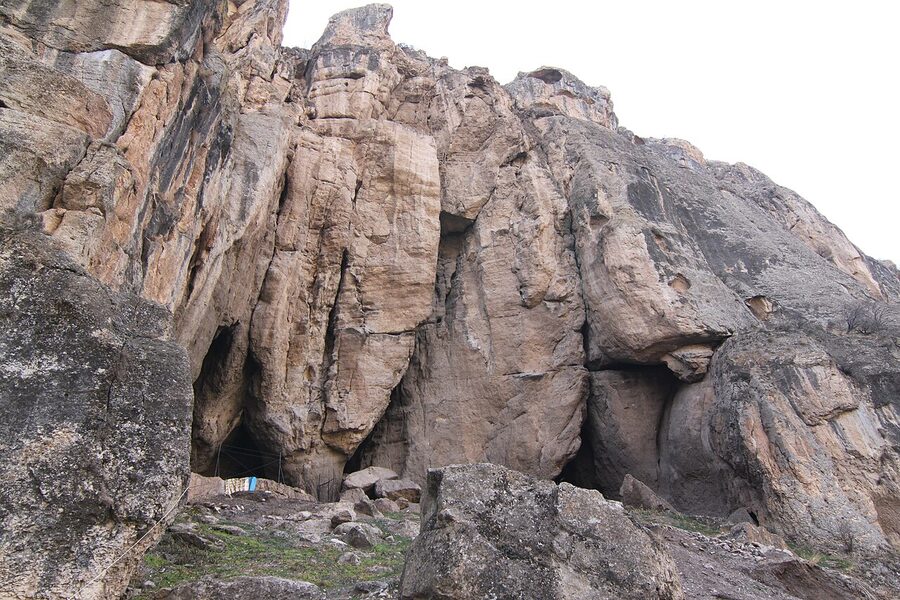
Armenia is one of the oldest wine-growing regions on earth. The Areni-1 cave in Vayots Dzor turned up a 6,000-year-old wine press in 2007, with crushed grape skins still in the fermentation vessel. That’s older than Bronze-Age Mesopotamian winemaking and predates the Egyptians. So when local restaurants tell you Armenian wine is ancient they’re not embroidering.
Modern Armenian wine spent most of the 20th century being quietly destroyed by Soviet brandy-first policy, then revived after independence by a small group of producers who replanted indigenous grapes. The most important variety to know is Areni, a thin-skinned red that gives wines with a soft, savoury, slightly herbal feel. Producers worth tasting:
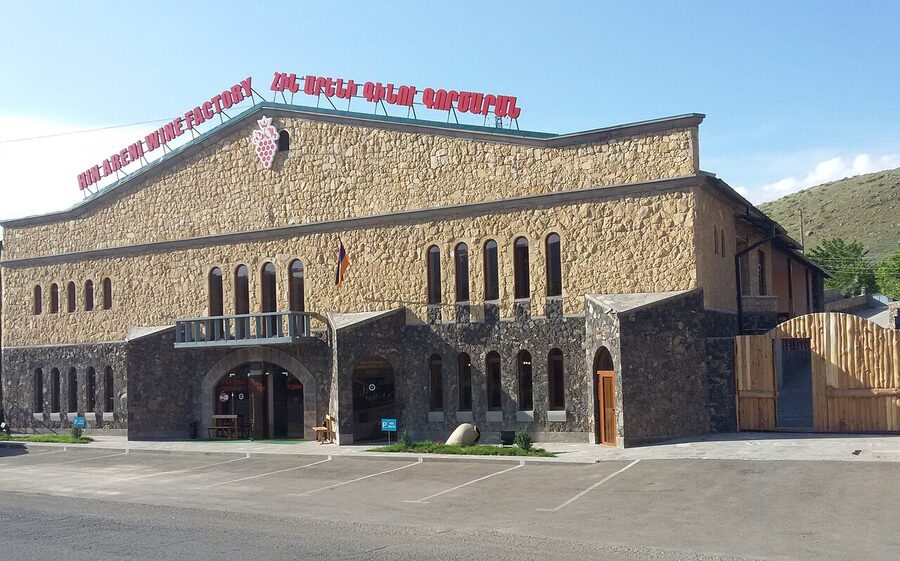
- Hin Areni: the classic, accessible, found in most Yerevan restaurants by the bottle for around 4,500 to 7,000 dram.
- Zorah: small, biodynamic, the bottle that put Armenia on the international wine list. Pricier; expect 12,000+ dram.
- Trinity Canyon: a co-op approach, several solid mid-range reds.
- Voskevaz: a heritage producer; the white from voskeat grape is a good change of pace.
If you want to taste several without committing, In Vino on Saryan St runs a casual wine-bar setup with most major Armenian producers by the glass and pours that don’t punish you. Saryan St in general has turned into a sort of wine alley over the last decade, with five or six places one after the other. It’s a pleasant 15-minute walk from the Saryan House Museum, which is on the same street.
Armenian brandy
The country’s most-exported drink, mostly under the brand Ararat, distilled in Yerevan since 1887. The classic story is that Churchill used to get crates of it sent over after Yalta. Whether or not that’s true, it’s good brandy. The five-star Ararat is the entry-level pour you’ll see in any bar. The aged versions (Akhtamar 10-year, Nairi 20-year) are worth tasting if you have a soft spot for cognac. The Yerevan Brandy Company does factory tours including a tasting; book ahead at the Ararat museum on the Hrazdan riverbank.
Tarragon lemonade and the soft drinks
Tarragon shows up everywhere, including in lemonade. The bright green tarkhun lemonade is a Soviet-era classic, sweet and herbal in a way that takes about three sips to get used to. After the third sip you’re hooked. Jermuk is the local mineral water from the high-altitude springs of the same name. It’s saline and slightly fizzy. Cafes also do fresh-pressed pomegranate juice in season (autumn) for around 800 to 1,200 dram a glass; the tartness is genuinely different from any pomegranate you’ve had in a supermarket.
Coffee
Armenian coffee is finely ground, boiled in a small copper-and-brass pot called a jezve over flame or hot sand, and served in tiny cups with the grounds settled at the bottom. Order it with sugar (qaghtsr) or without (datark). It’s not a Turkish-coffee clone whatever any guidebook tells you; the grind is finer and the sugar handling is its own thing. Cafes and street kiosks have it for 300 to 500 dram a cup. Don’t drink the last sip; that’s the sludge.
Where to actually eat in Yerevan
A short, opinionated list. Most restaurants in central Yerevan run a similar price band: starters 1,500 to 3,500 dram, mains 3,500 to 8,000 dram, a bottle of decent local wine 5,000 to 9,000 dram. Some places list prices net of service; a 10% tip is standard, sometimes added automatically.
For a proper Armenian dinner
Sherep (1 Amiryan St). Modern Armenian, open kitchen, sometimes loud, almost always full. The pomegranate-juice soup nraneh is a thing only a few places make and Sherep does it well. Reserve.
Lavash Restaurant (21 Tumanyan St). The flagship. They have a glassed-in tonir with a baker working through service. Order the khurjin lamb pouch or the ghapama if you’ve got four people and a free evening.
Vostan (just off Republic Square). Heritage-minded menu in a 19th-century townhouse. The khorovats and the gata stand out. Quieter than Sherep or Lavash.
Dolmama (10 Pushkin St). Old-guard, slightly grand, serious wine list. Worth a special-occasion visit.
Tsaghkunk (Tsaghkunk village, near Lake Sevan, about 90 minutes from Yerevan by car). If you can make a day of it. Built around an excavated 18th-century stone home with two original tonirs preserved behind glass. The chef brings back dishes that disappeared in 1915.
For a cheaper, livelier night
Tavern Yerevan (Pandok) on Amiryan St. Tour-bus levels of busy on weekends, but the manti is excellent and the khorovats comes out of an actual wood grill. Live music. Loud.
Caucasus Tavern (Kavkaz) on Hanrapetutyan. Late-opening, traditional-tavern interior, food consistent rather than spectacular. Affordable.
Pandok Yerevan Riverside. A theatrical setup with dancing waiters and a kitsch element you either lean into or hate. The food’s better than the show suggests.
Anteb near the Cascade. Manti-focused, tiny dining room, half the price of the centre.
For something Levantine or fusion
Zeituna in Missak Manouchian Park. Syrian-Armenian, courtyard seating, the falafel and lahmajun with pomegranate molasses are worth crossing town for.
Charentsi 28 (28 Charentsi). Local-favourite, vegetarian-friendly, terraced back garden with a Mt Ararat view on clear days.
Babylon. Armenian-Levantine fusion. Good for the in-between meal where you don’t want a heavy dinner.
Wine Republic (2 Tamanyan, by the Cascade). Wine-focused, with a Thai-leaning kitchen. Order the local wine and the Thai green curry. It’s one of the only places I’d send you for non-Armenian food in Yerevan.
For breakfast or coffee
Lavash Restaurant does a good basturma omelette breakfast on the terrace.
Café Merhatsy near Yerevan Cathedral. Beirut-run; their fattoush is the best Lebanese salad in the city.
Coffee Story and Lumen Coffee for third-wave-style flat whites if you’ve had enough black coffee with sediment in it.
The markets and street food
Two markets are worth your time in Yerevan.
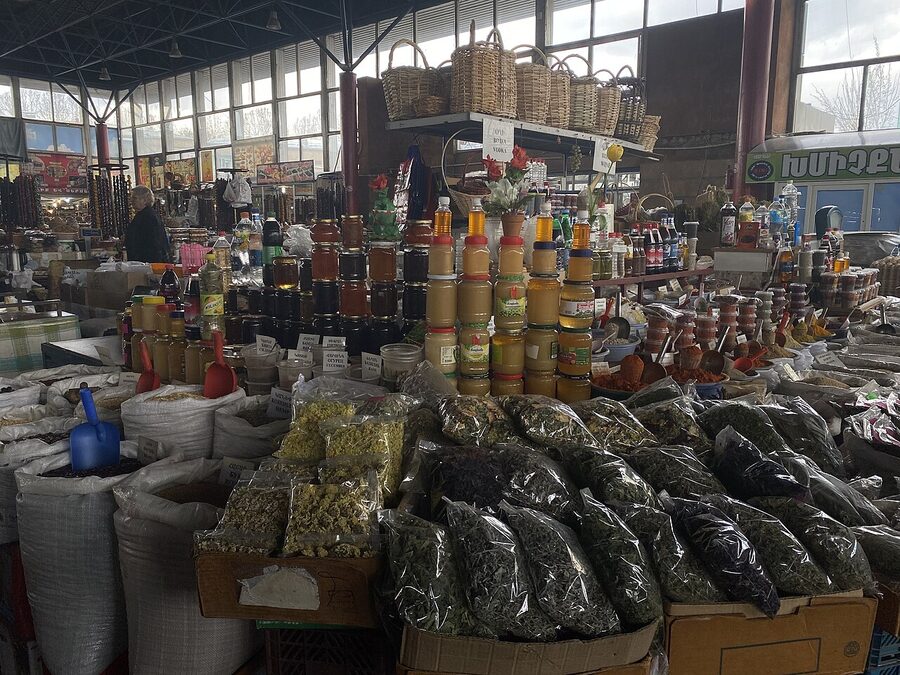
GUM Market (Movses Khorenatsi 7) is the big covered produce market. Open about 7am to 6pm daily, busiest on Saturdays. Pile up dried apricots, walnuts, churchkhela, basturma, lavash by the bundle, jars of fruit preserves and homemade tan (drinkable matsun). Vendors expect to negotiate; nothing extreme, but the first price is usually the foreigner price. Smile, ask “vorqan?” (how much), and offer 80%. They’ll laugh and meet you somewhere in between.
Pak Shuka (Mashtots Avenue) is smaller, less pretty inside, more local. The covered building is a wonderful Soviet-era piece of architecture from the outside; the gold lettering on the front is original. Inside it’s mostly produce and dairy. Less of a souvenir destination, more of a place to see how Yerevan eats.
Street food, briefly
Yerevan isn’t a street-food city the way Bangkok or Istanbul is. There are a few places to grab cheap eats on the move:
- Lahmajun from Elie’s Lahmajun or Mer Taghe near Freedom Square: 700 to 900 dram a slice, fold and eat.
- Khinkali: large hand-held boiled dumplings, technically Georgian, sold at most taverns for around 350 dram apiece.
- Kebabs in lavash: every shawarma-style place along Northern Avenue or around Mashtots will do you one of these for 1,200 to 2,000 dram.
- Pomegranate juice and tarragon lemonade: stalls along the Cascade or in the parks in summer. 500 to 1,000 dram a cup.
Coffee kiosks for the takeaway Armenian coffee are everywhere. So are corner bakeries selling freshly stamped gata for the morning walk to work.
What to skip
Not everything labelled “traditional” earns the menu space. A short list of things to be choosy about:
- Pelmeni: Russian-origin small dumplings. They’re on a lot of menus. They’re fine. But they’re not a particularly Armenian dish and the Armenian version is rarely as good as the Russian one. If you’re choosing between pelmeni and manti, get the manti.
- Mass-market khorovats restaurants: the ones with photos of the dishes on outdoor menu boards in the centre tend to be aimed at coach tours. The food’s not bad, but you’re paying more for less smoke. Walk a block off the main streets.
- Tourist-trap “lavash dinner shows”: a category of restaurant that combines dinner with folk dancing and a stage manager. Some are genuinely fun, some are aggressively bad. Read recent reviews before you book.
- Imported wine in restaurants: skip it. The Armenian list will be better, cheaper, and more interesting.
- “Ararat brandy in fancy bottles” sold at the airport: marked up considerably. Buy a regular Akhtamar 10-year in town for half the price.
And a few takes on what you’ll see hyped:
- Khash is a ritual, not a meal you’ll come back to. Try it once. Bring an Armenian friend if you can.
- Manti is better in Yerevan than anything I’ve had in Istanbul or Tbilisi. It’s a peak dish.
- The famous “Anthony Bourdain dolma at Dolmama” is genuinely very good but the homemade version your guesthouse host serves you will be at least as good and probably better.
- Pakhlava is good, not transcendent. Don’t sit through a meal hoping the dessert will save it.
- Armenian cheese deserves more attention than it gets internationally. Eat as much chanakh and motal as you can stand.
Etiquette and how a meal actually works
A few small things that change the experience.
Order more than you think. Armenian dinners are sharing-style, dishes arrive when they’re ready rather than in courses, and the table fills up. Two or three plates each among four people is normal. Better to have leftovers than awkward gaps.
The toast matters. If you’re at a longer dinner with locals, expect toasts. A toast can take two minutes and have a structure: a thanks for the gathering, an honouring of someone or something (often the dead first, then the living), a wish for the future. You don’t have to perform if it’s not you. Just hold your glass, listen, and drink at the end.
Refusing food doesn’t always work. The Armenian saying “a guest is a gift from God” gets quoted often, and it’s not just decoration. Hosts will press more food on you. The polite play is to accept a small portion and not finish; finishing your plate signals you want more. A pause and a hand over the plate is fine.
Tea or coffee at the end is mandatory. Even when you can barely move. Skip dessert if you have to but don’t skip the coffee.
Tipping is 10% in restaurants. Some menus add a service charge; check. In family-run places a round-up is fine. Cash tips travel further than card tips.
Lavash etiquette. Tear it; don’t cut it with a knife. Use it as a scoop or a wrap. It’s bad form to waste it. If a piece falls on the floor, pick it up and put it back on the plate; nobody will throw it out, but they’ll appreciate that you noticed.
A practical day-one ordering guide
If you’re sitting down at a Yerevan restaurant on your first night and want to eat well without overthinking, here’s the order I’d give a friend.
- Start: an aughtsan plate of fresh herbs and cheese, plus a basket of lavash.
- Soup: a small bowl of spas, regardless of season.
- One stuffed dish: a tolma plate (mixed if they offer it).
- One grill: pork khorovats, with grilled-vegetable salad alongside.
- One bread or dumpling moment: manti, or a herb-stuffed lavash to share.
- To drink: a bottle of Hin Areni red, sparkling Jermuk water on the side.
- Dessert: gata at the cafe next door, or a couple of pieces of pakhlava with the coffee.
That’s about 15,000 to 20,000 dram per person at a mid-range place ($35 to $50). Less if you skip the bottle of wine for a glass; more if you go to Sherep or Dolmama. Either way, it’s an extraordinary amount of food for the money by any Western European standard.
Beyond Yerevan: where the food gets stranger and better
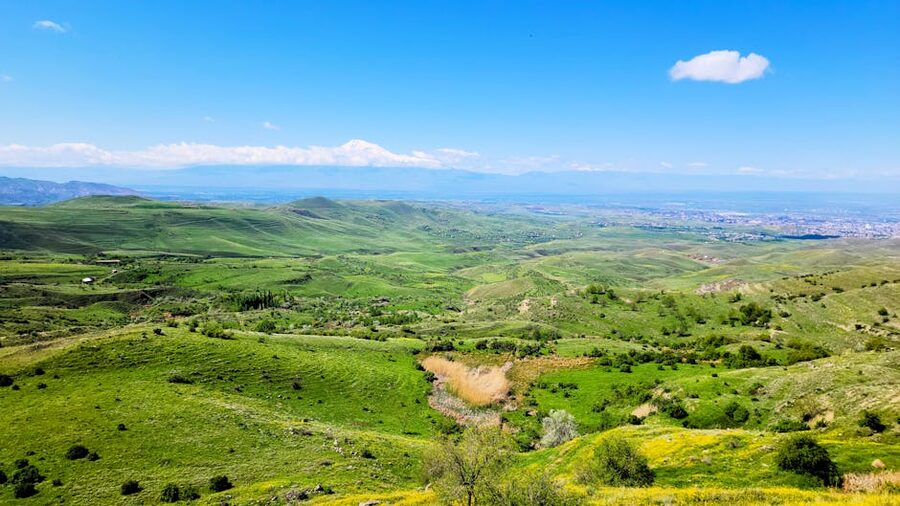
Yerevan is great for restaurant cooking but the village table is where Armenian food actually comes from. A few road-trip meals that earn the drive:
- Dilijan and around (about 100 km north): Haghartsin Monastery has a small bakery on its grounds where two sisters make the regional gata. Worth the drive even if you’re not into churches. The mountain valleys around Dilijan are also where the best honey and the best pork are.
- Garni village (27 km east): lavash workshops, garden lunches, and access to the Azat gorge.
- Areni (115 km south): wine country. The Hin Areni cellar, the cave winery site, and a half-dozen small producers along the M2.
- Lake Sevan (75 km north-east): ishkhan trout, lakeside restaurants, the Tsaghkunk village restaurant. Best in summer.
- Goris and Syunik (south): jingalov hats heartland. Late-summer festival.
- Gyumri: Armenia’s second city, hit hard by the 1988 earthquake, slowly rebuilt. Aregak Bakery employs disabled young people and their mothers. Their bread and pastry is the best in the country.
If you’re staying in Yerevan and pairing food with culture, an evening at the theatre and a late dinner is one of the city’s better combinations. Yerevan’s main theatres let out around 10pm, which lines up well with most restaurant kitchens still being open.
One last thing
The dishes are easy to list. The reason Armenian food sticks is harder to bottle. Eat enough of it and you start to notice that the meal is rarely about the food on its own. There’s always somebody at the table who wants to refill your glass, somebody pulling more bread out of the kitchen, somebody taking a phone call and coming back with a story. Anahit kept feeding me for the rest of my stay. I never figured out exactly why. I think she just liked having someone to feed.
That’s the part I’d plan a trip around.
The best way to eat like Anahit cooks is with someone local — HappyToVisit.com curates six two-day tours out of Yerevan that fold in food and markets, and Armenia Travel, the official site, lists the seasonal food festivals.
.jpg)


.jpg)