
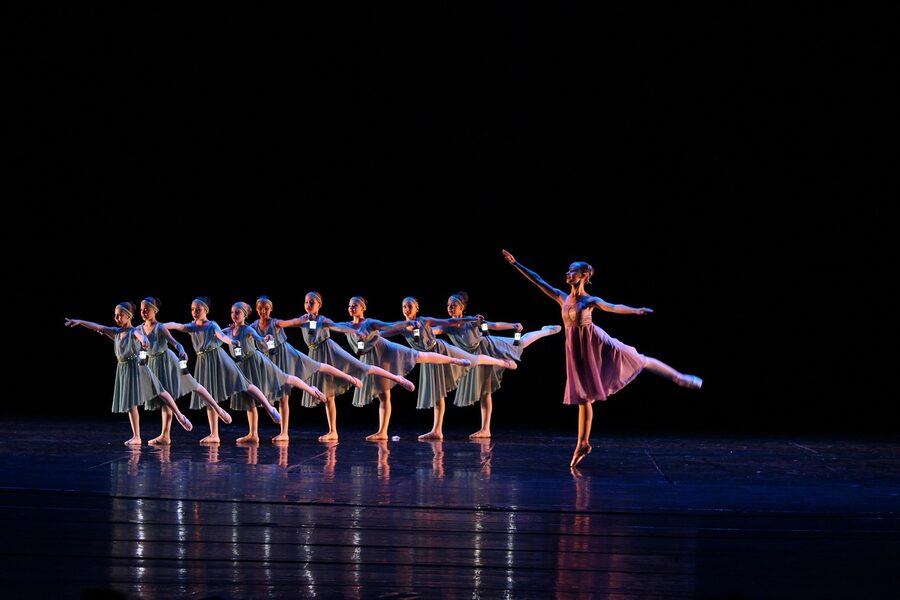
A balcony seat at the National Opera and Ballet for Tchaikovsky’s Swan Lake runs about 15,000 dram, roughly $39 USD. A stalls seat at the Sundukyan State Academic Theatre for an Armenian-language drama is 2,000 to 3,000 dram, or $5 to $8. A Friday night at the Russian Drama Theatre is 3,000 to 8,000 dram, the puppet theatre for kids closer to 1,500. Compare any of those to the cheapest seat at Covent Garden or the Bolshoi and you’ll see why theatre is the unsung bargain of a Yerevan trip. The performances themselves don’t feel cut-rate either. Many of these companies have been running since the 1920s, on stages built specifically for them, with full orchestras and trained ensembles.
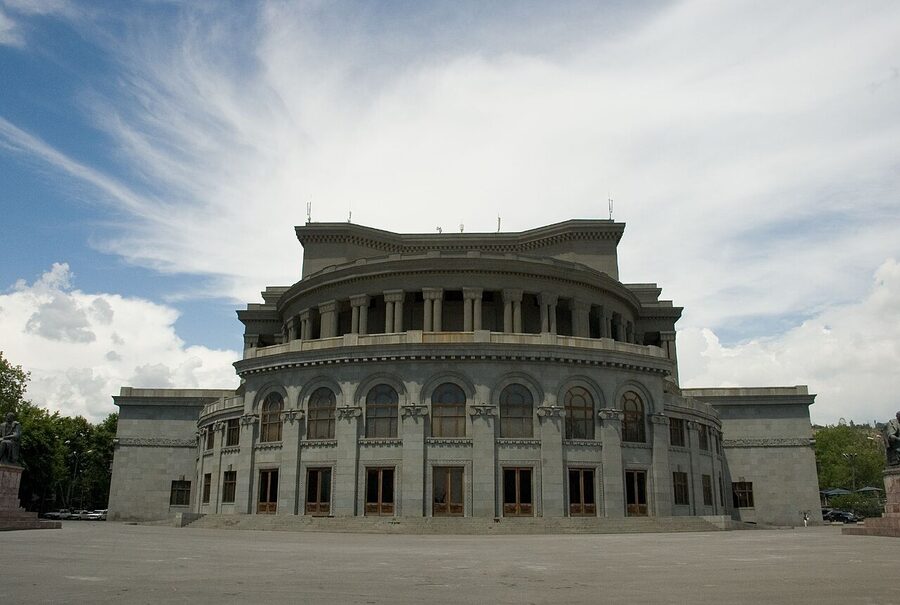
The pitch I make to anyone who says they aren’t a “theatre person”: go anyway. Most of the work is staged in Armenian or Russian, neither of which you probably read, but a third of it is opera and ballet, where the language barrier is more or less zero. Tchaikovsky and Khachaturian don’t need subtitles. And the venues themselves are landmarks. The Opera House by Alexander Tamanyan is the architectural centrepiece of the city, on a rotunda site Tamanyan designed in 1930. The Sundukyan was rebuilt in 1966 in red Armenian tuff after a fire, with twelve-metre interior pillars depicting the history of Armenian theatre. Even if you don’t follow a word, an evening here gets you a building, a crowd, an interval, and a view of how Armenians spend their nights out.
This is a guide to actually doing it: which theatres are which, what the schedules look like, where to buy tickets, what to wear, and what to expect once the lights go down. Prices are current as of the 2026 spring season and are confirmed from the theatres’ own ticket platforms, not estimated. Things shift, especially around festivals, so cross-check before you book.
In This Article
- The quick answer: where to buy tickets
- The Armenian National Opera and Ballet Theatre
- What’s on
- Ticket prices
- The Opera Tour
- Practical details
- The Gabriel Sundukyan State Academic Theatre
- The building
- What’s on and what it costs
- Practical
- The Hrachya Ghaplanyan Dramatic Theatre
- The Russian Drama Theatre after K.S. Stanislavsky
- The Hakob Paronyan State Theatre of Musical Comedy
- Smaller theatres worth knowing about
- The Mher Mkrtchyan Artistic Theatre
- The Yerevan State Puppet Theatre
- The Hamazgayin State Theatre
- The Sos Sargsyan Nationwide Theatre
- The Chamber Theatre on Mashtots Avenue
- The Yerevan State Marionette Theatre
- Festivals worth timing your trip around
- High Fest International Performing Arts Festival
- Shakespeare and Co. Theatre Festival
- The Gyumri International Theatre Festival
- What to wear, what to expect
- How to combine a theatre evening with the rest of your day
- Buying tickets: the practical bits
- Online
- At the box office
- Resale and scalping
- Refunds
- A few practical notes
- If you only have one evening
The quick answer: where to buy tickets
Three places, in this order.
Opera and ballet: go straight to the National Opera and Ballet Theatre’s own site at opera.am, or to the box office in the building itself. They publish a season calendar months ahead and the seat map shows you what’s left in real time. Tickets generally run 5,000 to 15,000 dram for the standard productions and up to 28,000 dram for the marquee ballets like Swan Lake, Spartacus and Masquerade.
Drama, comedy, musical comedy, kids’ shows: use tomsarkgh.am or ticketon.am, the two main Armenian ticketing aggregators. They list every theatre in the city, you pick a date, and most shows can be booked with a card and an email. Both sites have an English mode, though the show titles often stay in Armenian. A quick paste into a translator usually sorts that.
Russian Drama Theatre: book at stanislavski.am or via the aggregators. Their own site lists shows in Russian; the aggregators give you the English wrapper around it.
If you’re already in Yerevan and just want to see something tonight, walking into the Opera House box office or the Sundukyan box office is genuinely a workable plan. They keep paper tickets at the door and the staff speak enough English to sort you out. The exception is anything during the High Fest international festival in early October, when the city fills up and the good seats go weeks ahead.
The Armenian National Opera and Ballet Theatre
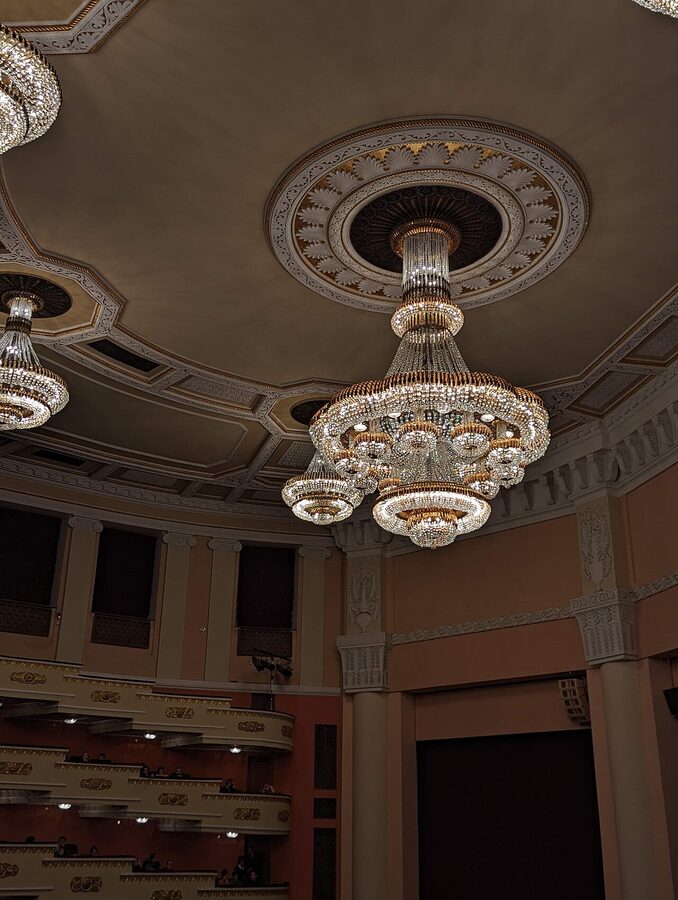
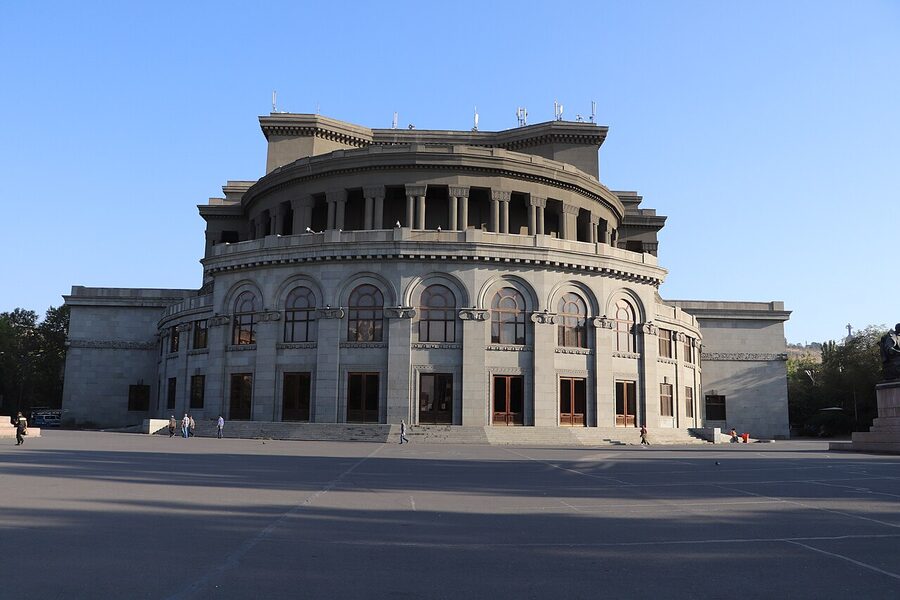
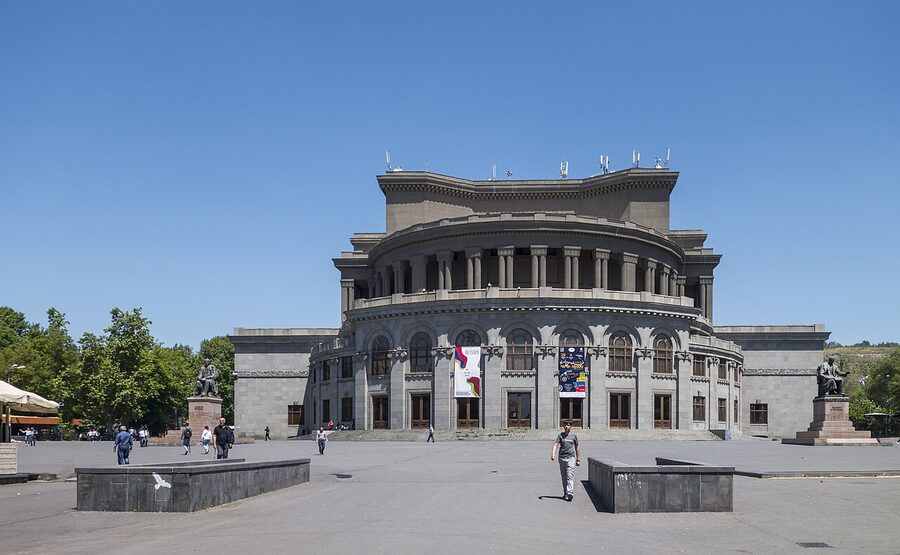
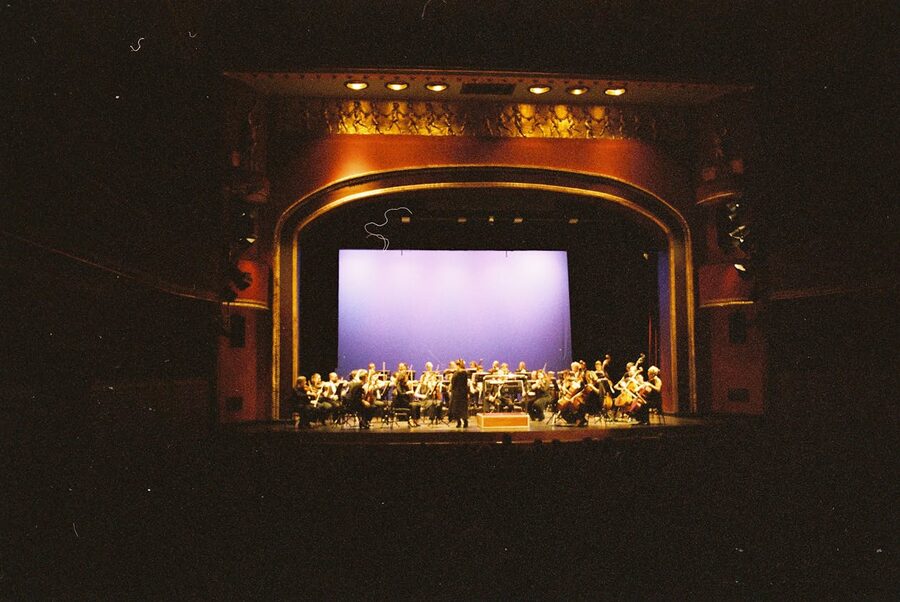
If you only do one theatre evening in Yerevan, do this one. It’s the venue that anchors the city’s cultural calendar, the one foreign visitors recognise, and the one that solves the language problem entirely. The full name, for anyone who likes that detail, is the Alexander Spendiarian National Academic Theatre of Opera and Ballet. Locals call it the Opera, drop the rest, and so will I.
What’s on
The repertoire is heavy on the classical canon, with a strong Armenian thread running through it. In a typical month you’ll see Tchaikovsky’s Swan Lake and Sleeping Beauty, Khachaturian’s Spartacus, Gayane and Masquerade, Bizet’s Carmen, Puccini’s Turandot, La Bohème and Madame Butterfly, Verdi’s Traviata and Otello, plus Armen Tigranyan’s Anoush, the Armenian-language opera every traveller should try to see at least once. Anoush is the one where you’ll feel the audience react differently. It’s woven into Armenian identity the way Onegin is for Russians or Carmen for the French, and the response in the hall reflects that.
Concerts and recitals fill out the gaps between productions, often in the smaller hall to one side of the main stage. The season runs roughly September through July, with a summer break in August. Performances start at 19:00 on weekdays and 18:00 on weekends. Children’s matinees go up at 13:00 on Sundays.
Ticket prices
The standard pricing band, confirmed from the live opera.am calendar and the tomsarkgh listings:
- Operas (Carmen, Anoush, Turandot, La Bohème, Traviata): 5,000 to 15,000 dram, about $13 to $39
- Big-name ballets (Swan Lake, Spartacus, Sleeping Beauty, Gayane): 5,000 to 28,000 dram, about $13 to $73
- Mid-tier ballets (Masquerade, Romeo and Juliet, Bolero programme): 5,000 to 18,000 dram, about $13 to $47
- Concerts and recitals in the smaller hall: 5,000 to 10,000 dram, about $13 to $26
- Children’s matinees (Dragonfly and the Ant, The Snow Queen): 3,000 to 10,000 dram, about $8 to $26
The dram-to-USD figures use a rate of roughly 385 to the dollar, which is where it’s been sitting through 2026. Expect a few percent of drift either way.
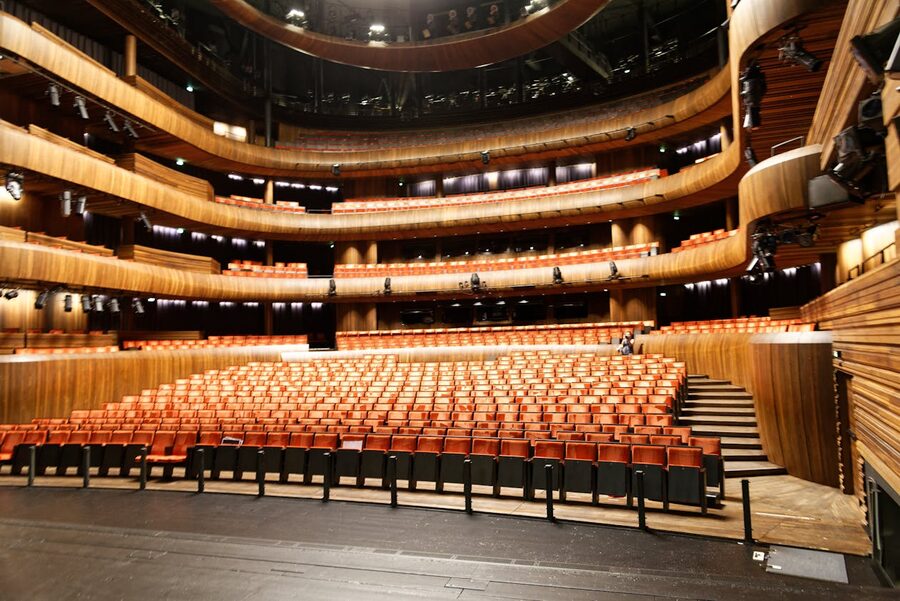
For seat choice: the side balconies on the second tier give you the best architectural view of the hall but you lose a slice of the stage. Centre stalls or the front of the dress circle are the safest pick if it’s your first time. Avoid the very back of the side galleries unless you’re fine with leaning forward for two hours.
The Opera Tour
If you can’t catch a performance, the theatre runs a backstage tour through the workshops, balconies, and sets. It’s 3,000 dram per visitor, roughly $8, with a minimum of ten people and a maximum of twenty-five per group. You book at the ticket office in the building, not online, which is mildly annoying but not a deal-breaker. If you’re walking past anyway, just stop in. The tour is offered in several languages depending on guide availability.
Practical details
Address: Tumanyan Street 54, on the rotunda between Saryan Street and Tigran Mets. Roughly a 15-minute walk from Republic Square, or three minutes from the Saryan House Museum if you’re stringing the afternoon together. Yeritasardakan metro is two minutes away.
Box office hours: 11:00 to 19:00, every day during the season. Performance evenings the box office stays open until showtime. Cards work, cash works.
The interval bar in the foyer sells coffee, sparkling water, and small glasses of wine and brandy at gentle prices. Skip the cloakroom queue at the end by not checking your coat. The seats are wide enough that nobody minds you keeping it draped.
The Gabriel Sundukyan State Academic Theatre
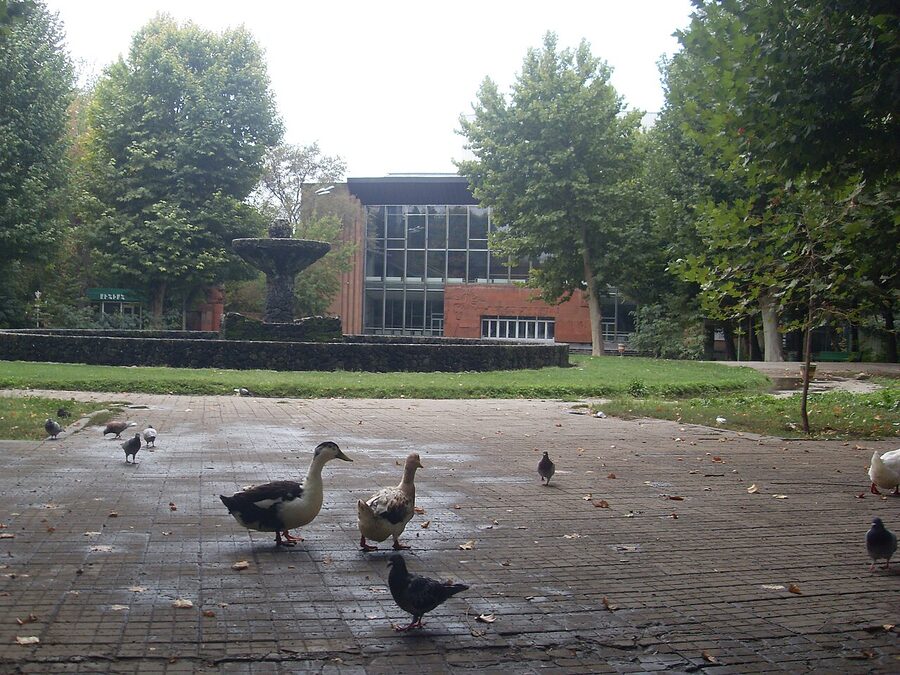
This is the home of Armenian-language drama in the same way the Opera House is the home of opera. It’s the oldest state theatre in the country, opened officially in 1922 after a year of staging in temporary halls, and named after Gabriel Sundukyan, the 19th-century playwright whose works still anchor the repertoire. If you read modern Armenian, this is where you go for the canon. If you don’t, you’ll enjoy the building anyway.
The building
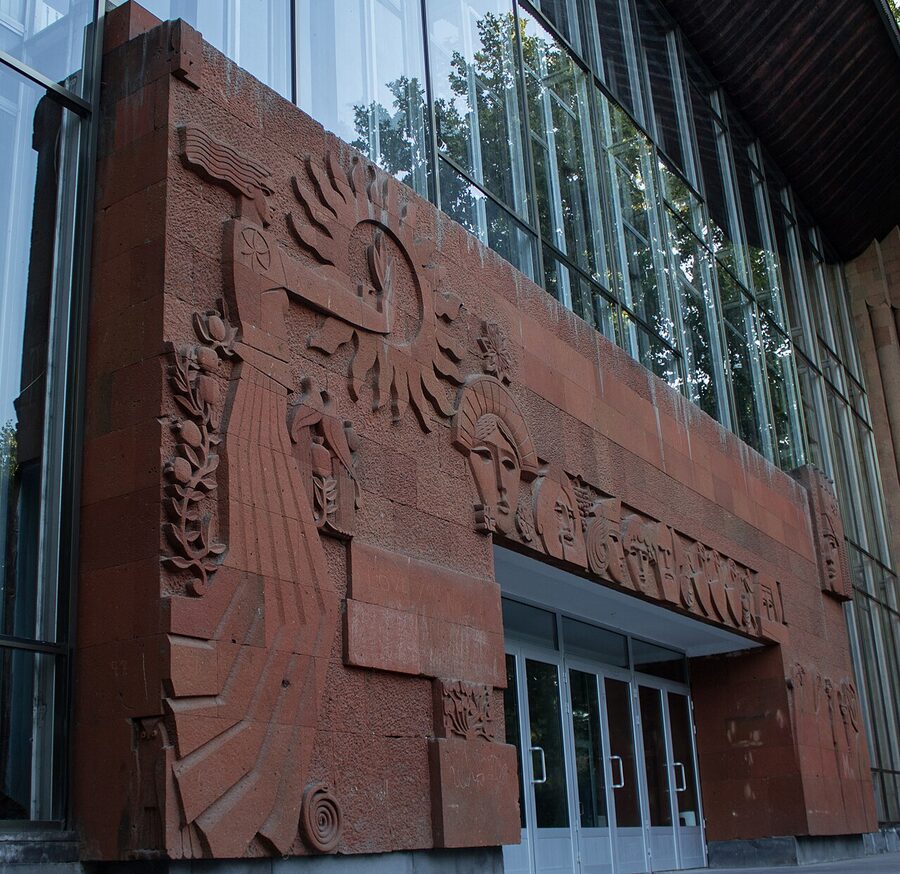
The current Sundukyan opened in 1966, replacing the original which burned down. Razmik Alaverdyan, Suren Burkhajian and Gurgen Mnatsakanyan designed it in red tuff stone quarried from Armavir, which is the same volcanic stone you see in churches across the country. Walk around to the front and you’ll find sculptural reliefs along the facade narrating the history of Armenian theatre. Inside, the foyer is a winter garden lit by tall windows, with twelve-metre pillars covered in ceramic panels that also trace theatrical history if you read them carefully. Sightlines in the auditorium are excellent and the hall holds about 600.
The bust of Sundukyan in the forecourt is a useful landmark. The other figure out front, the small bronze of a half-figure called Hushkaparik, is a reference to a folkloric character. Kids climb on it, theatre-goers wait under it, and you’ll often find a couple sharing a coffee on the bench beside it before evening shows.
What’s on and what it costs
The current Sundukyan repertoire mixes Armenian classics with international work in translation. From the live tomsarkgh listings for the spring season:
- Sundukyan’s own Mecapativ Muratsyaknere (“The Honourable Beggars”), a 19th-century classic still in regular rotation. 1,000 to 3,000 dram, about $2.60 to $8
- Hovhannes Tumanyan adaptations including Saretse Sirte (“The Frozen Heart”) for kids. 1,000 to 3,000 dram
- Translated international work, with recent runs that have included One Flew Over the Cuckoo’s Nest under its Armenian title Trichk kkvi bni vrayov. 1,000 to 3,000 dram
- Festival programming and special events run higher: 4,500 to 9,500 dram for some International Festival shows
- Kids’ matinees of Mokhrote (“Cinderella”) and Aladdin: 1,000 to 3,000 dram
For most non-Armenian readers, this is best treated as an experience rather than a literary evening. The acting is strong, the staging is full-scale, and the audience reaction tells you what’s happening even when the dialogue doesn’t. Kids’ matinees are an easy entry point: the stories are familiar (Cinderella in any language is Cinderella), the stagecraft is enthusiastic, and a parent can follow the rough arc without translation.
Practical
Address: 6 Grigor Lusavorich Street, just off Republic Square in the English Park area. Zoravar Andranik metro is a 10-minute walk. The theatre is centrally located enough that most hotels in central Yerevan are within 15 minutes on foot.
Box office hours: 10:00 to 19:00, Monday to Saturday. Most performances start at 19:00, weekend matinees at varying times. Doors open 30 to 45 minutes before curtain.
Tickets online via the theatre’s own site (nationaltheater.am) or via the aggregators. Student and senior discounts on selected shows.
The Hrachya Ghaplanyan Dramatic Theatre
Founded in 1967 by the actor and director Hrachya Ghaplanyan, this is the city’s other big drama house and runs a stylistically braver programme than the Sundukyan. Where the Sundukyan tends towards the canon, the Ghaplanyan goes harder on contemporary Armenian work, translated experimental drama, and adaptations. It’s also smaller and physically warmer, which suits the kind of theatre it stages.
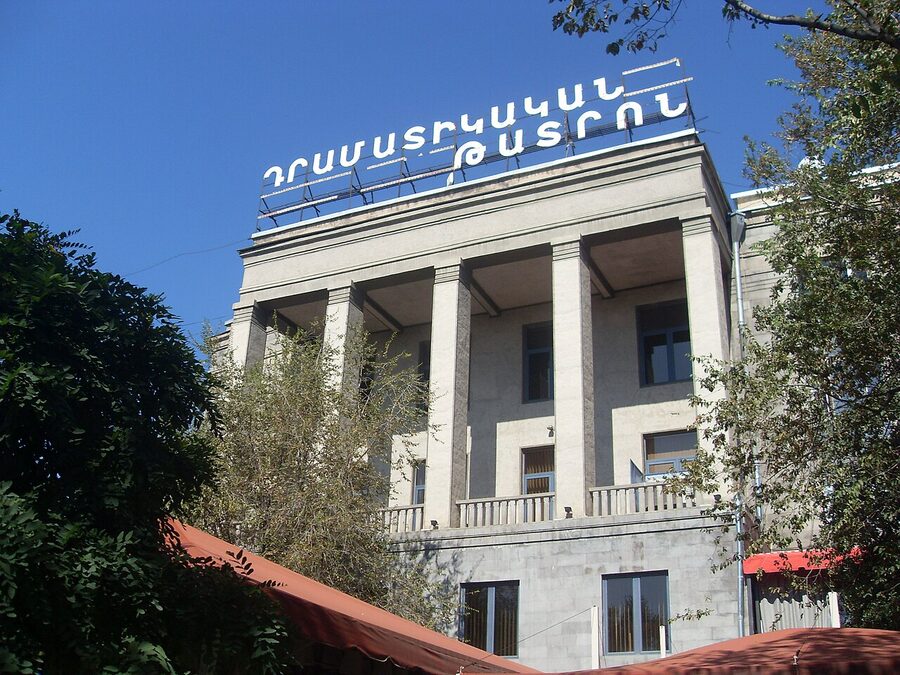
Recent and current shows include Parizyan datavchir (“Parisian Verdict”), a two-act drama, with prices listed at 3,000 to 4,000 dram, around $8 to $10. Other drama runs sit in a similar 3,000 to 5,000 dram band. The auditorium is intimate enough that any seat is a good seat.
Address: 28 Isahakyan Street. Yeritasardakan metro is the closest stop. The theatre’s own site is ydt.am.
If your Armenian is non-existent, the Ghaplanyan is harder to recommend over the Sundukyan as a one-shot. The Sundukyan’s larger productions are more visually carrying when you can’t follow dialogue. But if you’ve already been to the Sundukyan, or you’re Armenian-speaking, the Ghaplanyan is where the more interesting work tends to land.
The Russian Drama Theatre after K.S. Stanislavsky
The Russian Drama is the longest-running Russian-language theatre outside Russia itself, founded in 1937. That’s useful context if you’re wondering why a building this prominent in central Yerevan stages exclusively in Russian. The post-Soviet generation of Yerevan still skews bilingual, and there’s a strong audience for Russian-language drama, particularly the classic 19th and 20th-century repertoire.
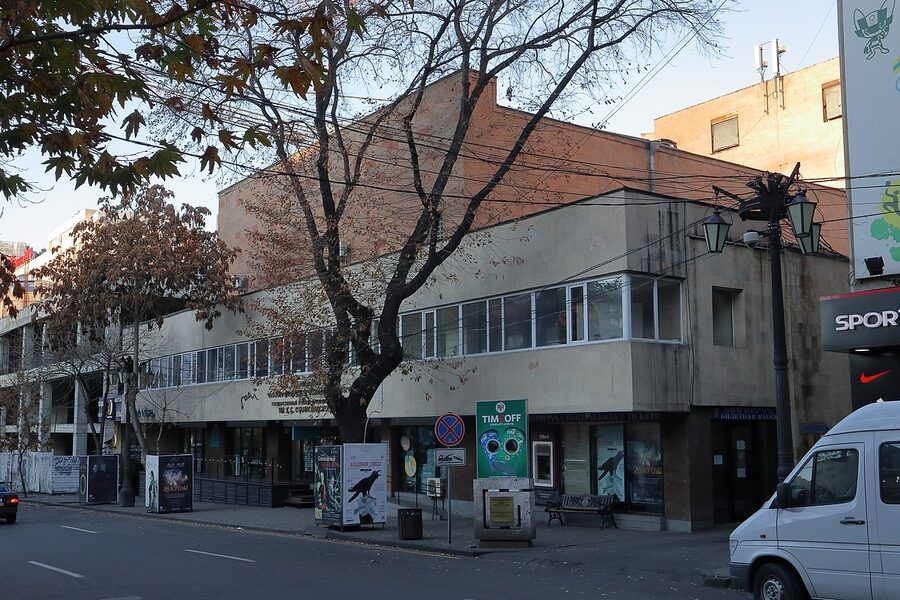
The repertoire leans Chekhov, Gogol, Bulgakov, Hamlet (recently in rotation as Гамлет), and contemporary Russian drama. Tickets run 2,000 to 8,000 dram for most shows, around $5 to $21. Tsnoghe (“The Parent”) was on the spring schedule at 3,000 to 8,000 dram.
Address: 7 Abovyan Street, in the centre of the old grid. A two-minute walk from Republic Square. The site is stanislavski.am, which lists shows in Russian; tomsarkgh and ticketon mirror the schedule in English.
If you read or speak Russian, this is the easy pick. If you don’t, the productions can still work. The staging is precise and physical, and Chekhov in particular is short enough that you can read a synopsis at the interval and pick up the rest by feel.
The Hakob Paronyan State Theatre of Musical Comedy
This is the closest thing Yerevan has to a West End. Founded in 1942, the Paronyan stages operetta, musical comedy, and reworked classics with full orchestra and bigger ensembles than the dramatic theatres. The repertoire runs lighter than the Opera House. Strauss, Lehár, Kálmán on the operetta side, Armenian musical adaptations on the other.
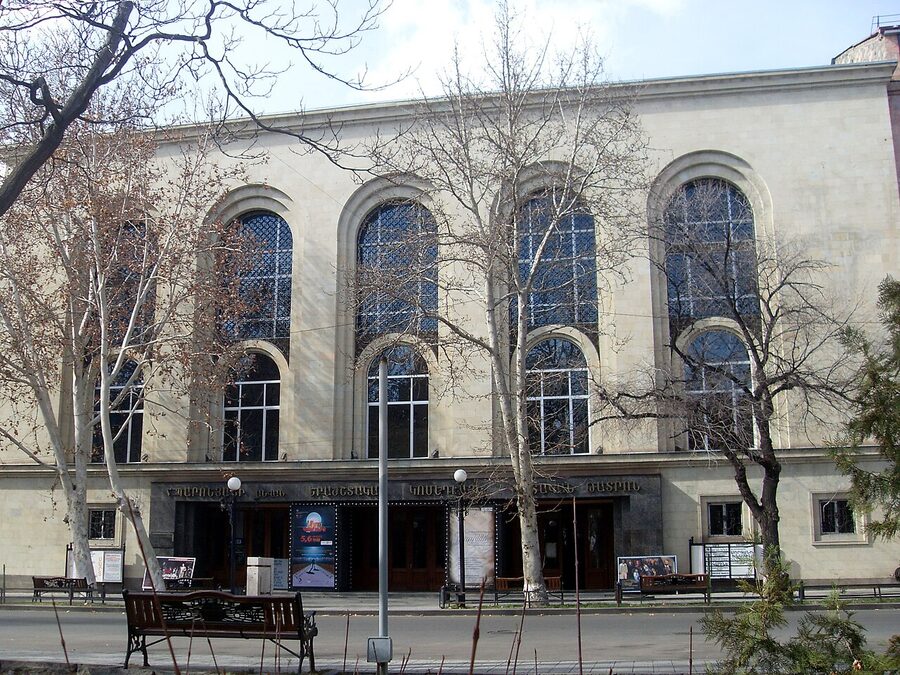
Tickets run 3,000 to 5,000 dram for most shows, around $8 to $13, with festival or premiere nights pushing higher. Recent listings include Gishatichneri khnjuyqe (“The Predators’ Feast”) at 4,000 dram. Operetta productions like Die Fledermaus and The Merry Widow appear regularly.
Address: 7 Vazgen Sargsyan Street. The theatre’s own site is comedytheater.am.
For travellers, the operetta nights are an easy sell. Music carries the evening, the costumes are big, the choreography is broad, and you don’t have to follow the dialogue to enjoy yourself.
Smaller theatres worth knowing about
Beyond the five big houses, Yerevan has a long tail of smaller theatres that punch above their weight.
The Mher Mkrtchyan Artistic Theatre
Named after the Soviet-era Armenian actor, this is one of the city’s most active mid-size venues, staging a wide range from translated drama to Armenian work. Tickets typically 3,000 to 6,000 dram, about $8 to $16. Recent listings include Ays kanach, karmir ashkhare (“This Green, Red World”) at 3,000 to 5,000 dram and Yete du mernes (“If You Were to Die”) at 5,000 to 6,000 dram.
The Yerevan State Puppet Theatre
Founded in 1987, only the third puppet theatre in the former Soviet Union, after Leningrad and Tbilisi. Marionette work, with both children’s productions and adult-aimed pieces. Tickets are among the cheapest in the city, often around 1,500 dram. The repertoire includes Mikin and his Friends, Madagaskar, and Saroyan’s You Have Entered the World. Worth it as a stand-alone evening or as a way to give kids something to do that isn’t another monastery.
The Hamazgayin State Theatre
Newer Armenian-language work, with a stronger leaning towards political drama and contemporary writing. Tickets 2,000 to 6,000 dram. The current schedule had Jin khaghe (“The Gin Game”) at that range.
The Sos Sargsyan Nationwide Theatre
Founded by the Soviet-era actor Sos Sargsyan in 1992, with a smaller ensemble and a more focused programme. Address: 26 Amiryan Street. Site: sostheatre.am.
The Chamber Theatre on Mashtots Avenue
A small, experimental venue founded in 1981, run by Ara Yernjakyan. The kind of place where the audience is on three sides of the stage and the actors enter through the front row. Site: erkat.am. Address: 58 Mashtots Avenue.
The Yerevan State Marionette Theatre
Distinct from the Puppet Theatre. Adult marionette productions with a darker, more visual aesthetic. Listed on tomsarkgh and ticketsystem.am alongside the others.
Festivals worth timing your trip around
High Fest International Performing Arts Festival
The biggest one. Runs in late September into early October every year and has been going since 2003. The festival brings international companies into Yerevan venues. The Sundukyan, Ghaplanyan, Mher Mkrtchyan, and others all programme around it. Ticketing is more chaotic than usual, with day-of releases and walk-up queues. If you’re trying to overlap a Yerevan trip with theatre, this is the date to circle.
Shakespeare and Co. Theatre Festival
A smaller programme that runs through the spring and brings together Shakespeare productions in Armenian, Russian, and occasionally English. Listed on tomsarkgh under the festival category.
The Gyumri International Theatre Festival
Not in Yerevan, but worth noting if you’re touring Armenia: held in Gyumri in late autumn and pulls regional and international companies. Worth a day trip from Yerevan if your visit overlaps.
What to wear, what to expect
Smart-casual works for everything. The Opera leans dressier on opening nights and gala performances. Think jacket and decent shoes for men, equivalent for women. Anything you’d wear to a nice dinner is fine on a normal evening. The drama theatres are more relaxed; the puppet theatre is whatever-you-want.
Doors typically open 30 to 45 minutes before curtain. Performances at the Opera and the Sundukyan start exactly on time. Latecomers are seated at the discretion of the staff, usually only at scene breaks, so don’t push it.
Phones must be silenced and photography during performances is forbidden. Photography in foyers and during the interval is fine. The cloakroom is free at the major theatres, with attendants who’ll watch coats and bags. Tipping isn’t expected.
One thing that catches some travellers off guard: applause patterns are different. Armenian audiences tend to clap rhythmically in unison at curtain calls, sometimes for several minutes, and they don’t always follow Western timing for between-movement quiet. Don’t worry about getting it wrong; follow the room and you’ll be fine.
How to combine a theatre evening with the rest of your day
Most performances start at 19:00, which gives you a generous window for an early dinner. Yerevan’s restaurants run late and most of the central ones don’t fill up until 21:00, so if you’re trying to squeeze in dinner before a 19:00 curtain, aim to sit down by 17:30. Service is unhurried; an hour and a half is a realistic minimum.
If you want to pre-load with culture, the Saryan House Museum is three minutes’ walk from the Opera House and closes at 17:00, which makes for a clean handover into a 19:00 show. Half a day at the museum followed by a Khachaturian ballet is a very Yerevan way to spend a Saturday.
For dinner, central Yerevan has every range. Cheaper, faster options near the Opera include the cafés along Saryan Street and the chain places at the back of the rotunda. For a proper sit-down meal of Armenian food before a show, see the traditional Armenian food guide for what to order. Khorovats and a glass of red is a fair lead-in to opera, but lavash wraps and a plate of sujukh works just as well.
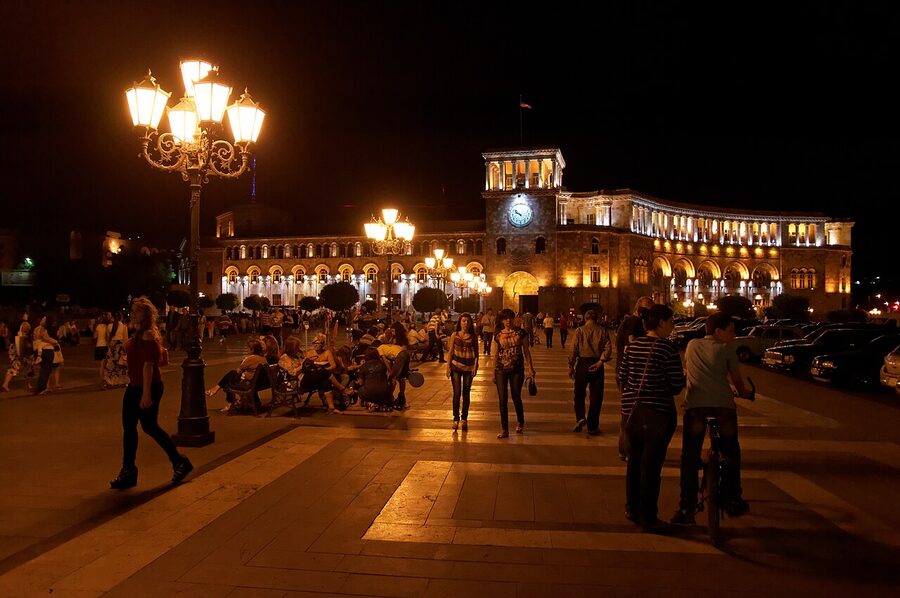
After the show, the rotunda around the Opera fills up with people walking and meeting friends. The cafés stay open late and Yerevan has nothing of the empty-streets-after-dark feeling some European cities have. Walking back to your hotel through Northern Avenue or down Tigran Mets is part of the evening.
Buying tickets: the practical bits
Online
The two big aggregators, tomsarkgh.am and ticketon.am, both work for international cards. You’ll get an e-ticket by email; print it or show it on your phone at the door. The Opera House’s own site, opera.am, has a direct seat-map booking flow which is usually cleaner than the aggregators for opera and ballet.
Both aggregator sites have the show titles in a mix of Armenian and English. The English wrapper is reliable but often the show name itself stays in Armenian. A copy-paste into a translator gets you the gist, and the date, venue, and price are always shown in English.
At the box office
Cards work at the major theatres. Cash works everywhere. Bring your passport for student or senior discounts. Walk-in tickets the night of the show are realistic outside premieres and Saturday-night ballets.
Resale and scalping
Both basically don’t exist. The aggregators are the resale market and you’ll only see prices around face value. Scalping at the doors isn’t a thing here in the way it is in Western capitals.
Refunds
Most tickets are non-refundable. Some performances allow exchange to a different show with at least 48 hours’ notice. If you book and your plans change, the realistic move is to message the box office directly. Staff are usually pragmatic if there’s space on a later date.
A few practical notes
The standard of production varies. Opera and ballet at the National are reliably high. The company has been there for nine decades and the orchestra is properly tuned. The drama theatres are more variable. A weeknight repertory show at the Sundukyan can feel slightly under-rehearsed; a Friday or Saturday production with the lead cast is a different proposition. If you only have one drama-theatre evening, go on a weekend.
Subtitles are not a thing at any of the dramatic theatres. The Opera occasionally projects synopses for Italian and French operas in Russian and Armenian, but rarely in English. Read the libretto on Wikipedia before you go. It takes ten minutes and changes the evening.
Some of the smaller theatres have inconsistent box office hours. If you’re targeting a specific show at the Chamber Theatre or one of the Marionette stages, message ahead via the aggregator or call the venue. Walk-up at the smaller venues isn’t always reliable.
The Opera House’s air conditioning is hit-and-miss in summer. June and July performances can run warm; bring a fan in your bag if you’re heat-sensitive. The drama theatres are smaller, easier to cool, and rarely a problem.
If you only have one evening
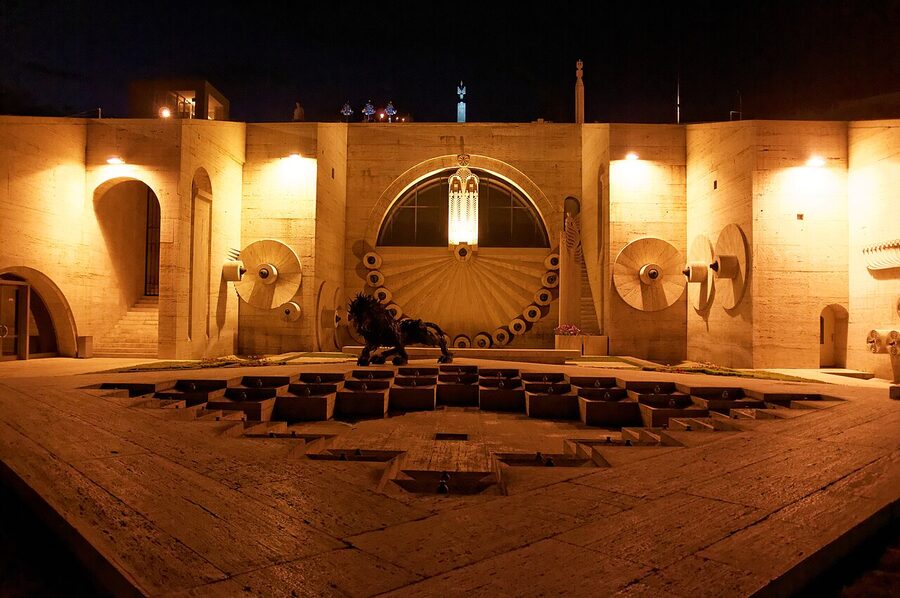
Go to the Opera. Pick a Khachaturian ballet (Spartacus or Gayane), an Armen Tigranyan Anoush, or a recognisable opera in the canon (Carmen, La Bohème). Spend 10,000 to 15,000 dram on a centre-stalls or front-circle seat. Get there 30 minutes before curtain. Have a glass of brandy at the foyer bar during the interval. Walk back to wherever you’re staying through the Cascade or Northern Avenue afterwards.
That single evening will tell you more about how Yerevan thinks about itself than five museums will, and it’ll cost you less than a dinner at most of the city’s mid-range restaurants. The country has been building up to this kind of evening for a hundred years; it’s worth giving it three hours.
One last thought. Yerevan’s theatre scene wasn’t built for tourists, and that’s why it’s worth bothering with. The audiences are local, the prices are local, the work is being made for the city it’s staged in. You’re not visiting a heritage display. You’re sitting in the same hall a Yerevan family books for its Saturday night out, watching the same production, paying roughly the same price. There’s a version of cultural travel that’s all looking. The theatres are the version where you actually participate. For about the cost of a couple of beers.
If you’re lining up the city’s older infrastructure as part of the same trip, the historic bridges of Armenia belong on the same list. Both are pieces of working everyday life that doubled as Soviet-era cultural projects, and both reward an unhurried look.



.JPG)

.JPG)

.jpg)

