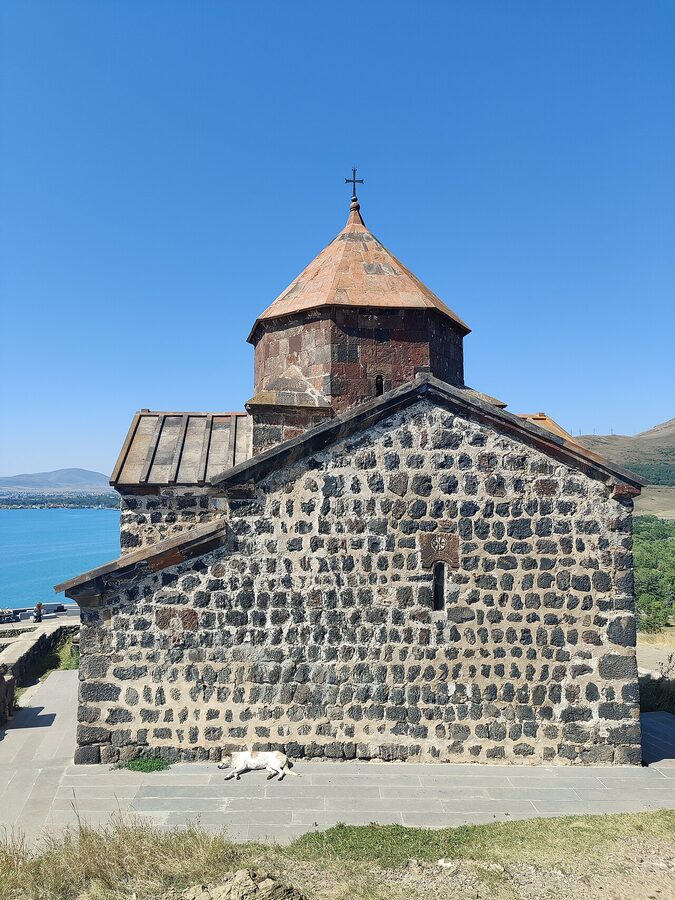
The wind on the Sevan Peninsula at six in the morning is the kind that rearranges a face. I’d come up the unmarked back path from the Writers’ House terrace, gravel under boots, the lake going from slate to bronze as the sun cleared the eastern ridge, and by the time I reached the top of the steps the two stone domes of Sevanavank were already lit and there wasn’t a single tour bus in the car park. By eleven there would be coaches, families, drone cameras, ice-cream wrappers, and a queue snaking past the gata stand at the bottom of the stairs. For now there was a woman lighting candles inside Surp Astvatsatsin, the wind moving through the open vestry doorway, and a stray dog asleep on the warm stones of the south wall.
That hour did most of the work of changing my mind about Lake Sevan. I’d been before, in the wrong way, in the wrong month. July, a Saturday, after lunch. Crowded, too hot, with the inevitable sense that the lake was being processed rather than visited. This time, on a Tuesday in late May with poppies in the grass and the temperature still cool enough to want a jacket, I understood why Armenians treat the lake the way they do, which is with something between affection and reverence, the way you treat a slightly difficult relative who is also the source of most of your good memories.
This is the guide I wish I’d had the first time. What’s actually worth doing on the lake, when to come, what to skip, how to get out there without a rental car, and the calls I’d make differently if I were planning the trip again. If you’re stitching the lake into a longer Armenia loop with Tatev Monastery and the cable-car ride, Dilijan National Park, and Mount Aragats, the timing notes at the bottom matter more than the sights themselves.
In This Article
- What Lake Sevan actually is
- The Soviet drainage and what it left behind
- How big is it really
- The peninsula and Sevanavank
- The climb up
- Inside the churches
- The viewpoint above the churches
- Surb Hakob and the Vazgenyan seminary
- The Sevan Writers’ House
- Staying there
- Eating at the lounge if you’re not staying
- The piano and the rules of the place
- Eating fish at the lake
- Where I’d actually eat
- Skip Ashot Erkat
- The lesser-visited monasteries on the southern shore
- Hayravank
- Noratus and the khachkars
- Hayrkavank, if you have time
- Swimming, diving and what’s actually possible on the water
- Beaches
- Diving with Altitude 1900
- Boat trips
- The Soviet viewing platform
- The eastern shore and the long loop
- When to come
- Late May to mid-June
- July and August
- September and early October
- Winter
- Where to sleep
- The peninsula itself
- Sevan town
- The southern lakeshore
- Getting there
- From Yerevan by marshrutka
- From Dilijan
- From Tbilisi
- Driving
- Hiring a driver
- Joining a tour
- Day trip or overnight
- What to combine the lake with
- What I’d skip
- The view from the back path
What Lake Sevan actually is
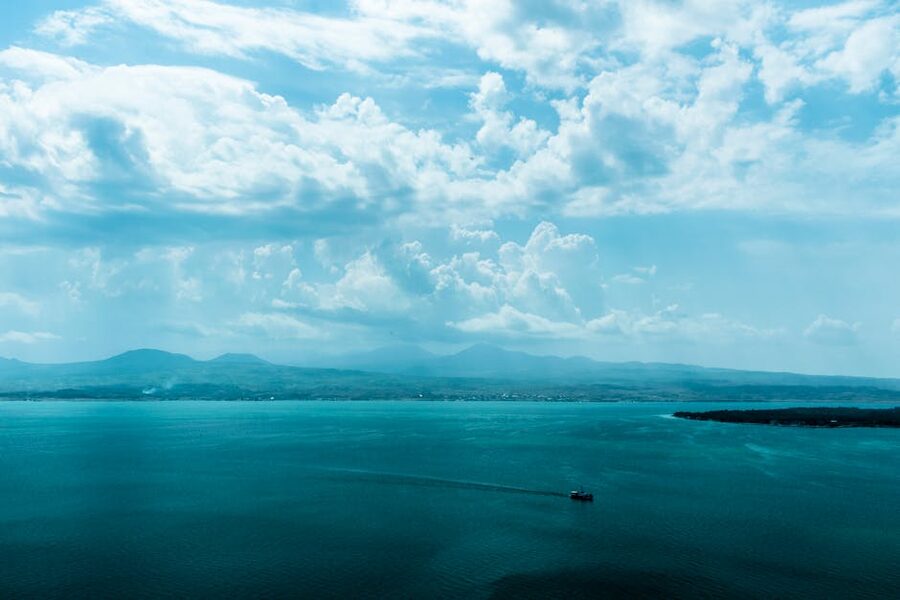
Lake Sevan is the largest body of water in Armenia and the largest freshwater lake in the wider Caucasus. It sits on a high plateau in Gegharkunik province, about 65 kilometres east of Yerevan, and the surface is at roughly 1,900 metres above sea level. That altitude is the first thing to know. Sevan in the abstract sounds like a beach destination. Sevan in practice is closer to a high-mountain lake, with the weather to match. It will be 30 degrees in central Yerevan and 18 with a wind off the water at the Sevanavank stairs, and big late-afternoon storms roll in fast from June through September.
The lake covers about 1,240 square kilometres, which is around a sixth of Armenia’s total area. The deepest point is 81 metres. The water itself is freshwater, and the surrounding catchment is fed by 28 small rivers and streams; only the Hrazdan flows out, on the western side past the town of Sevan. The shape on a map is a rough oval pinched at the middle, with the northern and southern basins separated by a strait. Most of the famous sights, Sevanavank, the Writers’ House, Hayravank, Noratus, are on the western and southern shores. The eastern shore is quieter, more agricultural, and the place to head if you want the lake mostly to yourself.
The Soviet drainage and what it left behind
Most of what you see on the peninsula today exists because of a piece of Stalin-era engineering that nobody is happy about. Starting in 1933, a tunnel was bored from Lake Sevan into the Hrazdan river basin. The plan was to drop the lake’s water level deliberately, draining the shallows for irrigation and feeding a cascade of hydroelectric stations on the Hrazdan. By the late 1950s the water level had fallen by about 19 metres. Nearly half the surface area was gone. The shallows were a fish nursery; losing them gutted the population of endemic Sevan trout. The Soviet leadership had over-promised, the irrigation didn’t deliver as much as hoped, and by the 1960s the consequences were visible.
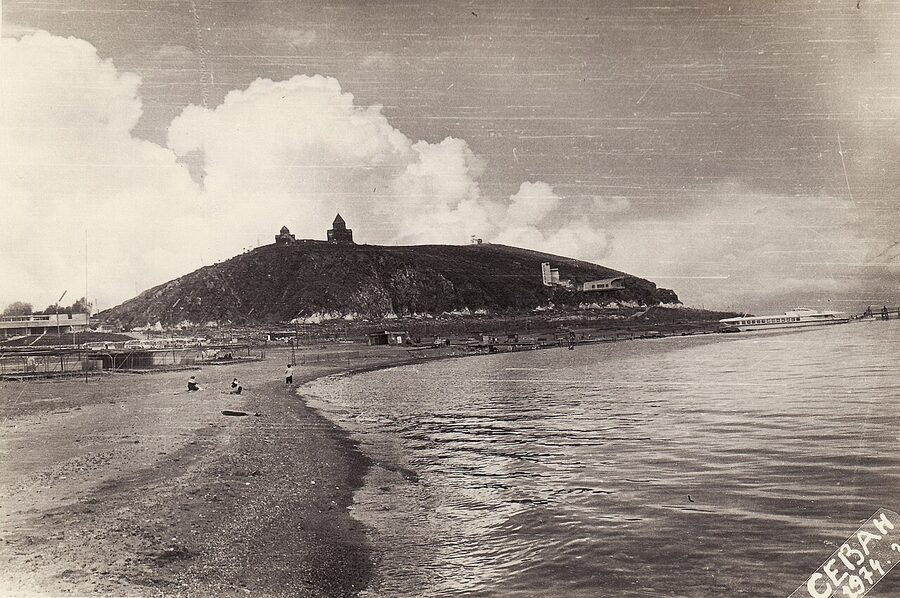
Two later projects partially reversed it. The Arpa-Sevan tunnel, completed in 1981, brings water in from the Arpa river to the south. The Vorotan-Arpa tunnel, finished in 2003, extends the chain further. The lake has come back roughly four metres since the late 1990s. You can still see the difference if you look for it, the thin pale strip of bare lakebed visible between the tree line and the water in places along the southern shore is the old shoreline. Lichen on submerged rocks marks where the water used to be.
The peninsula is the most visible legacy. Until the drainage, Sevanavank Monastery sat on a small island a couple of hundred metres offshore. The water dropped, the strait turned into a land bridge, and the island became a peninsula in the 1940s. Without the drainage there would be no road up to Sevanavank, no Writers’ House overlooking the cove, no fish restaurants on the beach below. The same engineering that wrecked the trout fishery is the reason there’s a path you can walk up.
How big is it really
For Americans, the lake is a little smaller than Utah’s Great Salt Lake at its current level. For Brits, it’s about the size of all of England’s Lake District plus a bit more. Held against the country it sits in, it’s enormous: a sixth of Armenia, roughly. You can drive the perimeter in a long day if you really push it (about 220 kilometres total), but the western and southern shores have most of what’s worth stopping for, so a sensible trip covers Sevanavank, Hayravank and Noratus, and skips the long eastern leg unless you’re already heading further east.
The peninsula and Sevanavank
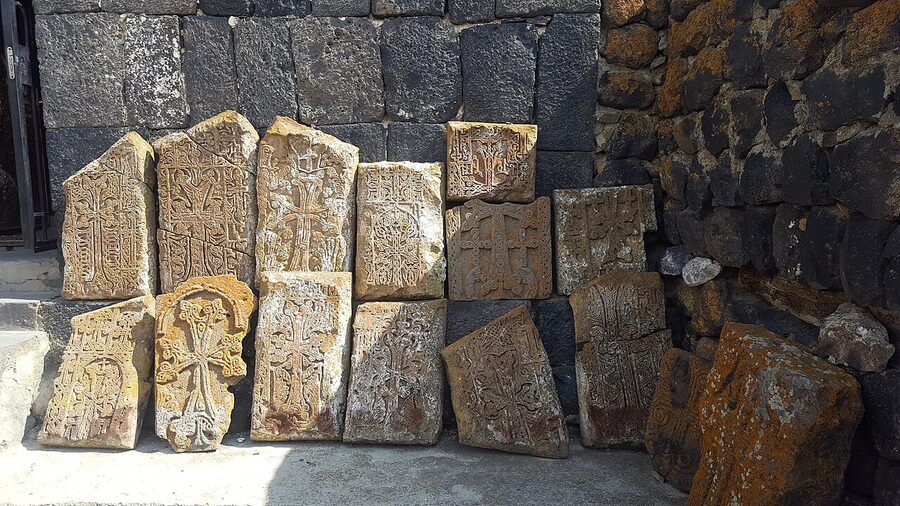
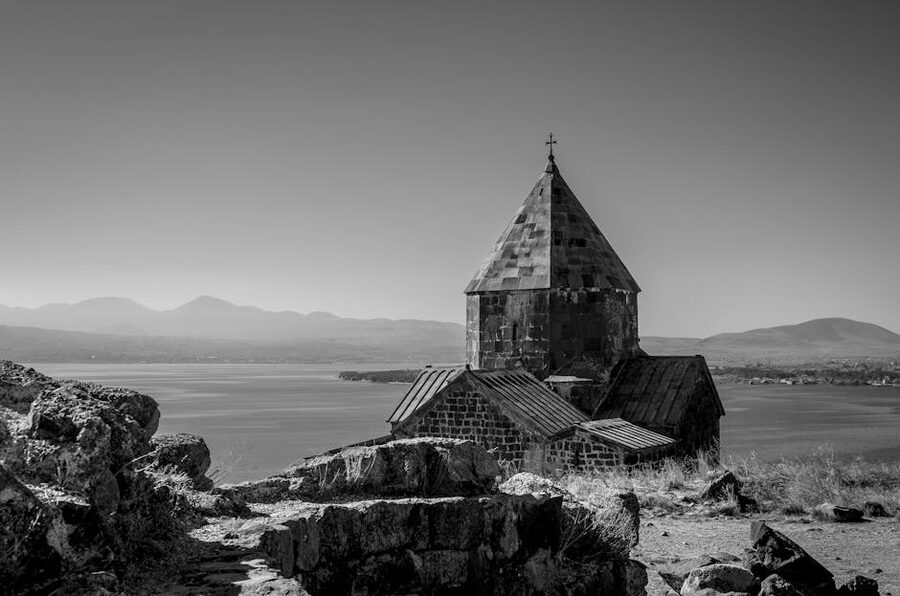
The Sevan Peninsula is the postcard. It’s a small finger of land sticking out from the north-western corner of the lake, just below the town of Sevan, and the road that runs out along it ends at a car park with a long flight of steps. At the top sit the two churches and a scatter of khachkars (Armenian cross-stones, more on these in a minute). The site has been continuously religious since the 4th century. The two stone churches you actually visit are both from 874, Surp Arakelots (Holy Apostles), the bigger one, and Surp Astvatsatsin (Holy Mother of God), the smaller one, built by monks who’d settled here a few decades earlier.
Princess Mariam, daughter of King Ashot I, paid for the construction. The story repeated by guides is that the monastery was a punishment posting for monks who’d misbehaved at Echmiadzin, sent here to live without meat or wine on a windswept island. If true, the punishment improved with the view. There’s a third ruined church, Surp Harutiun (Holy Resurrection), whose foundations you can see slightly downhill of the surviving pair. The whole complex was abandoned in the 1930s, when the last monks were forced out and the Soviet Union secularised the buildings.
The climb up
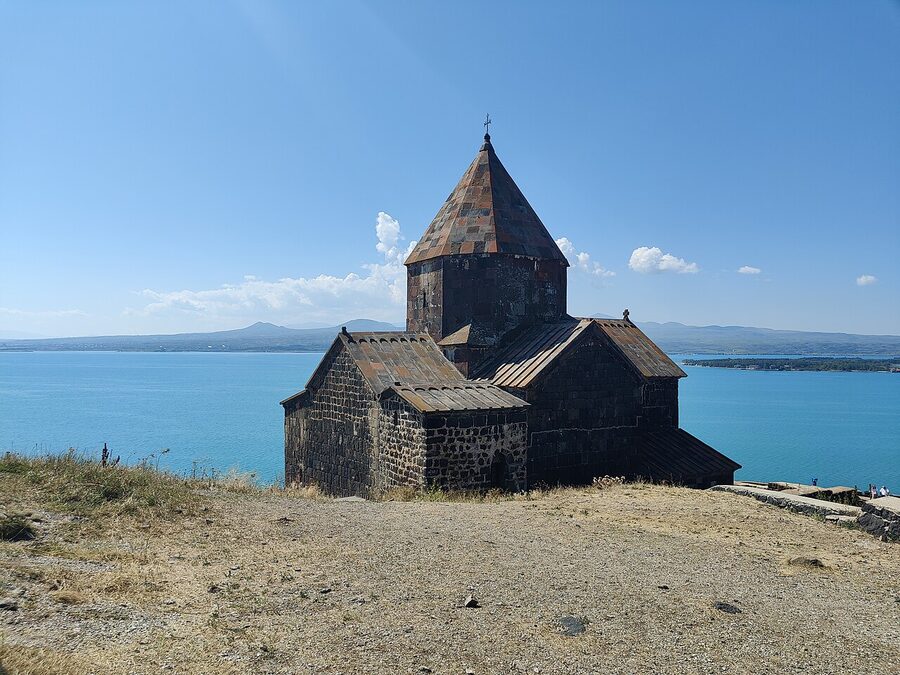
From the car park near the gata bakery to the top of the steps is roughly five minutes if you’re fit, ten if you’re not, fifteen if you stop for photos every ten metres, which most people do because the view back over the cove gets better with every flight. The path is paved, the steps are uneven, and the wind picks up sharply once you clear the trees. There’s a small pavilion roughly two-thirds of the way up where you can catch your breath.
If you want to skip the steps entirely, there’s a back road that loops around to a service entrance close to the seminary. Drivers sometimes use it. Everyone walking up takes the main staircase, which is also the only route most tour guides will lead.
Inside the churches
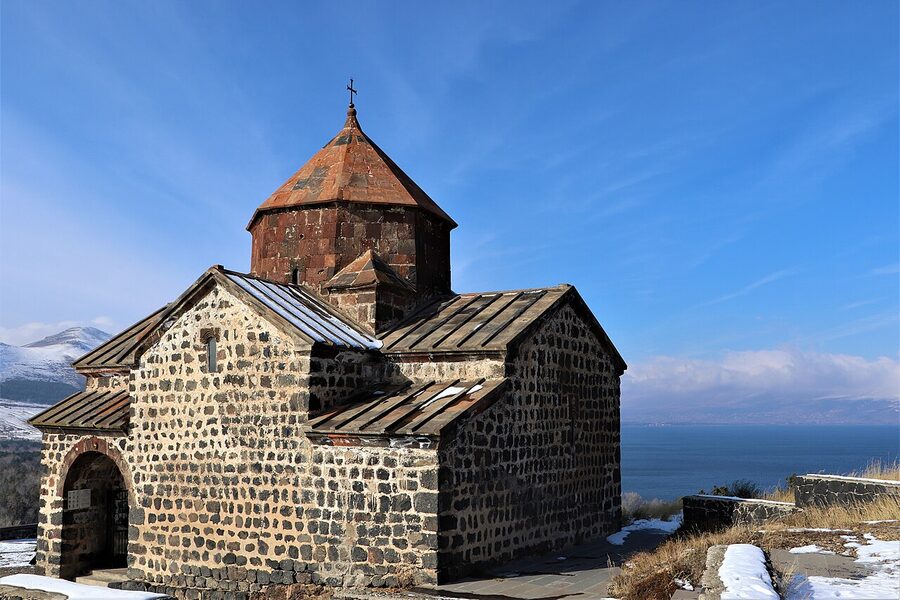
Both churches are working again, restored slowly through the 1990s and 2000s, with services now run by the seminary on the hillside above. Inside, expect candle nubs floating in trays of water, the smell of beeswax, and very little decoration. The interior of Surp Arakelots is the better of the two; look for the rare carved relief showing the face of Christ with the almond-shaped eyes that became standard in Armenian church art during the Mongol period. There’s also a 13th-century khachkar leaning against the south wall that’s worth a closer look, the cross is framed in a circle of vegetal carving so deeply recessed it looks like lacework.
You don’t tip and you don’t pay an entry fee. There’s a small donation box near the door if you want to leave something for upkeep. Modest dress isn’t strictly required outside services, but men should remove caps and women keep shoulders covered if you intend to step inside.
The viewpoint above the churches
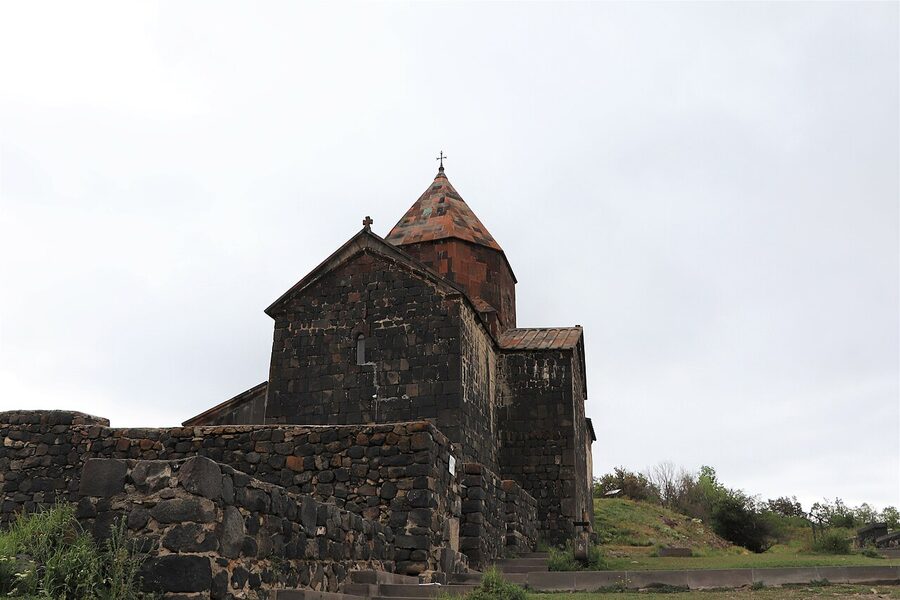
Most tour groups stop at the churches and turn around. They miss the best view, which is up the small ridge to the east of the complex on a clear footpath. Five more minutes of climbing puts you on a low rocky platform with the churches in the foreground, the curve of the peninsula below, and the lake opening out to the snow-capped Geghama range. There’s a half-collapsed Soviet observation deck up there too, which is harmless to scramble on if you’re sensible. Wind permitting. On gusty days the platform isn’t fun.
Surb Hakob and the Vazgenyan seminary
On the slope to the north of the churches, in a U-shaped modern building, sits the Vazgenyan Theological Academy. It was founded in 1990, in the months after Armenia’s break from the Soviet Union, and it’s now the working seminary for the Armenian Apostolic Church. The chapel attached to it, Surp Hakob, is small and elegantly proportioned but closed to the public. You can see the courtyard from the path on the way up to the main churches; if you walk around the eastern side of Sevanavank you get a clearer angle. Don’t try to walk in. The grounds are private.
The Sevan Writers’ House
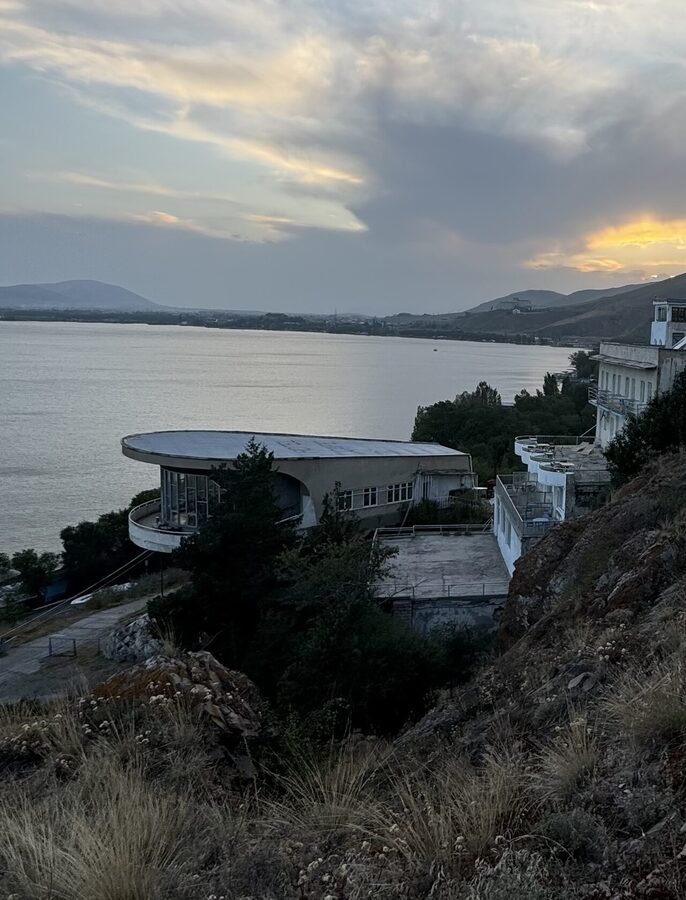
The single most interesting building on the lake is not Sevanavank. It’s a guesthouse from the 1930s, hugged into the slope below the churches, with a 1963 cafe-lounge that juts out over the cove like a flying saucer parked on the cliff edge. This is the Sevan Writers’ House, the Armenian Writers’ Union’s retreat for resident authors, built in two phases by the architects Gevorg Kochar and Mikael Mazmanyan. Both spent years in Stalinist labour camps before the second phase was built; the cafe-lounge is essentially their post-rehabilitation manifesto.
For Brutalism nerds and Soviet-architecture enthusiasts, the Writers’ House is one of the great pilgrimage sites in the Caucasus. The original 1933 residence is set into the hillside, three storeys of stripped-back Modernism, and the 1963 lounge is the curved disc you see in every photograph: a single concrete shell, supported on three slim piers, glazed on the lake side, with a grand piano permanently installed in the middle of the floor. It still works as a building. The acoustics from the piano roll out over the water on a quiet evening. The breakfast room remains the original 1963 cafe.
Staying there
You can sleep at the Writers’ House. Reservations go through Booking.com or directly via the property. Rooms are basic, narrow beds, plain tile floors, period furniture that has not been updated since the 1980s, but they’re inexpensive (typically 18,000–25,000 dram per night for a double, around US$45–65 in mid-2026), the bathrooms work, and you’re inside a building most travellers can only photograph from the road. Hotel guests get unrestricted access to the complex, including a private back path that climbs directly up to the Sevanavank churches. That’s how you get the empty-stairs early-morning experience I started this article with.
Sevan Writers’ House (Booking.com | Official site), the Brutalist landmark, basic but unique. Book a room with a lake view; the back rooms look at the slope.
Eating at the lounge if you’re not staying
The cafe-lounge is also open to non-guests for drinks and food during the day, although the welcome can be inconsistent. If staff are busy with hotel guests you may be told the cafe is closed; sometimes you’ll just be waved in. The menu is short, Armenian coffee, beer, simple grills, and the food itself is forgettable. You’re paying for the room, not the meal. Order a coffee, sit by the curved windows, watch the light change. Don’t order the fish here; eat that elsewhere on the lake.
The piano and the rules of the place
If you sleep at the Writers’ House, the piano is technically free to play. In practice it’s mistuned, the keys are heavy, and most guests are too self-conscious to touch it. There’s also an etiquette around quiet hours: nothing after 22:00 and nothing before 09:00 on the public floor. Information panels and old photo displays inside the lounge that were installed a few years ago have not been maintained, and the photographs are now sun-bleached, but they’re worth a pass anyway for the period architectural drawings.
Eating fish at the lake
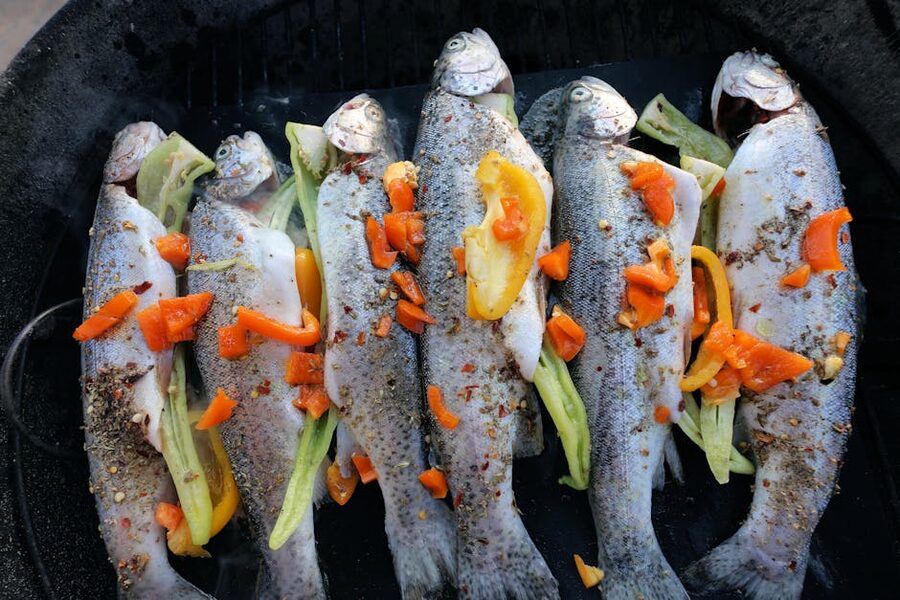
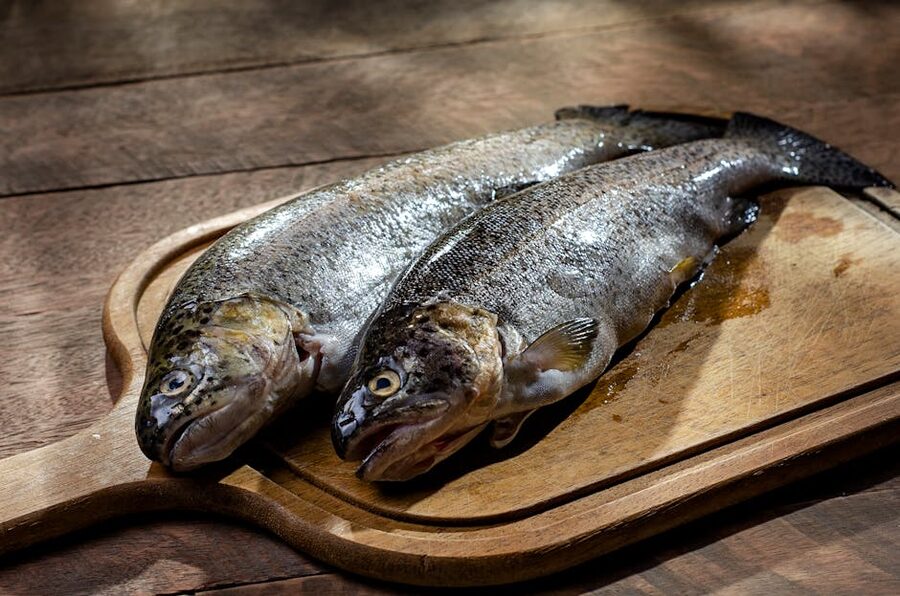
Lake Sevan supplies most of Armenia’s freshwater fish, and the area around the peninsula is full of restaurants that grill it. There’s a sleight-of-hand built into all of this, though, and it’s worth knowing before you order. The famous fish of Lake Sevan is ishkhan (Salmo ischchan), the endemic Sevan trout, and it is a critically endangered species. Catching wild ishkhan from the lake has been banned for years. What’s served as “Sevan trout” in restaurants today is almost always farmed rainbow trout, raised in pens at the southern end of the lake or in inland farms. Some places will say so. Most won’t. If you want the wild experience the answer is: you can’t have it, and if a menu offers wild ishkhan, walk away because either the menu is lying or someone is poaching.
What you can eat with a clear conscience is sig (Coregonus, a whitefish introduced from Russia’s Lake Ladoga in the 1920s), crayfish (khetsgetin, abundant), and farmed rainbow trout. All three are excellent grilled, all three are everywhere, and crayfish is what most locals will order if they’re treating themselves.
Where I’d actually eat
Three options I’d vouch for, in order of how easy they are to reach without a car. Semoyi Mot (sometimes called Collette) sits on the highway just north of the peninsula in the village of Tsovagyugh; the dining rooms run for fifty metres along a glass front looking straight at the lake. The fish is good, the salads are better than they need to be, and a full grilled-trout dinner with starters comes to roughly 12,000–15,000 dram per person (around US$30–40 in mid-2026). There’s a takeaway counter and bakery at one end if you just want a coffee and a piece of gata.
Maku Hatsatun in Sevan town is more local-leaning. They do an excellent summer salad, the khorovats grilling is done on a real wood fire (not gas), and they’re popular enough with Sevan families on Sunday afternoons that you should call to reserve in season. Slightly cheaper than Semoyi Mot, figure on 10,000 dram (US$25) for fish and trimmings.
Gagari Mot is the most touristy option, located right on the peninsula, with the most direct lake views and the most reliable English. Food is decent rather than exceptional and prices are 20-30% above Semoyi Mot. You’re paying for the location. If you have a single afternoon and can’t get to the better options, it’s a fair compromise. If you have time, drive ten minutes further and eat better for less.
Skip Ashot Erkat
The big restaurant at the bottom of the Sevanavank stairs is Ashot Erkat, and most tour groups end up there because the bus parks ten metres away. The food is mediocre and the prices are the highest on the peninsula. Convenience is the only argument for it. If you have an extra forty-five minutes, the meal at Semoyi Mot is genuinely better.
The lesser-visited monasteries on the southern shore
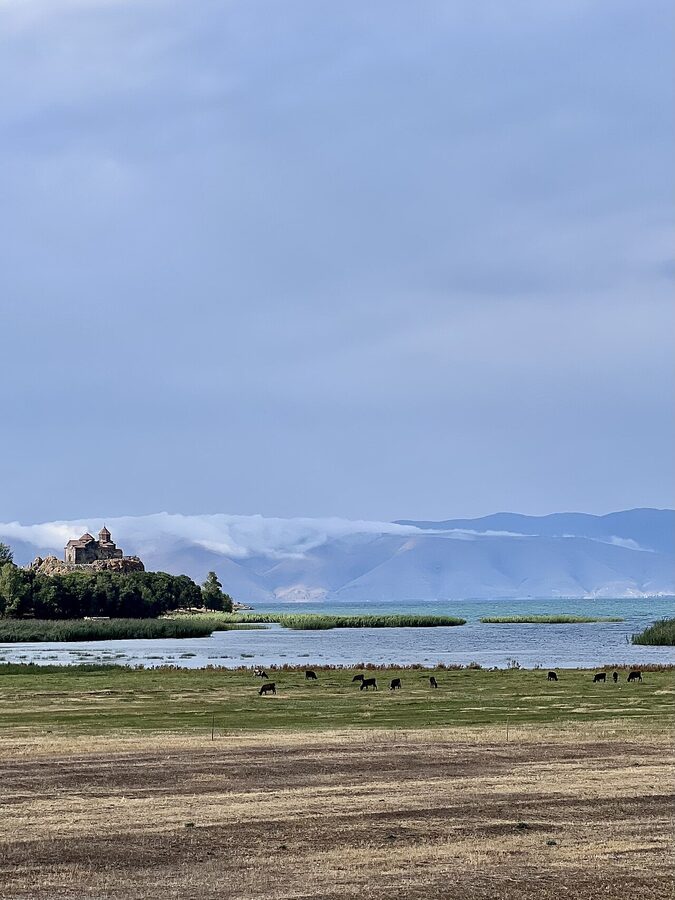
If Sevanavank is the obligation, the southern shore is the reward. Two stops in particular, Hayravank Monastery and Noratus Cemetery, are reachable on a short loop south of Sevan town and see roughly a tenth of the foot traffic. Both deserve more than tour-bus attention.
Hayravank
Hayravank is a 9th-century monastery sitting on a rocky promontory above the western shore of the lake, about 35 kilometres south of the peninsula. The complex is small, a single church, a chapel, a vaulted gavit (the Armenian narthex), all built in dark basalt, but the setting is unforgettable. From the south, where the shallow shore extends out into the lake, the silhouette has a Mont-Saint-Michel quality. Wildflowers in the spring; long grass and a few sheep in the summer; nobody at all in the winter.
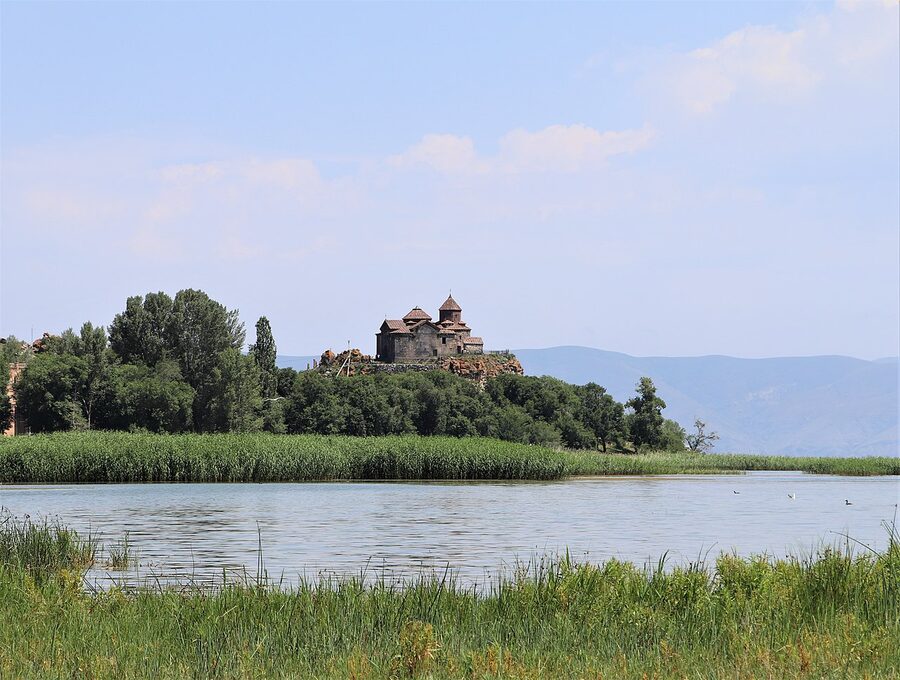
The interior is plain, there’s a low altar, a few candle stands, an iron grille, and you’ll usually have it to yourself. The gavit was added in 1211. Look up: the four corner squinches that support the dome are carved with rosettes that get more detailed the closer you get. There’s a small graveyard on the slope falling away to the lake with khachkars going back to the 13th century, and a path that loops down to the shoreline if you want to get your boots on the gravel.
To get there from Sevan town, take any marshrutka heading toward Gavar (the provincial capital, 10 kilometres further south) and ask to be dropped at the Hayravank turning. The walk down to the monastery from the highway is about a kilometre. Easier with a car.
Noratus and the khachkars
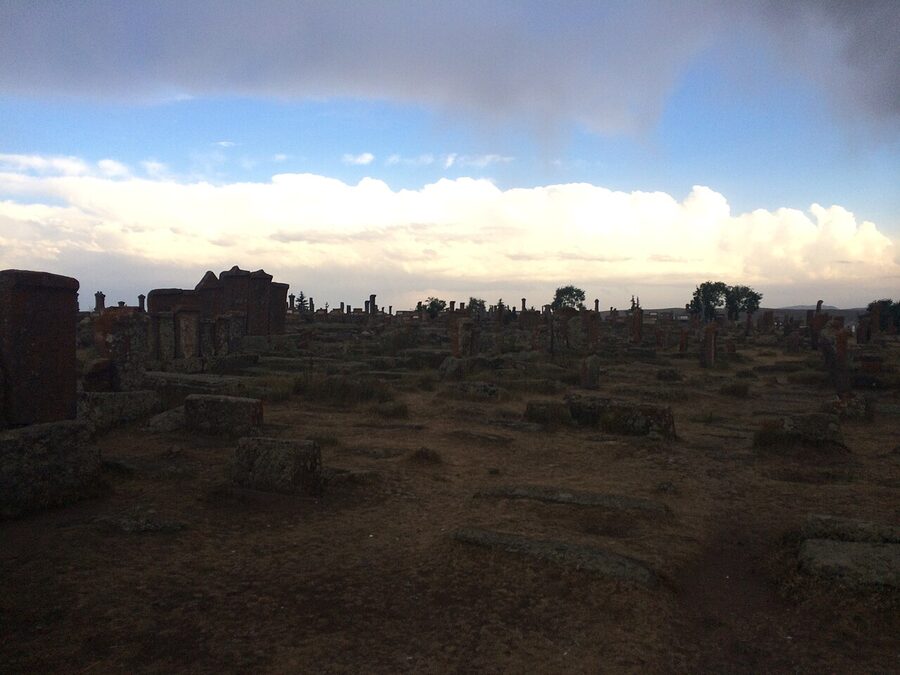
The Noratus khachkar field is what most travellers come to the southern shore to see. About 90 kilometres from Yerevan and 25 kilometres from the peninsula, it’s a working medieval cemetery that runs across about seven hectares of grass on the edge of the village of the same name. The site holds roughly 800 carved stones, most of them khachkars (literally “cross-stones”, a uniquely Armenian art form), the oldest dating to the late 10th century.
Each khachkar is unique. The cross at the centre is framed by deep, intricate vegetal carvings, and many include narrative panels along the base, a wedding scene here, a funeral procession there, a vine-and-grape motif that runs across hundreds of stones. The largest collection of khachkars used to be at Old Julfa, in what is now Azerbaijani Nakhchivan, but those stones were systematically destroyed between 1998 and 2005. Noratus is now the largest surviving field.
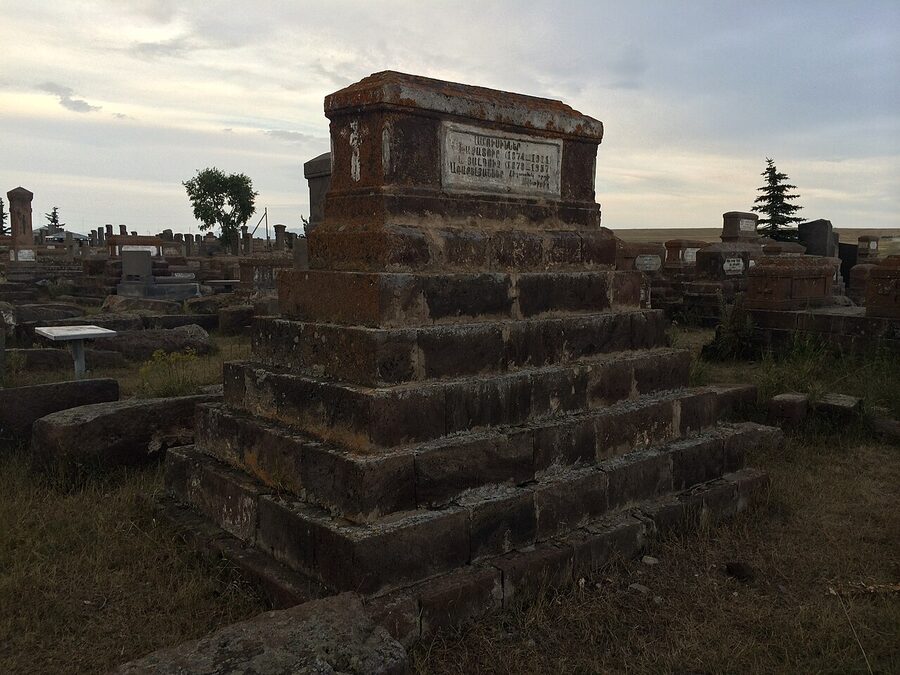
Entry is free. There’s no fence and no opening hours. A few elderly women sit at the gate selling hand-knitted socks; their grandparents are probably buried somewhere in the field. They speak no English but a smile and a 1,000-dram note (about US$2.50) buys a pair of wool socks that will outlast most of your gear. You’ll need an hour minimum to walk Noratus properly. The light is best in the late afternoon, low sun rakes across the carved faces and the texture pops.
Hayrkavank, if you have time
Less famous than the other two but worth the diversion if you have a car: Hayrkavank, a single-naved 4th–5th-century chapel in the village of Lchashen, near the western shore. It’s one of the oldest standing churches in Armenia and the building is a study in pre-cruciform basilica design, with a single nave and almost no decoration. It’s locked most of the time. Find the village priest’s house, anyone in the village can point you, and they’ll bring the key for a 1,000-dram donation.
Swimming, diving and what’s actually possible on the water
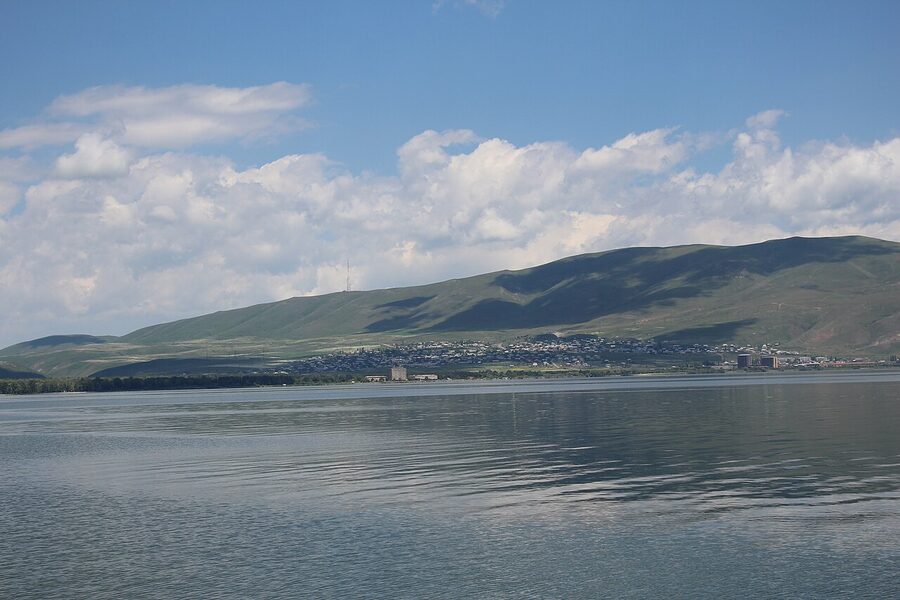
Sevan is one of the only places in landlocked Armenia where you can swim, and Yerevantsis treat the southern beaches the way they’d treat a coast they don’t have. The water is cold, surface temperature peaks at about 22°C in late July, with the rest of the year much chillier, and it’s also unsettled. Wind off the surrounding ridges hits the lake at unpredictable angles, the surface goes choppy in minutes, and small craft get into trouble surprisingly often. Swim, but pay attention.
Beaches
The pebbly beaches under the southern edge of the peninsula are the most accessible. They’re free, they have ramshackle beach bars in summer, and they’re crowded on Saturdays. The cleanest water is a few kilometres further south at the public beach near Tsovinar, where the shoreline drops cleaner and the wind is usually lighter. Avoid the area immediately east of the Writers’ House, it borders the Armenian president’s summer residence and photography is forbidden along that stretch.
Diving with Altitude 1900
The first PADI dive operation on the lake opened in 2024, Altitude 1900, on the eastern side, about 20 minutes’ drive from the peninsula. They run guided freedives, scuba dives and snorkelling expeditions across the underwater forests and submerged Soviet-era structures (parts of the old shoreline are 19 metres down, and there are sunken jetties and walls to explore). Visibility is 5–8 metres in good conditions. They also rent SUP boards, kayaks and small water bikes, which is the easier way to get on the water without certification.
This is genuinely the only operator on the lake. It’s worth booking ahead in summer; in shoulder seasons they may be running on call-only.
Boat trips
A small fleet of boats works out of the dock under Sevanavank during the summer season. Half-hour spins around the cove cost about 3,000 dram per person (US$7.50). They’re touristy, the boats are old, and the captains are sometimes pushy. If you want to be on the water, the kayaks at Altitude 1900 are a better bet. If you just want a photo of the peninsula from the lake side, the boats do their job.
The Soviet viewing platform
About 20 kilometres back from the peninsula toward Yerevan, on the southern side of the M4 highway, there’s a strange forked structure with twin staircases climbing to an open-air deck. Local maps mark it simply as the Soviet Viewing Platform. It was built in 1978 by Makabe Manuelian as a piece of architectural sculpture, half observation deck, half monument to the highway itself. The view from the top is not actually of the lake; the platform faces the wrong way for that. What you see instead is a low rocky landscape running south. The point isn’t the view. The point is the structure.
For thirty years it was a dumpsite. Recently the rubbish was cleared and the rock-mosaic facade restored, and you can climb the stairs without much risk. There’s a half-decent angle on the lake from the eastern shoulder of the structure if you walk around it. Spend ten minutes; don’t drive specially for it; do stop if you’re already passing.
The eastern shore and the long loop
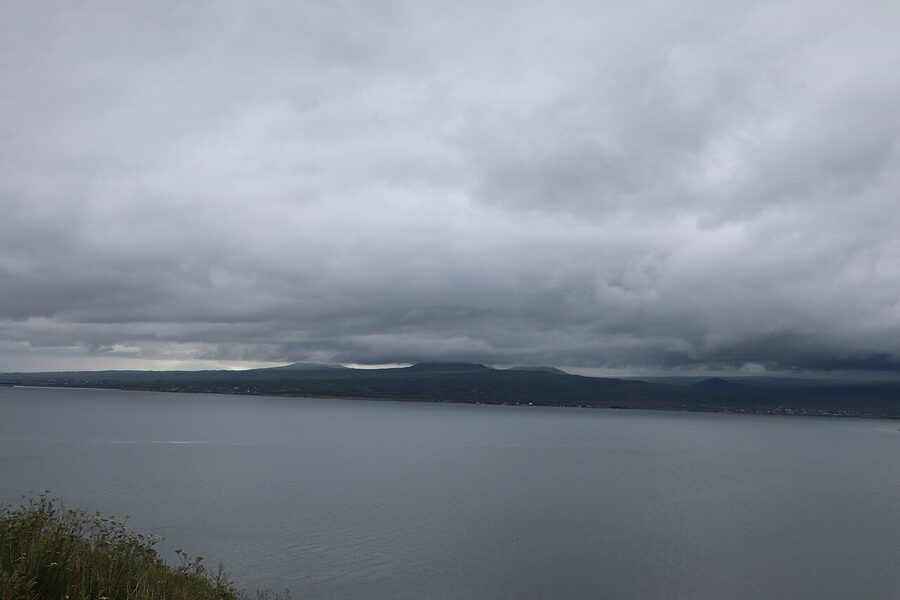
Most travellers see the western and southern shores and turn back. The eastern shore is the long way round and rarely worth the diversion on its own, but if you’re heading further east toward Vardenis (which is the gateway to the now-defunct Stepanakert road) or south to the Vayots Dzor wine country via the Selim Pass, it makes sense to drive the full loop instead of doubling back.
The eastern shore is rural, agricultural, and almost untouristed. Fishing villages with boats pulled up on the gravel; small Soviet-era apartment blocks; long flat stretches of farmland. There’s nothing in particular to stop for, but the drive itself is the kind of slow, empty, wind-blown landscape that’s hard to find anywhere else in the South Caucasus. Tsovak, on the eastern shore, has a small Russian Old Believer fishing community that’s been there since the 1840s; you’ll see the wooden cottages and the small chapel.
Driving the full perimeter from the peninsula and back, clockwise via Sevan town, Hayravank, Noratus, Vardenis, Tsovak and back along the eastern shore, is around 220 kilometres. Allow seven hours including stops. This is the kind of day where having your own vehicle (rented or via a private driver via GoTrip) is the difference between a feasible trip and an impossible one. There is no public-transport equivalent for the eastern leg.
When to come
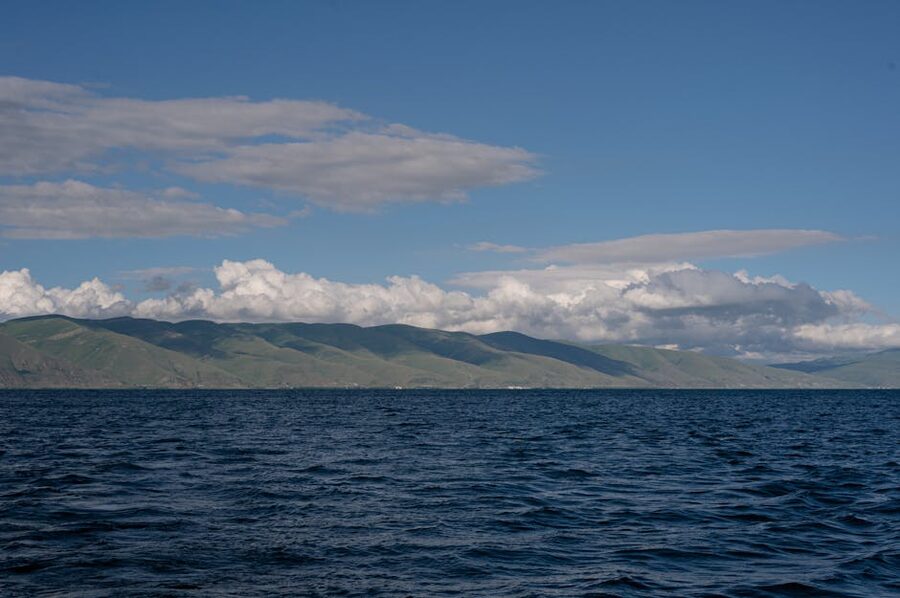
Sevan is a seasonal place. Most of the lakeside restaurants, bars, kayak-rental booths and beach umbrellas close from October through April. The peninsula and the monasteries are open year-round, but the working life of the lake, fish dinners with locals, swimming, watersports, boats, is summer-only.
Late May to mid-June
Best time, in my opinion. Wildflowers across the southern fields, manageable crowds, water still cold but air warm enough to want to be outside. The peninsula is busy at lunchtime but quiet before 9am and after 5pm. The fish restaurants are open. Late May 2024 had me eating dinner outside at Semoyi Mot in a t-shirt at sunset and reaching for a fleece by 9pm. That’s the rhythm to plan around.
July and August
Peak season. Hot in Yerevan (35°C+), cooler at the lake (25–28°C), but the peninsula is overwhelmed. Saturday afternoons in August are the worst single experience the lake offers. If you must come in August, come on a Tuesday and arrive at Sevanavank before 8am or after 6pm. Don’t try to swim on a weekend.
September and early October
Second-best time after spring. The summer crowds clear in the first week of September, the water is still warm enough to swim through about September 20th, the fish restaurants are at their best (the autumn whitefish run starts in September), and the early autumn colours along the road from Dilijan over the pass are the equal of anything in the country.
Winter
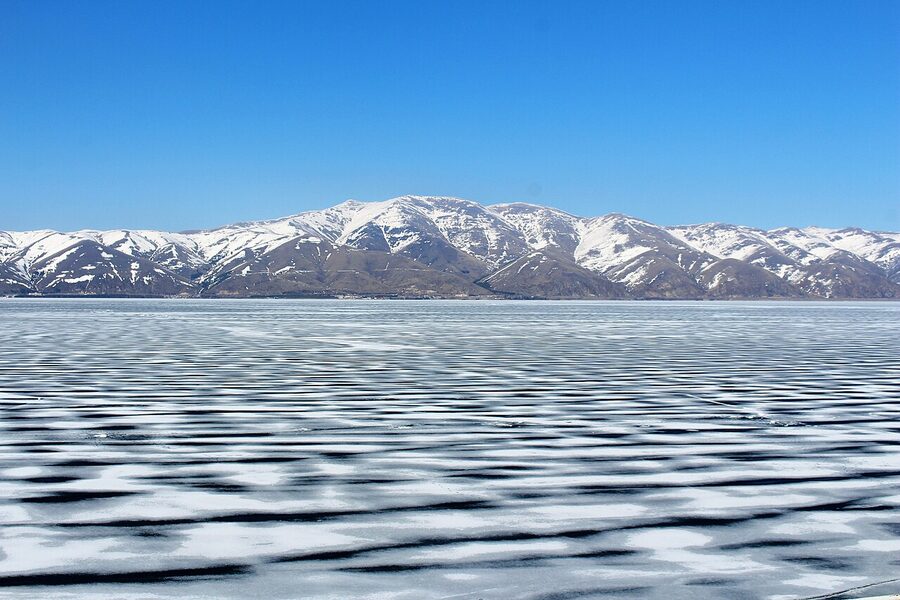
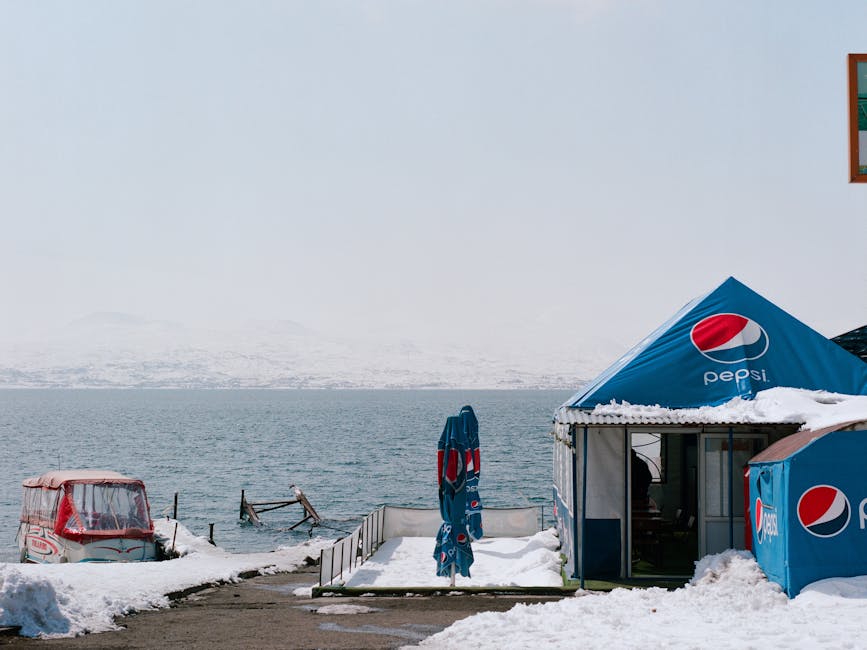
Winter Sevan is something else. The shallows freeze, snow lies on the peninsula for months, and the wind can take the air temperature below -15°C. You’ll have Sevanavank entirely to yourself; you’ll also have to drive, because the marshrutka frequencies drop sharply and the fish restaurants close. Most of the lakeside hotels stay open in winter for visitors heading to the nearby ski resort at Tsaghkadzor. If you want a starkly beautiful three-hour stop on a Yerevan-and-back winter trip, this is it. If you want to do anything more than look at the lake, come back in May.
Where to sleep
Three groups of accommodation, depending on what you want. Most travellers do Sevan as a day trip from Yerevan; if that’s the plan, skip this section. If you’re staying overnight, and I’d argue you should, because mornings on the peninsula are the single best thing about the lake, pick from the following.
The peninsula itself
The Sevan Writers’ House is the obvious first pick if you care about architecture or want the back-path-to-the-monastery experience. Reservations through Booking.com or directly. Rooms are basic, breakfast is included, and the building itself does the work that the rooms don’t.
Sevan Writers’ House (Booking.com | Official site), 18,000–25,000 dram per night (around US$45–65 in mid-2026) for a double; basic rooms, unique location.
Sevan town
For more comfortable rooms at a lower price point, Sevan town (about 10 minutes from the peninsula by road) has a string of mid-range guesthouses. Lavash Hotel is the best of the lot for the money, modern bathrooms, decent breakfast, English-speaking staff, around 22,000 dram for a double. Mirans is a friendly family-run option on Nairyan Street, more central, around 18,000 dram. Both are five minutes from the Bohem Studio teahouse, which is the best cafe in town.
The southern lakeshore
If you have a car and want a quieter base than the peninsula, the lakeside hotels south of Sevan town (Edem Sevan, Best Western Bohemian Resort, the cluster around Tsovagyugh) are typically 25,000–40,000 dram for a double in season and offer direct beach access. Edem Sevan is the simplest of the bunch and right on the water; the Best Western is the most polished but also the most generic. None are walking distance from anything except the lake.
Getting there
From Yerevan by marshrutka
The cheapest and most flexible option. Marshrutkas (shared minivans) leave the Northern Bus Station, small, basic, but easy to find on the city’s eastern edge, for Sevan town roughly every hour from about 09:00 to 18:00. Tickets are 800 dram (US$2). Travel time is about 70 minutes door to door. From Sevan town, a taxi to the peninsula is another 1,000–1,500 dram (call a Yandex Go through the app, or ask the driver who drops you at the station).
Coming back is straightforward: any Yerevan-bound minivan that comes through the Sevan town stop has space for you. You can also wave one down on the M4 highway near the peninsula turn-off; they’ll stop if there’s room.
From Dilijan
Any Yerevan-bound marshrutka from Dilijan passes within a kilometre of the peninsula turn-off. Tickets are 500 dram (US$1.25); travel time is about 25 minutes. Tell the driver “Sevani toravorum” (the Sevan turn) and they’ll drop you on the highway. From there it’s a 10–15 minute walk down to the peninsula or a quick taxi.
From Tbilisi
The Tbilisi-Yerevan minivans run via Vanadzor and Dilijan, passing the Sevan turn-off on their way south. Many drivers will stop for an extra 1,000–2,000 dram tip. The smarter version is to break the journey at Sevan rather than pushing all the way to Yerevan in one shot, get off at Vanadzor in the early afternoon, take a second van down to Sevan, sleep at the Writers’ House, then continue to Yerevan the next morning. That’s a much better travel day than 10 hours straight in a Tbilisi-Yerevan minivan.
Driving
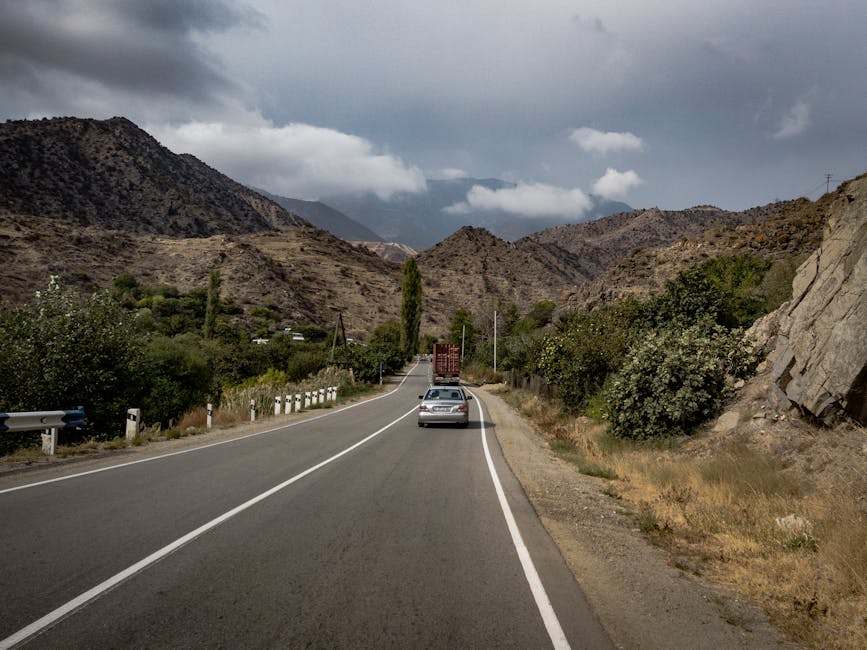
The M4 motorway from Yerevan to Sevan is excellent, two-lane, well-paved, and the most predictable driving in Armenia. Just over an hour from central Yerevan to the peninsula. From Sevan town the perimeter road south is single-track in places but easy. The eastern leg is rougher; expect stretches of unpaved road and occasional sheep traffic. Drivers come from Local Rent or Sixt at Yerevan airport; reckon on US$40–55 per day for an economy car in 2026.
Hiring a driver
If you don’t want to drive but want the flexibility of a private car, GoTrip is the standard option, a private driver booked online, fixed price, you set the route. A round-trip Yerevan to Sevan with stops at Hayravank and Noratus comes to around 25,000–32,000 dram (US$60–80) for the day. Drivers don’t usually speak English, but they hand you a phone with Google Translate when you need to communicate something complicated, which works well enough.
Joining a tour
Group day tours from Yerevan typically combine Sevan with Dilijan, Tsaghkadzor or the Haghartsin/Goshavank monasteries. Quality varies; pick one with English-speaking guides if you want context, or accept the language gap if you just want to be driven there.
Lake Sevan day tours from Yerevan (GetYourGuide | Viator | Klook), multi-stop options with Tsaghkadzor or Dilijan added; figure on US$50–80 per person.
Day trip or overnight
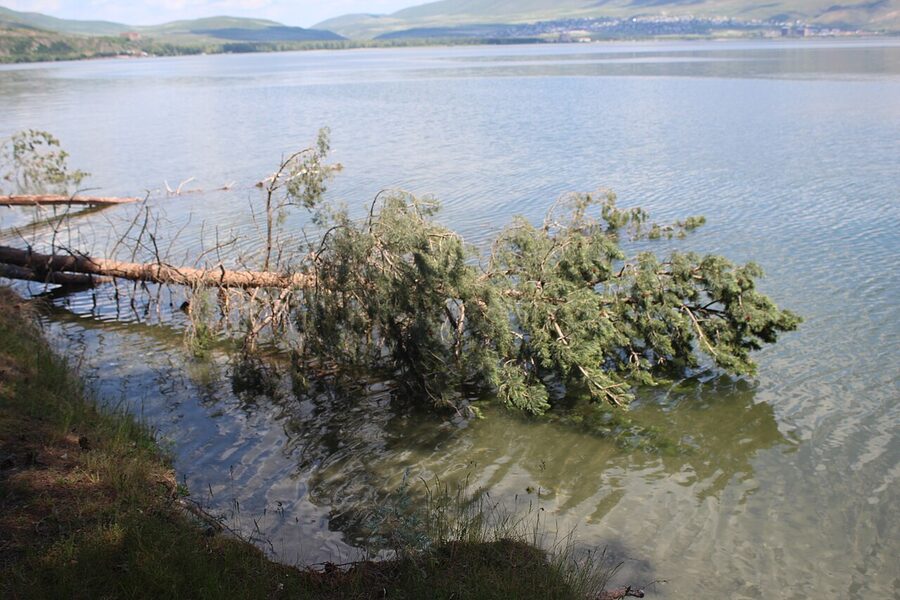
Most travellers visit Lake Sevan as a day trip from Yerevan. It works. You can leave at 09:00, see Sevanavank, eat lunch on the peninsula, drive south to Hayravank and Noratus, and be back in Yerevan by 19:00. Three of the four times I’ve done the lake have been day trips. They were all fine.
What changes if you stay the night: the peninsula at sunrise. Sevanavank without anybody else on the steps. The cafe-lounge at the Writers’ House at 7am with the lake going from grey to gold through the curved windows. The road south to Hayravank in the dawn light, before the marshrutkas start running. None of that is available on a day trip from Yerevan, because the first marshrutka back from Yerevan doesn’t arrive until 10:00 and the buses are running by 09:30.
So my call: if Sevan is one item on a packed Armenia itinerary and you have nine days or fewer, day trip is fine. If you have ten days or more, or if you care about photography, or you’re a Soviet-architecture nerd, or you simply prefer mornings, sleep at the Writers’ House. The 18,000 dram you’ll spend is the best money you’ll spend on the lake.
What to combine the lake with
Sevan stitches naturally into a few different routes through the country.
The classic Northern loop pairs Sevan with Dilijan, the Haghartsin and Goshavank monasteries, and a night in Dilijan town. Two days minimum, three is better. The forest road over the Sevan Pass into Dilijan is one of the prettiest drives in Armenia.
The Tbilisi-Yerevan overland uses Sevan as a halfway stop on the long minivan ride south. Best done with an overnight at the Writers’ House.
The Caucasus mountain itinerary can take in Sevan plus Mount Aragats, Armenia’s highest peak, on the way back through the country. Aragats sits west of Yerevan, so this means a base in the city with separate one-day trips out to each.
The southern monasteries chain uses Sevan as the first stop on a route that runs Selim Pass, Areni, Khor Virap, and ends at Tatev with the cable-car ride. Four days minimum, five if you want the rhythm right.
What I’d skip
A few things people sell as essential that aren’t.
The boat trips out of the dock under Sevanavank. Cramped, overpriced for what you get, and the same view from a kayak at Altitude 1900 is better.
Trying to do “the whole lake” in one day. Driving the full 220-kilometre loop just so you can say you did it leaves you exhausted, with not enough time at any one stop. Pick the western and southern shore, see them properly, leave the eastern shore for a different trip.
Eating at Ashot Erkat at the bottom of the Sevanavank stairs. As mentioned above, you can do meaningfully better with another fifteen minutes of driving.
The Soviet Viewing Platform as a destination in its own right. It’s a ten-minute curiosity, not an hour. Stop if you’re already passing.
Saturdays in July or August on the peninsula. Just don’t.
The view from the back path
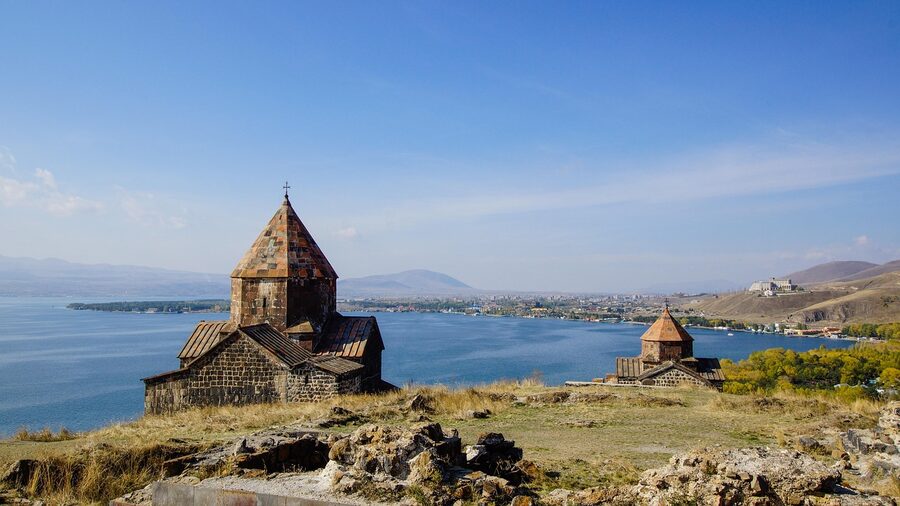
I’ll close where I started. The thing about Lake Sevan is that the lake itself isn’t really the point. It’s a big, cold, beautiful body of water in a country that doesn’t have much else like it, and there are bigger and prettier lakes in plenty of other countries. What makes Sevan worth a day or two of an Armenia trip is the layering, a 9th-century monastery and a 1933 Brutalist guesthouse and a Soviet observation deck and a working seminary and a wildflower-covered cemetery full of medieval stone-cut crosses and a freshwater fishery that’s been quietly recovering for forty years, all squeezed onto twenty kilometres of shoreline.
You don’t get that combination anywhere else. The first time I was here I missed all of it. The second time, the back path at six in the morning, I started to understand why people keep coming back.