
From Zvartnots into central Yerevan, you’ll pay 3,000 dram (about $7.50) for a metered city taxi at the rank, 300 dram on bus 201, or roughly 18,000 dram (~$45) for a private transfer booked ahead. Yerevan to Tatev by hired car runs 30,000–40,000 dram (~$75–100) for the day; the same trip stitched together with a marshrutka and the cable car is closer to 5,000 dram and three transfers. Yerevan to Tbilisi is 8,000 dram (~$20) on the daytime minibus, or 8,500 dram in second class on the overnight train. The cheapest way around Yerevan itself is the metro, at 100 dram a ride.
Those are the numbers people ask for first. The rest of this is how the country actually moves: which marshrutka leaves from which bus station, which apps work, when to give up on public transport and just hire a driver, and where the trains genuinely beat the road. I’ve been around Armenia enough times to have made every mistake on this list at least once.
If you’re starting from a quick city trip, Yerevan in 48 hours covers the capital itself; this guide is for the move out of Yerevan and the moves between everywhere else.
In This Article
- The fast-answer table
- Getting in from the airport
- The 3,000-dram taxi at the rank
- Bus 201 for 300 dram
- Yandex Go and GG to the airport
- Inside Yerevan: metro, bus, and walking
- The metro you’ll use about three times
- City buses and the TellCell trick
- Yandex Go and GG taxi: which one to install
- The walking case for Yerevan
- Marshrutkas: the workhorse
- The three Yerevan bus stations that matter
- Buying tickets and paying the driver
- The luggage problem nobody tells you about
- Routes worth the marshrutka, routes that aren’t
- Trains: small network, two great routes
- Yerevan to Gyumri: the express the locals like
- Yerevan to Tbilisi: sleeping through the border
- Other rail you’ll see in timetables
- Hiring a driver: the option that quietly wins
- What it actually costs
- Where to find a driver
- What “with a driver” doesn’t include
- Driving yourself
- What you need on paper
- Where to rent
- Driving Yerevan vs driving the country
- Where the rental car earns its keep
- Crossing into Georgia and Iran
- Yerevan to Tbilisi by minibus
- Yerevan to Iran (and back)
- The questions that come up after the basics
- Cash or card?
- Language
- What changes in winter
- Solo women travellers and night transport
- Internet and apps
- Wings of Tatev: the cable car practicalities
- Lake Sevan and the northern arc
- One last thing
The fast-answer table
Quick comparison of the routes most travellers actually book. Prices are 2025 rates and shift a little with fuel; the order of magnitude is what holds.
| Route | Cheapest option | Time | Cost | Best for |
|---|---|---|---|---|
| Zvartnots → central Yerevan | Bus 201 | 30–40 min | 300 AMD ($0.75) | Daytime arrivals, light luggage |
| Zvartnots → central Yerevan | Taxi at rank | 20 min | 3,000 AMD (~$7.50) | Late arrivals, normal travellers |
| Across central Yerevan | Metro | 5–10 min | 100 AMD ($0.25) | Anything along the line |
| Yerevan → Garni–Geghard | Marshrutka 284 + walk/taxi | 1.5–2 hrs each way | 300 + 1,500 AMD | Budget DIY day trip |
| Yerevan → Khor Virap | Marshrutka from Sasuntsi Davit | 1 hr each way | 500 AMD | Anyone with a morning |
| Yerevan → Sevan / Sevanavank | Marshrutka from Northern | 1 hr | 1,000 AMD | Lake day, summer |
| Yerevan → Gyumri | Express train (Fri–Sun) | 2.5 hrs | 2,500 AMD ($6) | Weekend day trip |
| Yerevan → Tatev | Hired car (full day) | 4 hrs each way | 30,000–40,000 AMD | Most realistic option |
| Yerevan → Tbilisi | Daytime minibus | 6 hrs | 8,000 AMD ($20) | Border-hop on the cheap |
| Yerevan → Tbilisi | Overnight train | 11 hrs | 8,500 AMD second class | Sleeping through the border |
Getting in from the airport
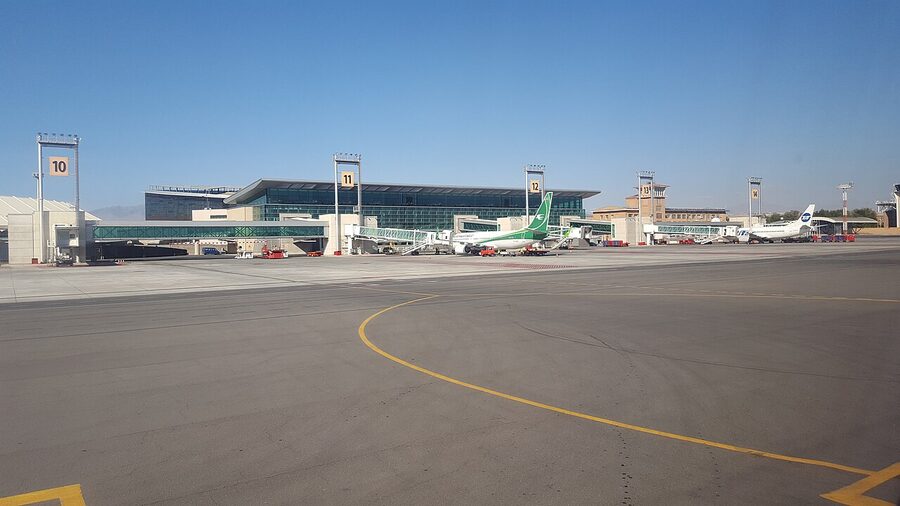
Zvartnots (airport code EVN) sits about 12 km west of the city. Arrivals come out of one terminal into a single hall, and you have three real choices for the trip into town.
The 3,000-dram taxi at the rank
This is what most people end up doing. The official taxi rank is to the right as you exit arrivals; rates to central Yerevan are posted in the window and run 3,000–4,000 dram depending on where in the centre you’re going. Drivers will sometimes offer to “agree a price” instead of using the meter. Agree, but get the number first, in dram, before you put the bag in the boot. Pay in cash. A driver who insists on euros or dollars is overcharging by about 30%.
If you’ve booked a private transfer through a tour platform, your driver waits with a sign in the same hall. Klook, GetYourGuide, and Viator all sell the same Zvartnots → city transfer at roughly 18,000–25,000 dram (~$45–60). It’s not better than the rank taxi unless you’re landing late, travelling solo with bags, or want a driver who’ll definitely speak English.
Bus 201 for 300 dram
Yes, there’s a city bus from the airport. It’s number 201, it leaves from the stop directly outside arrivals, and it costs 300 dram. It runs roughly every 20 minutes from about 7:00 until 22:00, and it terminates at Republic Square via Mashtots Avenue. The catch is room: if your luggage is bigger than a daypack, you’ll spend the trip clutching it on your lap. Worth it if you’re light, painful if you’re not.
Yandex Go and GG to the airport
Outbound is easier than inbound. Both Yandex Go and GG taxi will quote the trip from a central Yerevan address to Zvartnots at around 1,800–2,500 dram, which is cheaper than the rank-side rate going the other way. Set the pin to your hotel, request 90 minutes before check-in, pay through the app or in cash. If you arrive on a flight after about 23:00 and the rank looks thin, opening Yandex Go on the curb usually finds a car within five minutes.
Inside Yerevan: metro, bus, and walking
The capital is small. From Republic Square to the Cascade Complex is a flat 25-minute walk along Mashtots and then northeast through the museums. From the Cascade to the Opera is another ten minutes. Most of what visitors come for sits inside that triangle, and the cleanest single piece of advice for getting around it is: walk first, metro second, taxi for the awkward last mile.
The metro you’ll use about three times
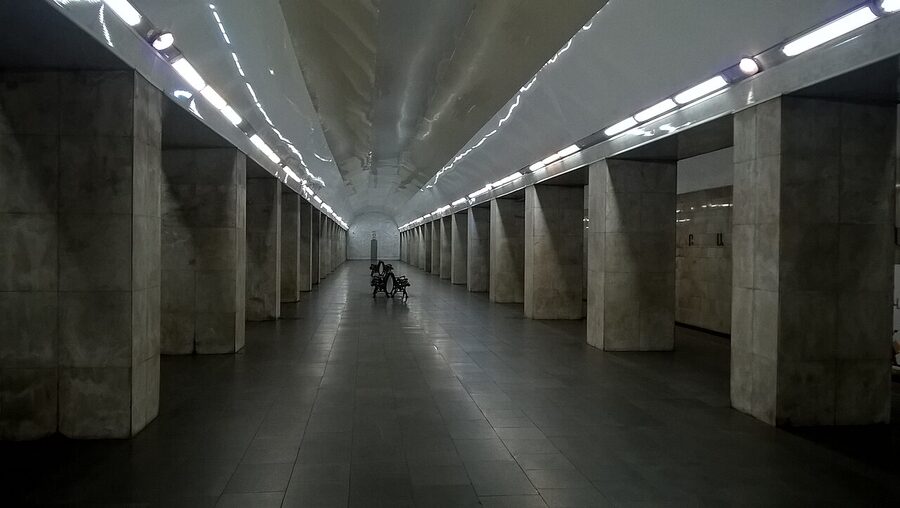
Yerevan’s metro has one line and ten stations, runs 06:30 to 23:00, and a single ride costs 100 dram. The trains arrive every five to seven minutes at peak and roughly every 12 minutes off-peak. You buy a token at the booth (cash) or scan a QR code at the new card-readers (added in 2024) and drop the token at the turnstile. Pretty old-Soviet on the inside, in a good way: deep stations, marble cladding, very quiet rolling stock.
The stops you actually want are these:
- Yeritasardakan: the closest stop to the Opera and the central restaurant grid.
- Marshal Baghramyan: exit here for the Cascade Complex, the embassy district, and the long walk down to the Saryan House Museum.
- Republic Square: central and official-looking, useful for the History Museum and the National Gallery.
- Sasuntsi Davit: the railway station and the Khor Virap marshrutka rank are both here.
- Zoravar Andranik: the closest stop to GUM market if you’re food shopping.
The line doesn’t reach Zvartnots, doesn’t reach Kilikia bus station, and only just brushes the railway terminal. So for trips out of the city, the metro is a feeder, not a finisher.
City buses and the TellCell trick
Yerevan’s bus network covers what the metro doesn’t, and as of late 2024 it’s been getting noticeably better. New low-floor buses are slowly replacing the old fleet. A ride is 100 dram, paid via the TellCell app’s QR scanner inside the vehicle (the screen above the driver shows the QR code) or by dropping a 100-dram coin in the box. There are also marshrutka-style minibuses on city routes, charging the same.
Real talk: the route information isn’t translated, and Google Maps is unreliable for local buses. Use yandex.com/maps set to Russian or Armenian (Yandex actually has the live bus data) or ask at your hotel. For a short hop you’ll save more time walking.
Yandex Go and GG taxi: which one to install
Both work; install both, and pick whichever quotes lower for your route. Yandex Go is the bigger network, has tighter pricing, and tends to send a car within three or four minutes anywhere central. GG is the local Armenian app, with a slightly older fleet but the upside that the drivers are more often Yerevantsi (knowing the back-streets is the difference between a 12-minute and a 25-minute trip in Friday evening traffic). UTaxi is a third option but the inventory is thin.
Both apps need an Armenian SIM or a working data eSIM to register; if you’re an absolute first-timer in town, ask a hotel receptionist to call a GG for you on theirs and pay the driver in cash. A short hop across the centre runs 700–1,200 dram, the same airport-to-Cascade route is around 2,000 dram, and a long crosstown trip rarely tops 3,000.
The walking case for Yerevan
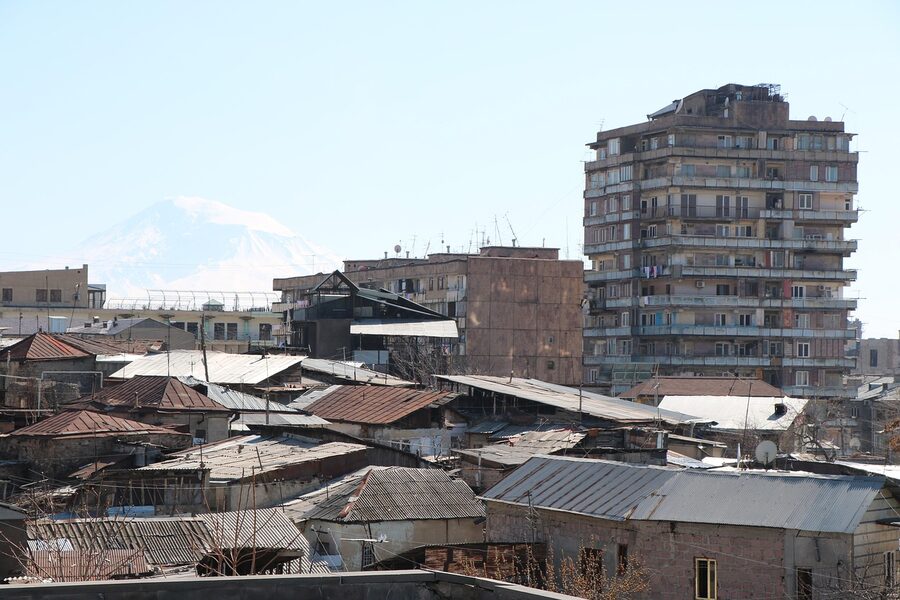
Inside the Kentron (central) district, walking is genuinely the best way to move. The grid is forgiving, the streets are tree-lined, and the elevation change between Republic Square and the Cascade is the only real climb. Pavements are uneven in places (heels are a bad call), and the summer heat between June and August can knock you flat after 14:00, so split your walking between morning and evening if you’re here in July.
Marshrutkas: the workhorse
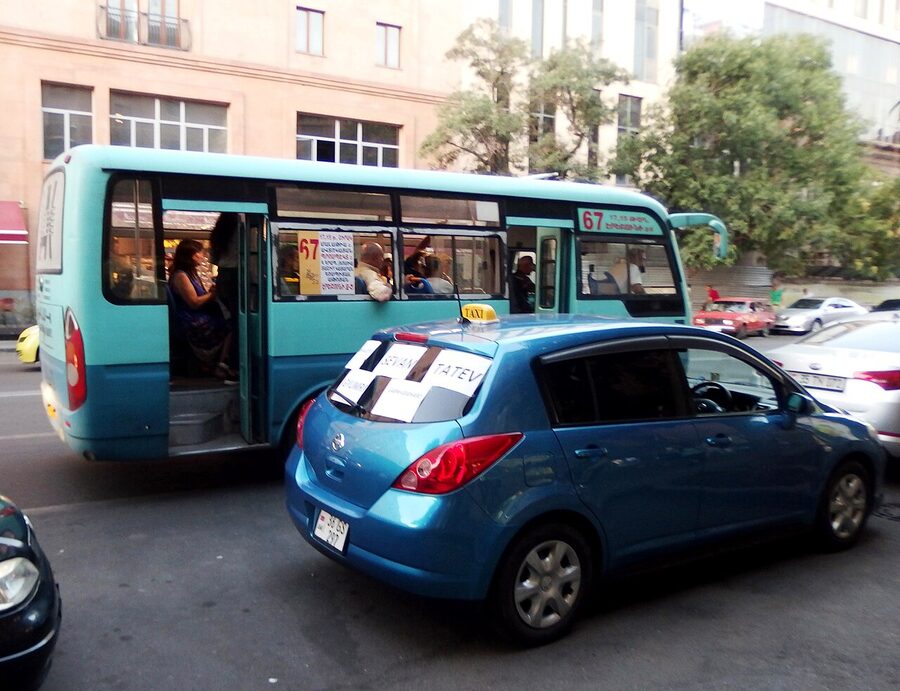
The marshrutka is a Soviet-era shared minibus, and it’s the spine of intercity transport in Armenia. Anywhere a private car will go, a marshrutka usually goes too. You just have to find which station, which time, and whether the driver will leave when the schedule says or when the seats fill up (usually the latter). They cost a fraction of a tour, they get you to the destination, and they are not comfortable.
The three Yerevan bus stations that matter
Yerevan has more than three bus stations on paper, but in practice you’ll only use these:
- Kilikia (Avtokayan): the main intercity station, 10 minutes by taxi southwest of the centre, near the Hrazdan Stadium. Most southern destinations leave from here: Khor Virap (regional services), Areni, Yeghegnadzor, Goris, Kapan, plus Vagharshapat (Echmiadzin) and Gyumri.
- Northern Bus Station (Hyusisayin): across from the Northern Bus Station metro stop in the north of the city. Lake Sevan, Dilijan, Vanadzor, and onward to Tbilisi from here.
- Sasuntsi Davit: the small rank in front of the railway station. Khor Virap and a few other southerly day-trip routes leave from here as well; useful if you’re already booked into the area.
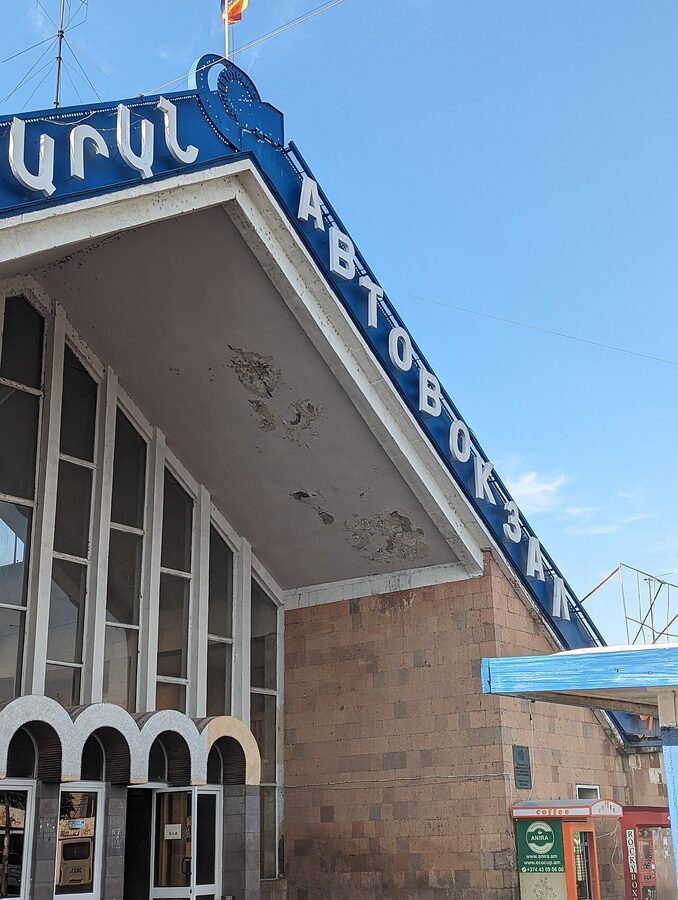
Buying tickets and paying the driver
For most marshrutka routes you don’t pre-book. You turn up, find the right vehicle, get on, and pay the driver, sometimes when you board, sometimes when you get off, sometimes when he comes round at a fuel stop. The fare’s set; you don’t haggle. For longer routes (Yerevan–Goris, Yerevan–Tbilisi, Yerevan–Kapan) there’s usually a ticket window inside the station, you pay in cash and get a paper stub. Cards aren’t accepted at most.
Show up at least 15 minutes before the scheduled time. Marshrutkas leave when full, and “scheduled” is a guideline. The first run of the morning (typically 07:00–08:00) is the most reliable; mid-afternoon services sometimes get cancelled with no announcement when the previous one came back almost empty.
The luggage problem nobody tells you about
Marshrutkas have minimal luggage space. There’s a small compartment in the back, and that’s it. A 60-litre backpack will fit if you’re early; two of them will not. If your bag takes up a seat, you may be charged for that seat. The simplest workaround is to travel with a daypack and one wheeled cabin-size bag, which fits at your feet. If you’re moving with a full hiking pack, factor in that you may need to wait for the next vehicle, or splash on a private taxi for that leg.
Routes worth the marshrutka, routes that aren’t
Where the marshrutka shines: short and medium-distance routes with a clear bus station at each end. Yerevan to Vagharshapat for Echmiadzin Cathedral (250 dram, 30 minutes, marshrutkas 202 and 203 from Kilikia). Yerevan to Sevan town (1,000 dram, an hour, Northern station). Yerevan to Gyumri (2,000 dram, 2.5 hours, Kilikia). All of these are easy enough to do solo and the savings versus a hired driver are real.
Where the marshrutka doesn’t make sense: anywhere with a tricky last mile. Garni Temple is 11 km off the main road, Geghard Monastery is another 9 km past Garni, and the marshrutka 284 only goes as far as Garni village. From Garni village to Geghard, you’ll either walk for two hours uphill or pay 5,000 dram for a return taxi from the village rank. A driver from Yerevan with both stops is a flat 20,000–25,000 dram. Once you factor in the time the marshrutka costs you, the day-tour platforms quoting 25,000 dram for the same itinerary look reasonable.
For Garni–Geghard specifically, prepaid day tours through Viator and GetYourGuide are competitively priced. Klook sells the Khor Virap–Noravank–Areni route as a single-day combo for around the same. None of these are wildly cheap, but they’re all the same price as you’d pay arranging it locally, with the upside that the meeting point is a known coordinate and the driver speaks English.
Trains: small network, two great routes
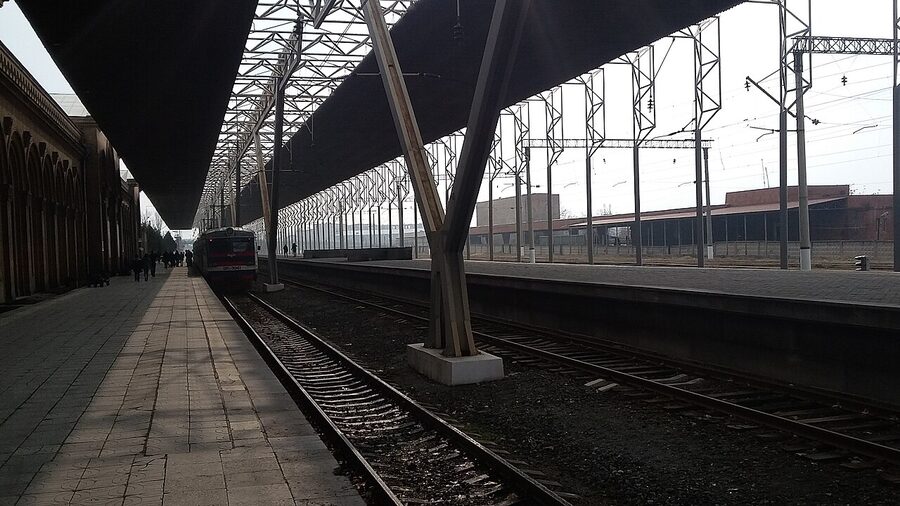
Armenia’s rail network is small, slow, and only really worth using for two things: weekend day-trips to Gyumri, and the overnight to Tbilisi. Outside those, the bus is faster.
Yerevan to Gyumri: the express the locals like
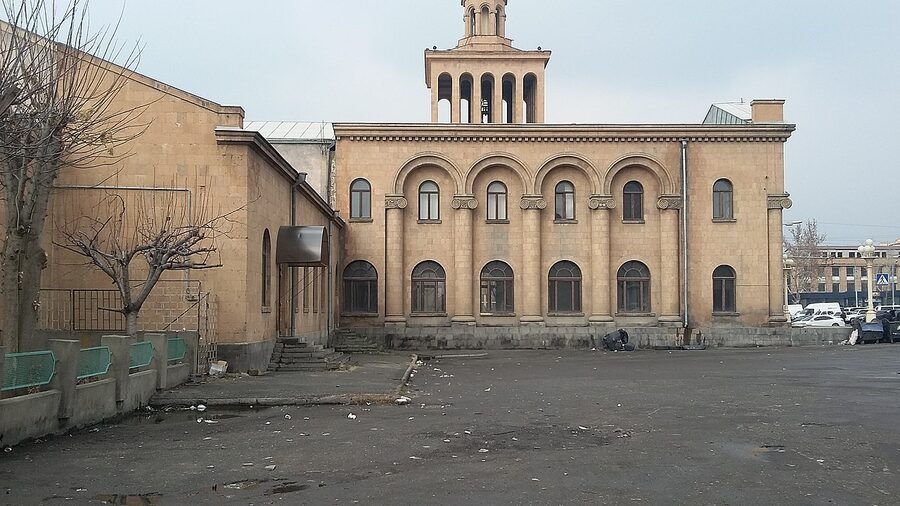
The express train to Gyumri runs Friday, Saturday, and Sunday, leaves Sasuntsi Davit at 08:00, and pulls into Gyumri at 10:30. Tickets are 2,500 dram (~$6) one way and you buy them at the station the same day or the day before. This isn’t a route that sells out except on long weekends. The slower stopping train runs daily but takes four-plus hours and only saves about 500 dram. Pay for the express.
The Gyumri express is the route I’d recommend even if you’ve never taken a train in your life. The carriages are modern, the route runs through the high country north of Aragats, and on a clear morning Mt Ararat sits in the rear-view window for the first hour. You can do Gyumri as a day trip (the last train back is around 18:00), or stay over and pick up the marshrutka the next morning.
Yerevan to Tbilisi: sleeping through the border
The overnight train to Tbilisi is one of those journeys that’s still slightly old-Soviet in a way the country’s new buses aren’t. It runs in summer (mid-June to early October) on alternate days, leaves Yerevan at 21:30 and arrives Tbilisi around 08:00 the next morning. Second-class kupé (four-berth compartment) is around 8,500 dram (~$21); first-class two-berth is closer to 16,000 (~$40). Tickets at the station, in cash, ideally a day ahead. Outside summer the train doesn’t run and the marshrutka is your only option.
The border crossing happens around 02:00–03:00. Armenian customs come through, you hand over your passport and stay in your bunk; about 90 minutes later Georgian customs do the same. It’s the only border on the Caucasus where you don’t need to get off the train, which is a real luxury after a long day.
Other rail you’ll see in timetables
Suburban services run from Yerevan to Yeraskh, Ararat, Hrazdan, Araks, and (in summer) onward from Hrazdan to Lake Sevan. They’re cheap (300–800 dram) and slow. The Sevan extension is genuinely scenic if you’ve got time on your hands; otherwise the marshrutka from Northern is twice as fast.
You can buy domestic tickets at any station window or via railway.am, which is the South Caucasus Railway’s own site and works in English on a good day. International (Tbilisi) tickets are best bought at the station. The online system has a habit of showing tickets as available and then refusing payment.
Hiring a driver: the option that quietly wins
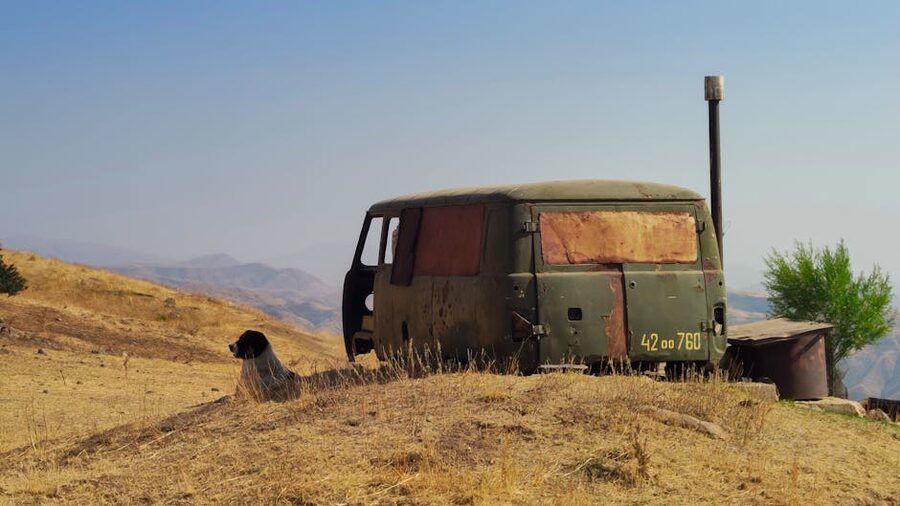
The single biggest realisation on a second or third trip to Armenia is how often hiring a driver for the day is the cleanest answer. The country isn’t huge, fuel is cheap, and a Lada or a Niva with an English-speaking driver costs less than you’d pay for an Uber half-day in any European capital. For day trips out of Yerevan it almost always wins on the time-to-money trade.
What it actually costs
A full day with a driver (8 to 10 hours, your pick of stops within reason) runs 25,000–40,000 dram (~$60–100) depending on the route. A half-day at 4–5 hours is closer to 18,000–22,000. The cheaper end is a Lada or a Niva with a driver who speaks function-Russian and tourist-grade English; the upper end is a newer Hyundai or Toyota with a driver who’ll talk you through every monastery you pass.
The classic three Yerevan day-trip routes and their typical driver rates:
- Garni–Geghard half-day: 18,000–22,000 dram. Four hours door-to-door is plenty.
- Khor Virap + Noravank + Areni winery full day: 30,000–35,000 dram. Eight to nine hours; allow time for lunch in Areni.
- Tatev one-way or as a long day-trip: 35,000–45,000 dram return same-day if you really want to push it; the more sensible move is to drive down, overnight in Goris, and come back the next afternoon.
Where to find a driver
Most travellers find their driver one of three ways. Hostels and guesthouses keep a list and will phone someone for you: that’s the lowest-friction option, the rates are usually the local-going-rate plus a small kickback to the host, and the driver has been vetted by people who actually use them. The booking platforms (Viator, GetYourGuide, and Klook for Tatev specifically) all package the same drivers under their own branding and an English-speaking pickup; expect a 15–25% premium on the local rate, which is reasonable insurance if you’re booking from abroad. Third option is GoTrip.am, the Armenian “pick a driver” site that lets you compare cars, photos, and prices for specific multi-stop itineraries; a good middle path between the hostel network and the OTAs.
What “with a driver” doesn’t include
It doesn’t include a guide. The driver drives, points out a few things, and waits in the car park while you walk around the monastery. If you want context (dates, history, the Avazan acoustic at Geghard), pre-read or hire a guide separately at the site (most charge 5,000–8,000 dram for an hour). Lunch is on you, fuel is on the driver, parking is on the driver. Tipping is appreciated but not expected; 2,000–3,000 dram on top of a full-day rate is generous.
Driving yourself
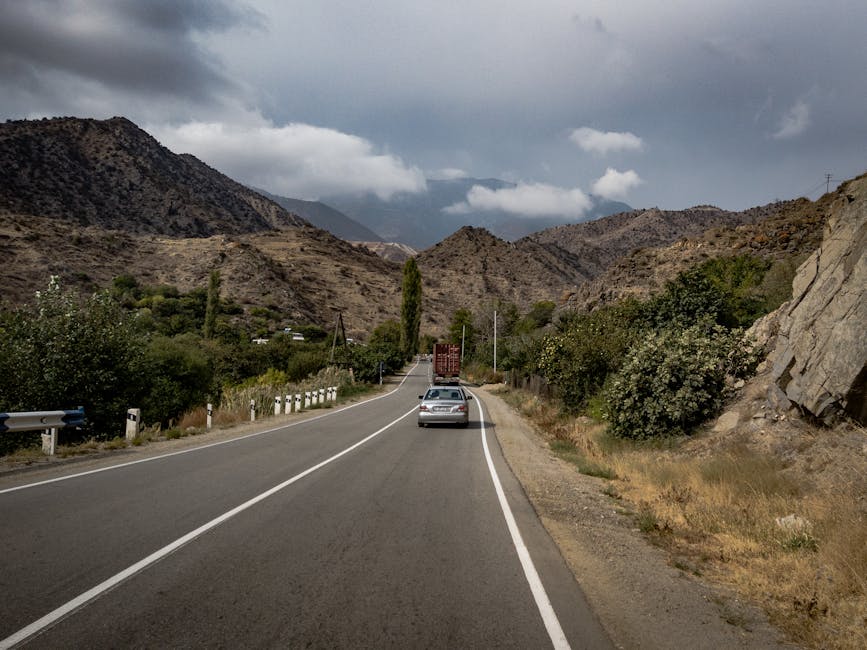
Self-drive is the way to see the country deeply, and the way to lose half a day to a flat tyre on the road to Areni. Done with eyes open it’s the best option for anyone with two weeks and a southern itinerary; done lightly it’s a way to spend more than the hired-driver rate and learn nothing about Armenia from the front seat.
What you need on paper
An international driving permit (IDP) is required for non-residents, technically and in practice. Most rental companies will ask for it, and police checks at provincial entry points will too. Get it from your home automobile club before you fly. You’ll also need a credit card for the deposit, and it’s worth photographing the rental’s existing scratches before you drive off; the post-return inspection in Armenia tends to be detailed.
The legal blood-alcohol limit is effectively zero. Speed limits are 60 in town, 90 outside town, 110 on signed sections of the M-roads. Police checks are common on the way south past Sisian; carry your passport and your IDP in the glove compartment.
Where to rent
Rentals at Zvartnots cluster around the international names (Hertz, Sixt, Enterprise) at the upper end and a wider field of local operators at the lower. Local Rent and the booking-aggregator side of Booking.com both run comparison engines that bring up the local fleets at competitive rates. A small saloon (a Hyundai Solaris or similar) is around 12,000–18,000 dram a day for a week’s rental; an SUV with proper clearance for the southern routes runs 25,000–35,000 dram a day. Petrol is around 510 dram per litre as of 2025, with the M-road stations charging the same as the city. Diesel is rare; most rental cars are petrol.
Driving Yerevan vs driving the country
Yerevan itself is not a fun drive. Lane discipline is loose, parking is metered everywhere central via the EasyPark app (no foreign-card fallback exists, so good luck without an Armenian SIM), and the traffic on Mashtots at 18:00 is the slowest you’ll move all day. Pick up the car the morning you leave town, drop it back the morning before your flight. Outside Yerevan the roads empty fast: the M2 south past Yeghegnadzor is a real drive, the H-roads up to Tatev and Khndzoresk are dramatic and slow, and the M3 north to Dilijan is the most scenic single hour on the network.
Where the rental car earns its keep
If your itinerary includes the medieval bridges on the side roads outside Sanahin, the further valleys around Tatev, the back-road approach to Khndzoresk’s old cave village, or any of Mt Aragats above the third lake, a rental is the only way to do it without committing two days to each. For Yerevan + Lake Sevan + the obvious monasteries, a driver is cheaper and easier.
Crossing into Georgia and Iran
Armenia has only two open land borders. Turkey and Azerbaijan are closed; Iran and Georgia are open with very different feel.
Yerevan to Tbilisi by minibus
The daytime route is a marshrutka or a slightly larger Mercedes Sprinter from the Northern Bus Station, leaving roughly every two hours from 08:00 to about 17:00. The trip is six to seven hours including the Bagratashen-Sadakhlo border crossing, costs 8,000 dram (~$20), and you walk through both passport controls (Armenian out, Georgian in) with about 10 minutes of standing time. There’s no luggage charge unless your bag takes a seat, and the driver gives you 30 minutes for lunch at a roadside diner around Vanadzor.
The Tbilisi minibus is uncomplicated: turn up, pick a vehicle going to “Tbilisi”, pay the driver, get on. The catch is that demand spikes around midday and the 11:00 and 13:00 services often sell out by mid-morning in summer. If you’re set on a specific departure, get there 45 minutes early.
Yerevan to Iran (and back)
The Yerevan–Tehran bus is real, runs from the Sasuntsi Davit area, takes 26 hours, and costs around 28,000 dram one way. It crosses at Meghri, on the southern tip of Armenia. You’ll need an Iranian visa secured in advance (usually arranged through an Iranian agency, sometimes available on arrival depending on your passport), and the border crossing itself is straightforward but slow, with currency exchange best done in Meghri before you cross. This is the only practical land route between Iran and Armenia for tourists; most travellers I’ve met going this way do it as part of an overland Caucasus-to-Persia loop rather than a one-off side trip.
The questions that come up after the basics
Cash or card?
Cards are accepted in most central Yerevan restaurants and hotels, and at chain supermarkets country-wide. Marshrutkas, taxi drivers, market stalls, monastery donations, small-town guesthouses, and most bus stations are cash-only in dram. ATMs are everywhere in Yerevan and at every regional centre; rural ATMs sometimes run dry on Sundays. Pull out roughly 30,000 dram at a time and refill in town. US dollar and euro notes are useful as backup but you’ll get a rotten exchange rate paying with them anywhere except a hotel.
Language
Armenian is the working language; Russian is widely understood by anyone over 35; English is increasingly common in central Yerevan and rare elsewhere. For transport specifically: bus drivers and ticket-window clerks at major stations almost always speak some Russian. A single phrase, “Kayaran?” (station?) followed by the destination, gets you remarkably far. Google Translate’s offline Armenian pack works; download it before you fly.
What changes in winter
December to mid-March, the southern roads (particularly the M2 from Sisian to Tatev and the H-roads east of Sevan) get snow and intermittent closures. The Wings of Tatev cable car runs year-round but the road in is sometimes icy enough to slow a saloon to a crawl. The Yerevan–Gyumri express keeps running. The Tbilisi train doesn’t (summer-only). Most marshrutkas keep going but the schedules thin out: where there were four daily services in August there might be two in February. Lake Sevan can be cold enough to freeze along the edges.
Solo women travellers and night transport
I’ve travelled the country solo with women I trust, and the consistent feedback is that Armenia feels low-hassle compared with neighbours, but the basics still apply. Use Yandex Go or GG rather than flagging a street taxi at night, especially around the bus stations. The overnight Tbilisi train compartments are mixed by default; you can ask the conductor to swap into an all-women kupé and they’ll usually find one. Walking back through central Yerevan at midnight is uneventful, but the ring road south of Kilikia is poorly lit and not where you want to be on foot after 22:00.
Internet and apps
An Armenian SIM from Team, Ucom, or Viva-MTS at the airport runs about 4,500 dram for 10–15 GB and a month of validity; you’ll need your passport. eSIMs (Airalo, Holafly) work fine and cost roughly the same. A working data connection is what makes Yandex Go and GG usable, what makes the railway.am and TellCell apps work, and what lets you read marshrutka timetable info that’s only ever in Armenian online. Don’t try Armenia on roaming alone. You’ll burn through a card balance fast.
Wings of Tatev: the cable car practicalities
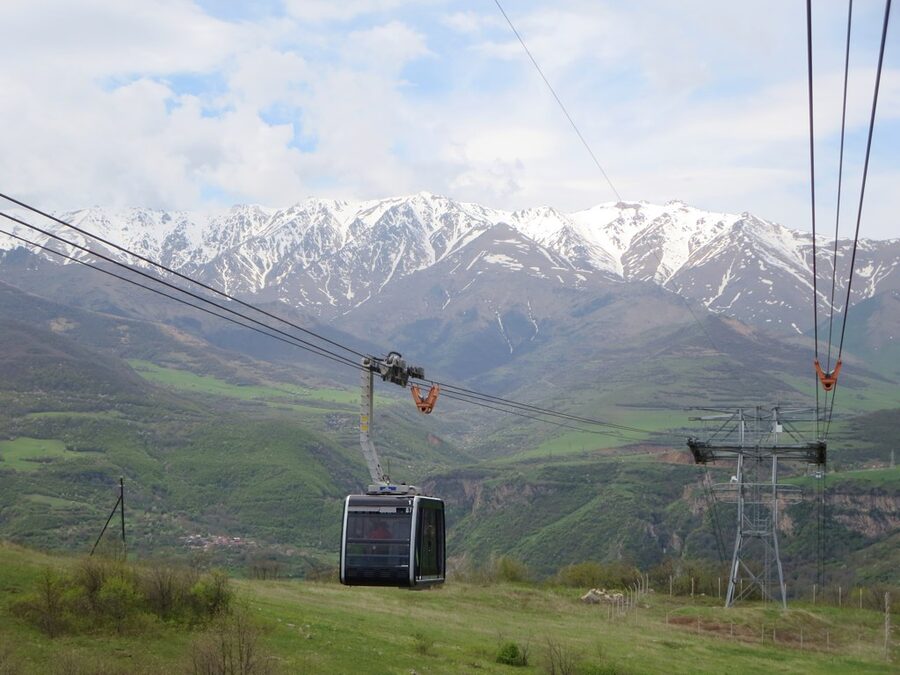
Tatev’s cable car (the Wings of Tatev) is the longest reversible aerial tramway in the world and runs 09:00 to 18:00, closed Mondays. Return tickets are 7,000 dram (~$17) for adults, with a small discount one-way; you buy them at the lower station in Halidzor. Show up 30 minutes before the ride you want, particularly on Saturdays. The drive up to Halidzor from Goris is 40 minutes by hired car or rental, and the village walk-up route from below is the alternative if the cable car queue is long: about 90 minutes downhill, three hours up. The Wings of Tatev official site publishes the live operating schedule.
Lake Sevan and the northern arc
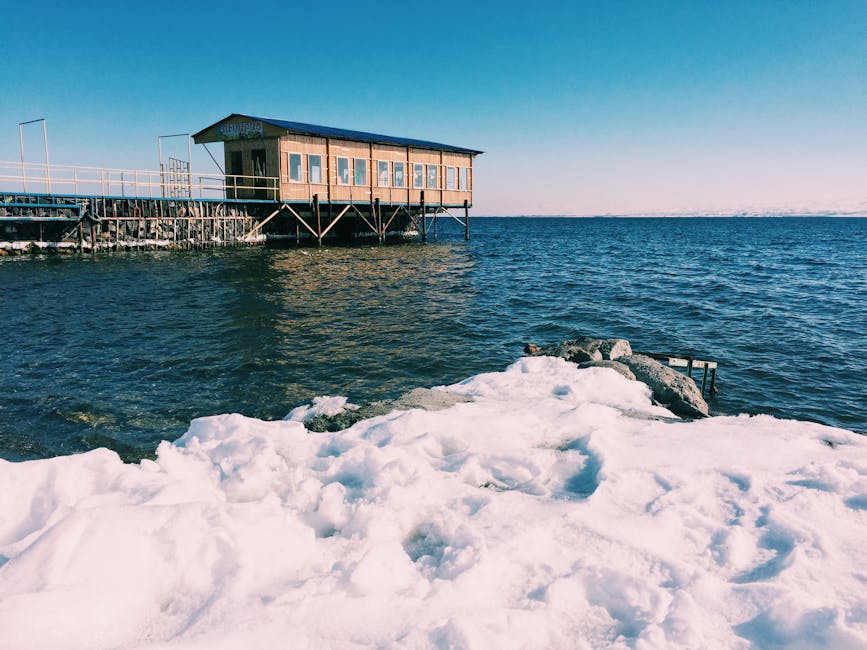
Lake Sevan sits an hour’s drive from Yerevan and is the easiest “out of the city” trip to do without committing a full day. Marshrutkas leave the Northern Bus Station every 30–60 minutes during summer for 1,000 dram one way, and the run to Sevan town takes about 65 minutes. From Sevan town the Sevanavank monastery is a 1.5-km walk uphill or a 1,500-dram taxi.
Past Sevan, the route splits. North-east takes you through Dilijan and on toward the Georgian border; south-east leads to the lake’s quieter shore and Noratus’s medieval cemetery. Both are doable from Yerevan as a long day, but Dilijan in particular rewards an overnight. The forest and cooler air are a hard turn from the high-desert feel of the south.
One last thing
Armenia rewards patience with transport in a way most countries don’t. The marshrutka schedule will change on you, the train you wanted will be cancelled, the driver will insist on stopping at his cousin’s bakery. None of it is a problem if you’ve left buffer in the plan. Build half-days, not full days. Eat lunch in Areni, not in Yerevan on the way back. And if a stranger at the bus station starts trying to explain something to you in Russian, hear them out. Half the useful information about Armenian travel exists outside any printed timetable.
.jpg)

.jpg)


.jpg)