Yerevan’s centre is about a mile and a half across. From the southern edge of Republic Square to the top of the Cascade is a single twenty-five minute walk, slow pace, with phone-out-for-photos stops. That walk takes you past the History Museum, the singing fountains, the National Gallery, the Opera, Saryan Park, and the bottom of the Cascade staircase. It is, give or take, most of what you came to see. Forty-eight hours sounds tight on paper. On the ground it is, oddly, the right amount of time.
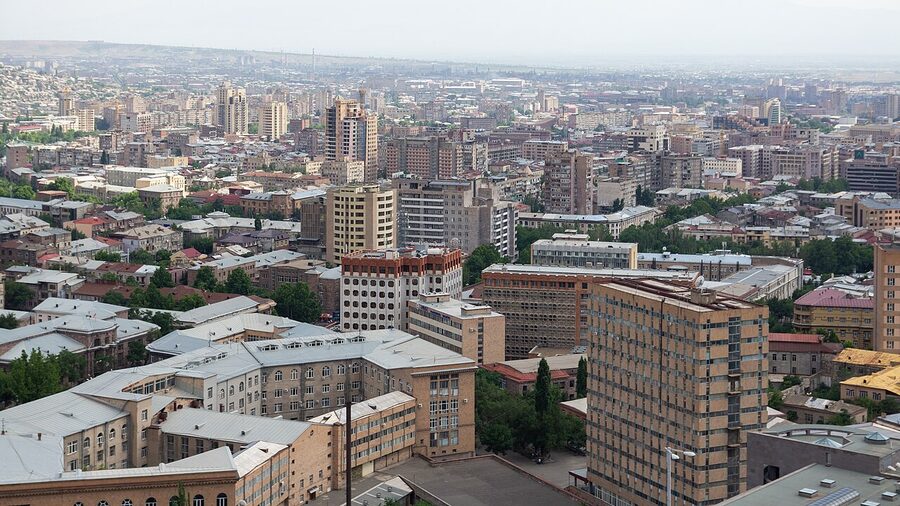
The city of a million people is built outward from a single ring road, and almost everything a first-time visitor wants is inside that ring. Two days lets you walk the centre slowly on day one, take in the museums and the fountains, then use day two for the things that sit a taxi ride out: the Genocide Memorial at Tsitsernakaberd, the Brandy Company, possibly an afternoon at Echmiadzin Cathedral if you want a half-day out of town. Three days would be better. Four would be better still. But two is genuinely workable, and that is more than you can say for most capitals on a long weekend.
What follows is the route I’d actually walk if a friend landed Friday night and flew home Sunday afternoon. Specific places, specific times, what’s worth queueing for and what isn’t. If you want to go deeper on individual stops, I’ve linked to the longer pieces I’ve written on Republic Square, the Cascade, and getting around the country.
In This Article
- The size thing nobody tells you about
- What the rest of Armenia is, briefly
- When to come
- Day 1, morning: Republic Square and the museums it hides
- The History Museum is better than you think
- Vernissage: the Saturday market that runs every day
- Day 1, midday: Northern Avenue, the Opera, lunch
- The Opera and the parks around it
- Lunch on Saryan Street
- Day 1, afternoon: the Cascade walk
- The climb itself
- The Cafesjian Centre and the cat
- Saryan Park and the Tamanyan statue at the base
- Day 1, evening: dinner and the singing fountains
- Where I’d actually eat
- The fountain show
- Day 2, morning: the quieter half of the centre
- The Blue Mosque
- The Saryan House Museum
- The Matenadaran
- Day 2, afternoon: the choice
- Tsitsernakaberd
- Yerevan Brandy Company
- Getting between them
- Day 2, evening: a slower last walk
- The bars worth knowing
- The last walk
- The practical scaffolding (read this first if you’re booking now)
- Getting in from Zvartnots Airport
- How to use the marshrutkas and the metro
- The Monday closure problem
- One half-day trip if you can’t help it
- Where to stay
- What two days actually buys you
The size thing nobody tells you about
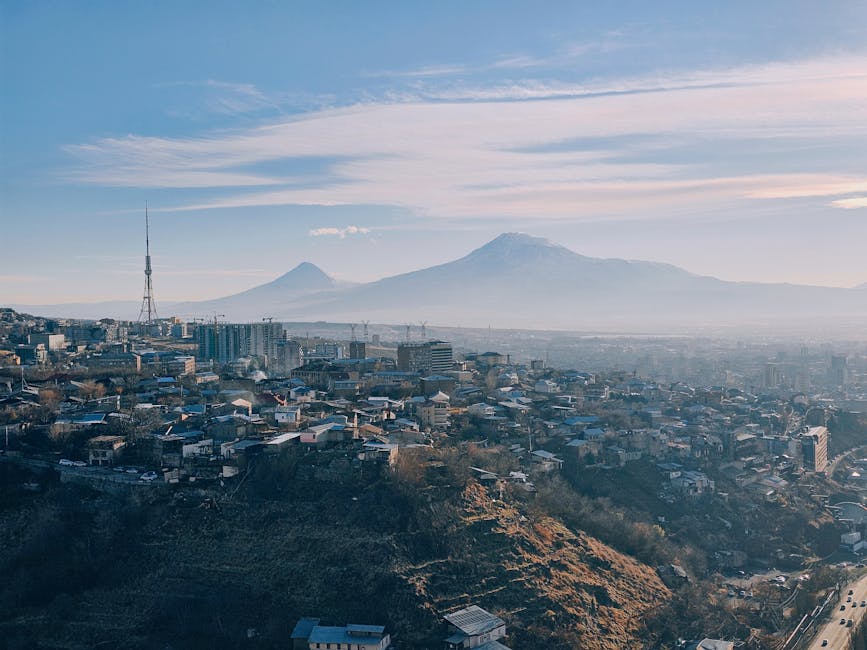
Yerevan was redesigned in the 1920s by Alexander Tamanyan, who flattened most of the old town and laid down a circular plan with Republic Square at its centre. The result is that the bits of the city you’ll spend time in form a near-perfect oval, roughly 1.5 km north-to-south and a little wider east-to-west. You can walk Republic Square to the Cascade base in fifteen minutes. Add five for the Opera. Add another ten if you climb the steps. If you only ever moved on foot you’d see the whole core in a long afternoon.
This matters for two reasons. The first is logistical: don’t book a hotel three metro stops out to save money. Stay inside the ring, between Mashtots Avenue and Tumanyan Street, and you’ll burn no time getting around. The second is psychological: the city feels smaller than it sounds. A million people, three thousand years of history on the spot, two thousand years of Christianity, and you can walk the whole tourist core before lunch on a Sunday. The trick is not to mistake “small” for “shallow.” Yerevan rewards a slow walk far more than a fast one.
What the rest of Armenia is, briefly
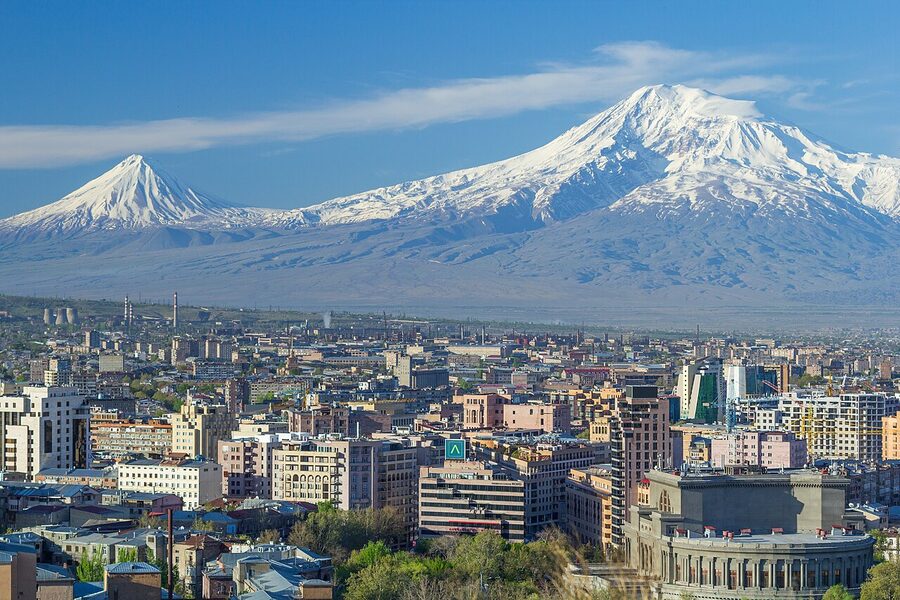
Outside the city, things spread out. Garni and Geghard sit thirty kilometres east. Echmiadzin is twenty kilometres west. Khor Virap and the view of Mount Ararat from the Turkish border is forty south. Tatev is seven hours away by car. Lake Sevan is sixty-five kilometres east. None of that fits in a two-day stay, and that’s fine; the point of two days in Yerevan is the city itself. Pick one half-day trip if you must, leave the rest for a longer visit.
When to come
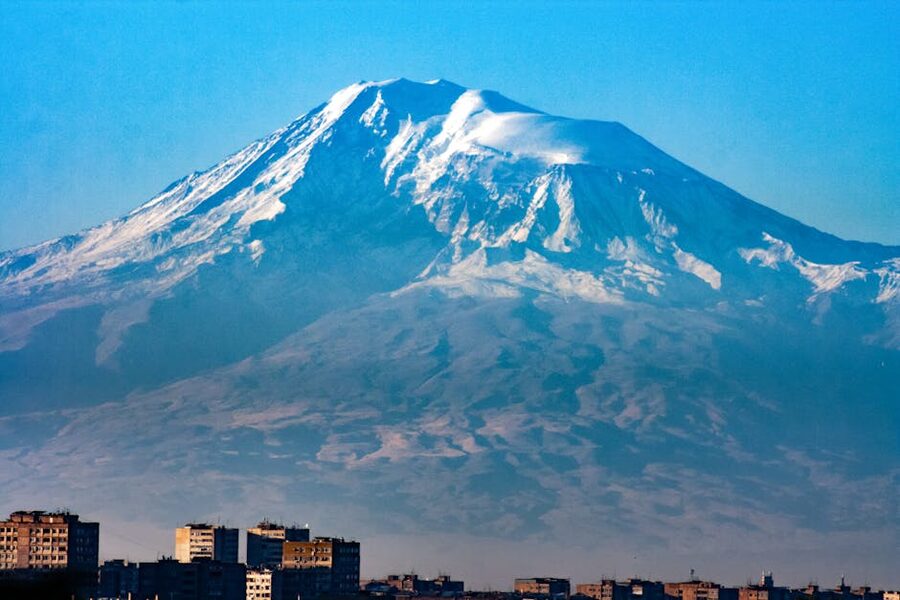
May, June, September and October. Yerevan is a high-summer furnace; July and August can sit at 38°C for days, and the singing fountains lose their charm when the air feels like a dryer vent. Winter is dry and cold, occasionally beautiful, sometimes brutal. The shoulder months give you long evenings, café-table weather, Mount Ararat clear of haze on a fair morning, and the brandy bars warm enough to want.
Day 1, morning: Republic Square and the museums it hides
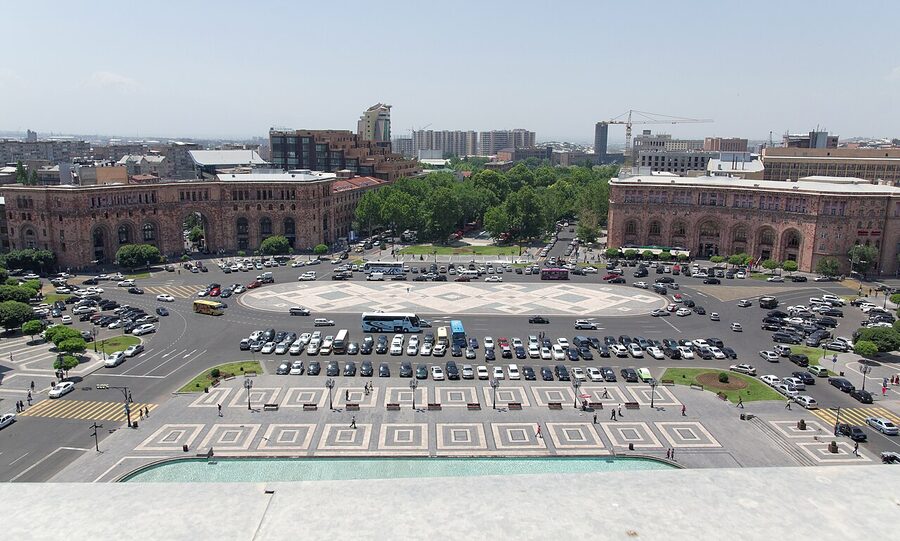
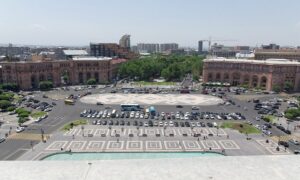
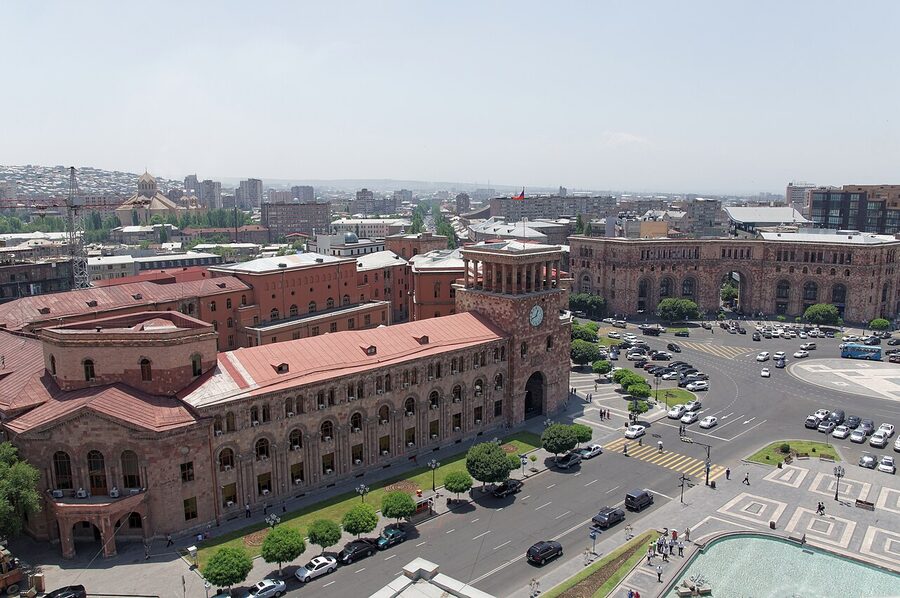
Start in the square. It’s the obvious move and also the right one. Five neoclassical buildings face an oval centre paved in two shades of stone, all of it cut from the local pink volcanic rock that gives Yerevan one of its nicknames. The central building is the History Museum and National Gallery; the others are government, the foreign ministry, the post office, and the Marriott (which used to be the Hotel Armenia and is the only one of the five Tamanyan didn’t intend). At ground level it’s a roundabout. Stand under the colonnade, look up, and you can see why people fly here for the architecture alone.
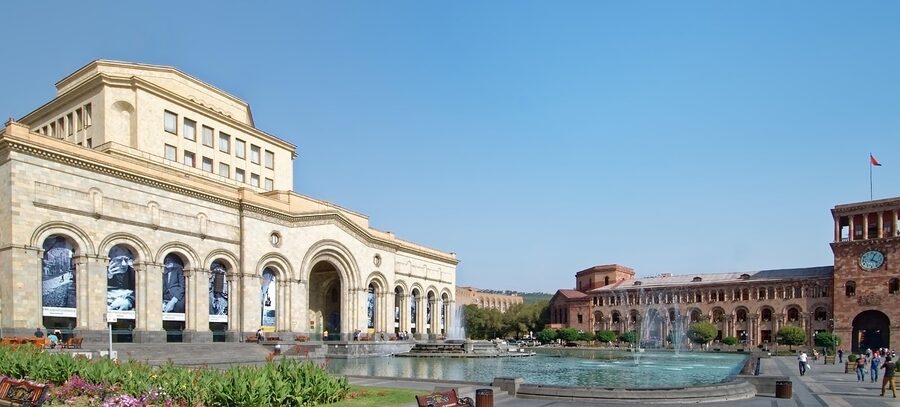
Tamanyan designed the square in the 1920s as the first piece of his bigger plan, which was to give the new Soviet Armenia a capital that looked like one. The work continued long after his death; the Marriott on the western side was finished in 1958, the post office on the eastern side later still. The lampposts and benches were redesigned for the centenary in 2018. The Lenin statue that once dominated the centre was pulled down in 1991 and now lies, decapitated and prone, in the courtyard of the History Museum. You can walk over and look at him through the iron fence.
The History Museum is better than you think
The History Museum of Armenia gets undersold by guidebooks that summarise it as “where the world’s oldest shoe lives.” That shoe is real, 5,500 years old, found in a cave in Vayots Dzor and intact because the cave was sealed by a thick layer of sheep dung. But the rest of the collection is what makes the museum worth ninety minutes. Bronze-Age model chariots from Lchashen, a wooden cart with intact wheels, the oldest leather garment ever excavated, royal regalia from the Urartian fortress at Erebuni that pre-dates Yerevan as a city. Open Tuesday to Sunday, closed Monday. Tickets in the low thousands of dram. Buy the National Gallery upstairs ticket if you’ve got a soft spot for Armenian painters; otherwise just do the museum.
If you want a longer dive into one of the country’s painters specifically, the Saryan House Museum is a fifteen-minute walk away and we’ve covered it separately. Save it for tomorrow morning if you want a small museum done well.
Vernissage: the Saturday market that runs every day
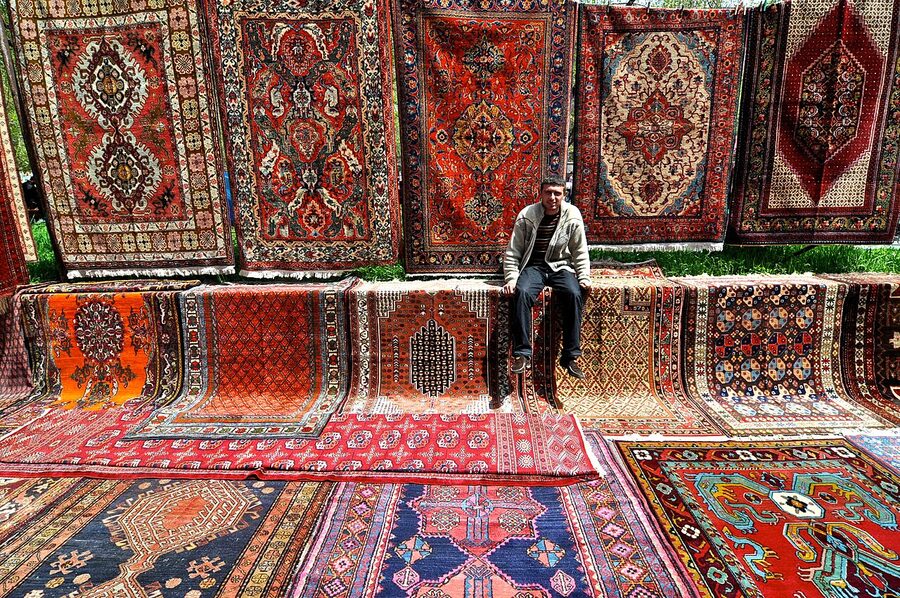
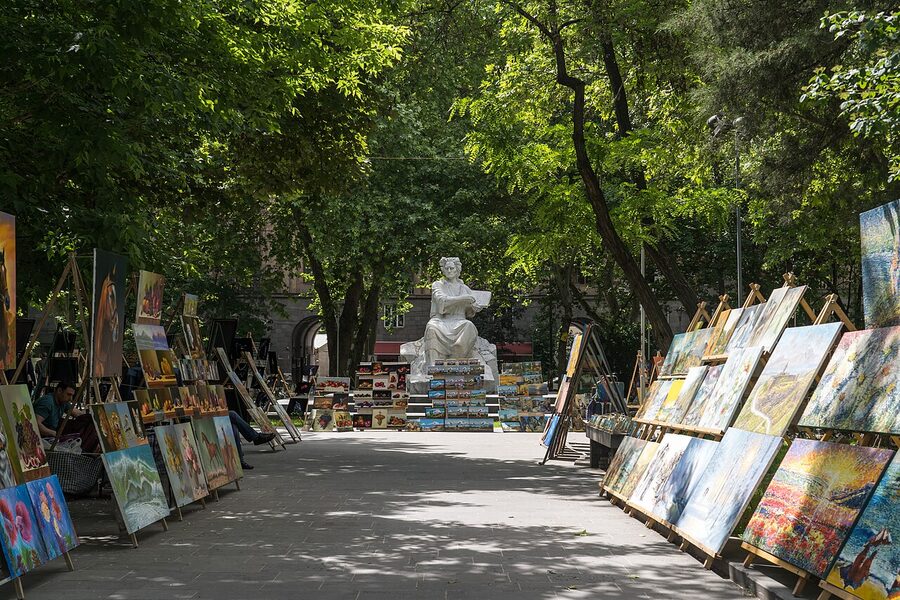
Two minutes east of the square, on a long strip of pavement between Aram Street and Khanjyan Street, is Vernissage. Officially it’s an open-air craft market that runs Saturdays and Sundays. In practice the carpet stalls and the antique-watch sellers are open every day from late morning, and the busiest stretch is the southern end nearest Republic Square. Carpets, khachkar tile copies, hand-carved chess sets, Soviet militaria, vinyl records, costume jewellery, military binoculars, and acres of pomegranate-themed homewares.
If you’re shopping seriously: the carpets are the real thing here. New ones woven in workshops in Yerevan and the Lori region, plus a steady supply of older village pieces that come in by family connection. Prices start around 60,000 dram for a small modern runner and go upward fast. Bargaining is expected and the sellers are not pushy; pour the tea, sit a minute, ask where it’s from. If you’re not shopping, walk it anyway. It’s the densest concentration of small-craft Armenia in one place.
Day 1, midday: Northern Avenue, the Opera, lunch
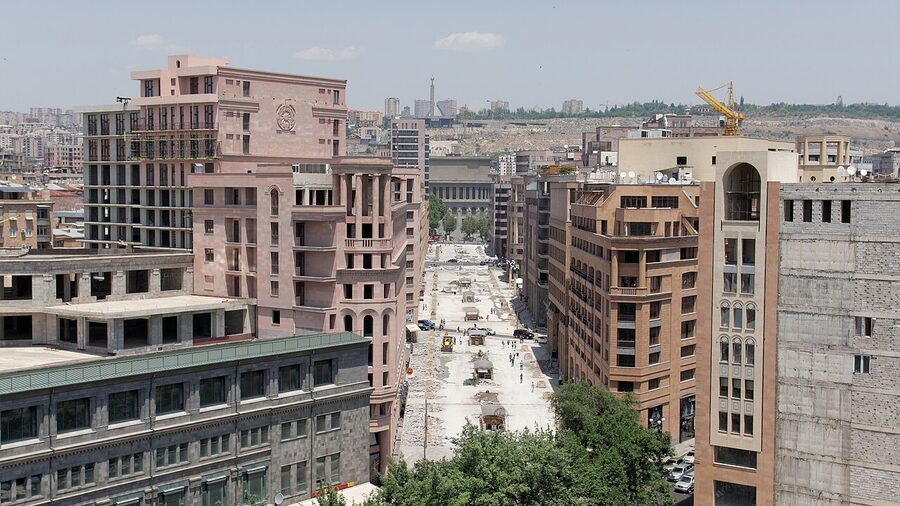
From the north side of Republic Square, follow the underpass up to Northern Avenue. This is the pedestrianised stretch Tamanyan drew in 1924 and that nobody got around to building until 2007, when Russian-Armenian money finished the job. It’s clean, lined with cafés and chain stores, and gets you to the Opera in eight minutes. The bench-and-fountain section halfway along is where you’ll see the city slow down: a chess club at one end, an ice cream queue at the other, locals cutting through to the square and tourists drifting the other way.
The Opera and the parks around it
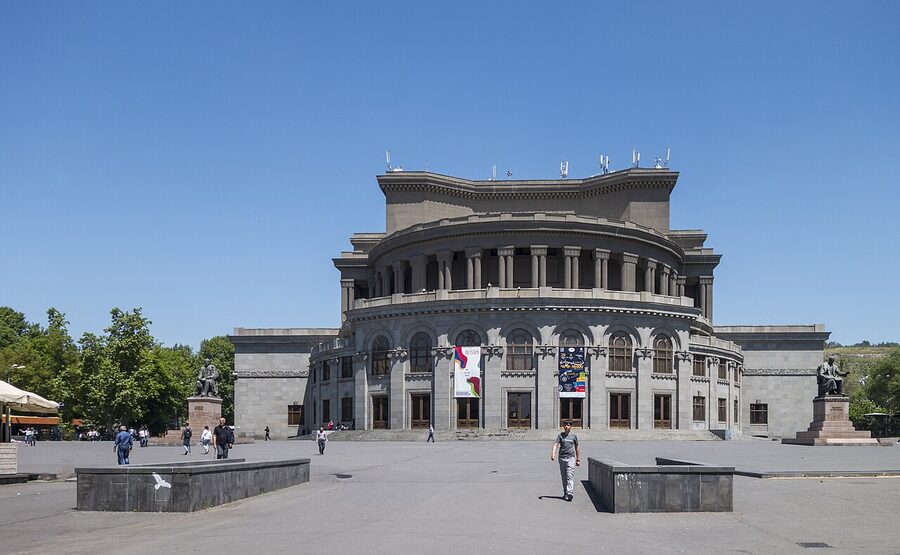
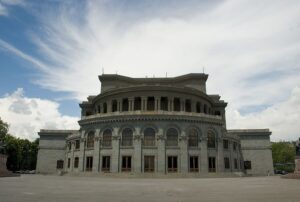
The Opera House is a single round building in pinkish-brown tuff, designed by Tamanyan and finished after his death. Two performance halls share the building: the National Academic Opera and Ballet on one side, the Khachaturian concert hall on the other. The whole thing sits on a small park called Liberty Square (older locals still call it Theatre Square) where the protests of 1988 started, the ones that turned into the independence movement. There’s a swan lake on one corner that freezes over and becomes an ice rink in winter. The benches face the Opera; the Opera faces the benches; people sit and read.
If you want to actually see something inside, the season runs September to early summer and the Opera box office is on the south side of the building. Tickets for the cheap seats are 3,000 to 5,000 dram for a regular ballet, 6,000 to 12,000 dram for opera. We’ve written a longer piece on going to the theatre in Yerevan if you want to plan around a specific performance. Otherwise just walk through the park.
Lunch on Saryan Street
From the Opera, walk one block north and you’re on Saryan Street, the city’s main wine-bar strip. In Tear of the Grapes, In Vino, Wine Republic, and a dozen smaller places run end to end on both sides, with table service spilling onto the kerb in good weather. Most do food too. A glass of dry Areni red is 1,500 to 2,500 dram depending on the vintage. The wine’s the draw, but a plate of tolma and a salad will set you up for the afternoon and run you maybe 6,000 dram a head. We have a longer piece on the dishes you’ll see on the menus if you want to go deeper on traditional Armenian food.
Day 1, afternoon: the Cascade walk
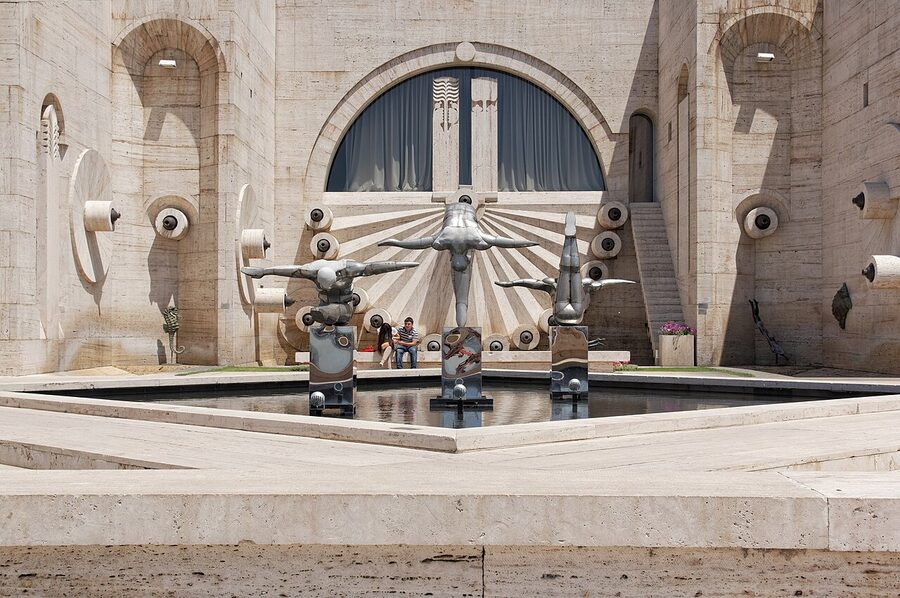
Three blocks north of the Opera, the Cascade rises out of the ground like the world’s biggest staircase, which is what it is. Five outdoor terraces, around 572 steps from the bottom of the gardens to the highest finished platform, gallery rooms running the full height of the inside, and a sculpture park at the base full of Botero, Plensa, Lynn Chadwick, and various other names that ended up in Yerevan because the man who paid for the whole thing collected art.
The story behind the Cascade is part of why it works. Tamanyan drew it in the 1930s as a green slope linking the lower city to the upper neighbourhoods. The Soviets started building in 1971, ran out of money in 1980, and the half-finished concrete tribute sat abandoned for two decades. In 2002 the Armenian-American philanthropist Gerard Cafesjian funded the completion and the contemporary art collection inside. The sculpture park is what it is because it’s part of his bequest. The Cascade reopened in 2009 and has been the city’s living room ever since.
The climb itself
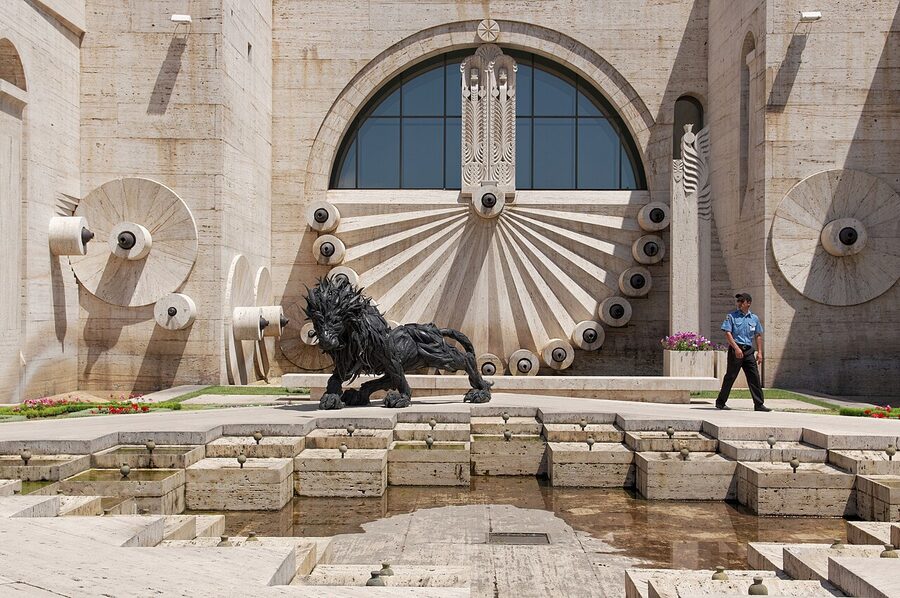
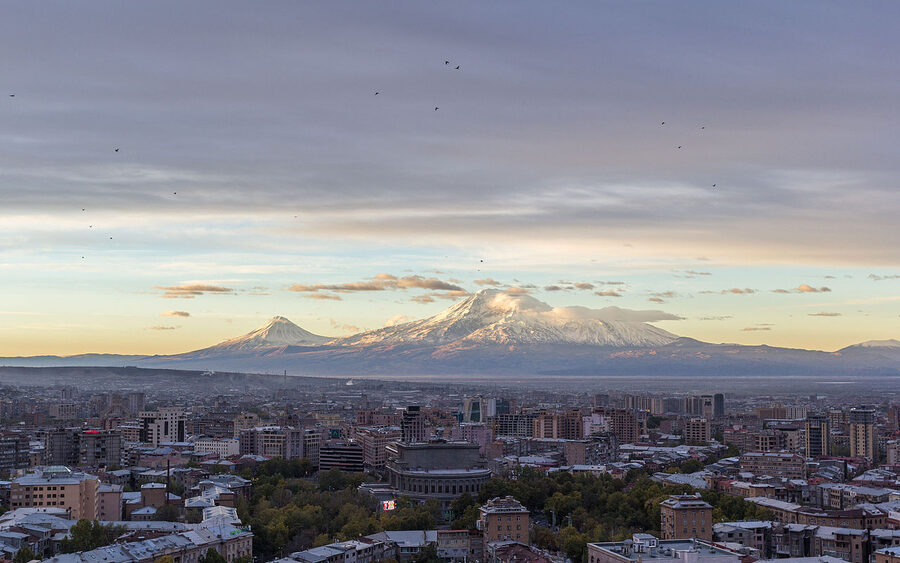
Take the escalators inside and stop at every level. There are five interior galleries with rotating shows, plus the sculpture-flanked terraces outside, and the only way to see them all is the back-and-forth climb. The interior closes at 8 pm and the escalators stop running at 8 sharp; if you’re in the upper galleries at 7:55 you’ll be walking down. From the top of the finished section, the view runs across the whole inhabited centre to Mount Ararat on a clear day.
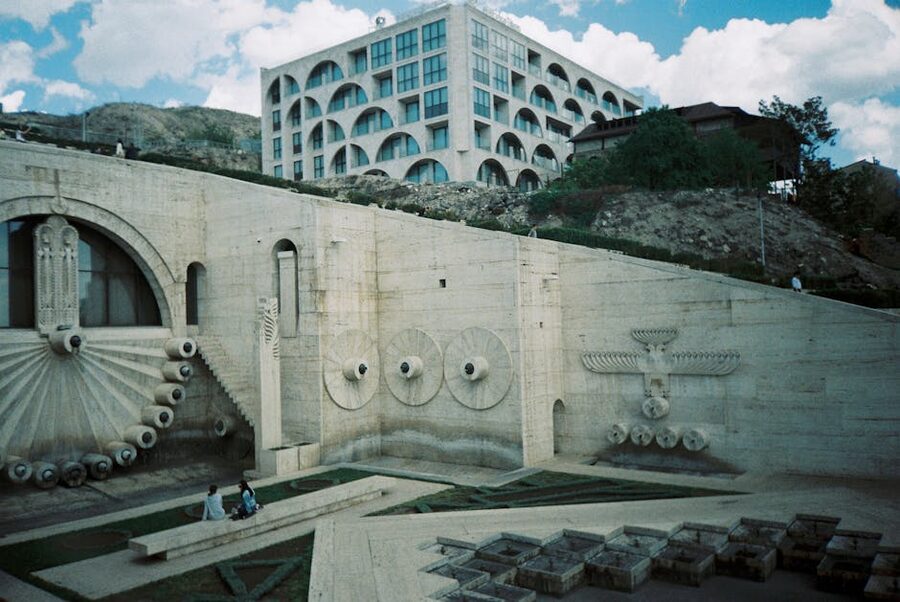
One thing the guidebooks miss: the construction never officially finished. Above the highest terrace, the unfinished top section is still a gravel-and-concrete shelf. You can walk up to it; it’s where the locals go for picnics. There’s a small Soviet-era monument up there and the views are arguably better than from the official top, in the way that views from a slightly off-axis spot often are.
The Cafesjian Centre and the cat
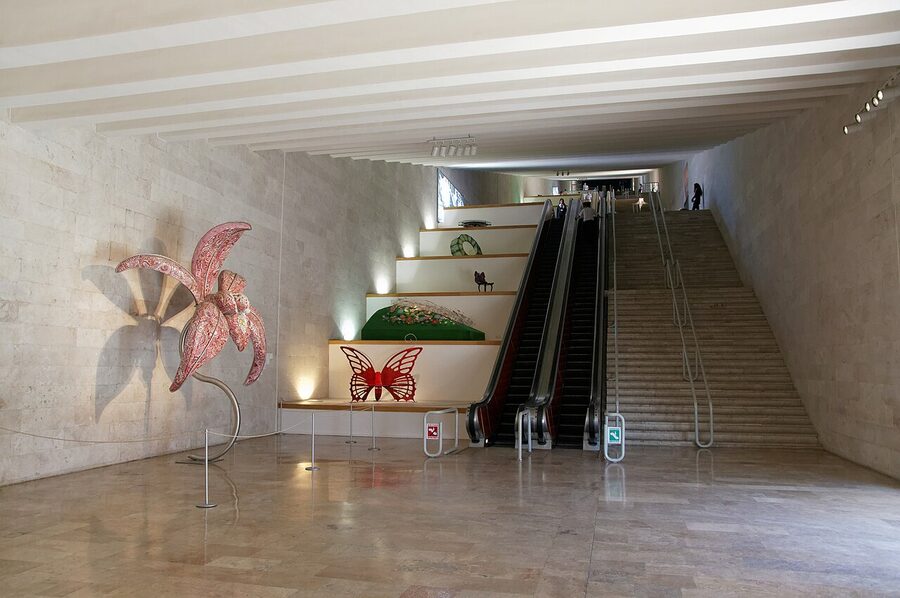
If you only stop once on the climb, stop at level five. The Cafesjian’s big interior gallery there usually holds a Chagall lithograph or two from the foundation collection, and the rotating shows in the smaller rooms tend to be local Armenian artists. Free entry to most. Then there’s the cat. The Botero “Cat” on the third terrace is the most-photographed sculpture in the country, and it’s exactly what it looks like: a fat bronze cat. Don’t fight it.
Saryan Park and the Tamanyan statue at the base
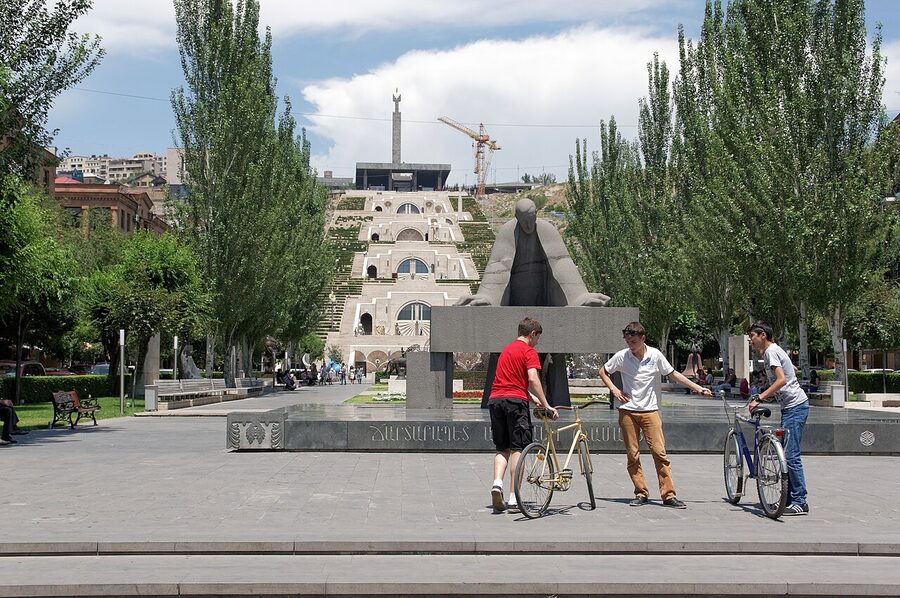
The base of the Cascade opens onto a terraced park with the Tamanyan statue front and centre. He’s bent over a drawing board, oversized hands working on what may or may not be the plan for the city you’re standing in. Everyone in Yerevan refers to him as “the architect” the way Romans refer to Bernini. From the statue, walk diagonally back toward the Saryan Park and the Opera. If you’ve timed it well you’ll be looking for somewhere to sit by 7 pm, which is exactly when the wine bars start filling up.
Day 1, evening: dinner and the singing fountains
Dinner is the easy part of a Yerevan day. The hard part is choosing between the Saryan Street wine strip you walked through at lunch, the Tumanyan Street restaurant cluster five minutes south, the Cascade-base cafés, and the proper sit-down places near Republic Square. My default is to do dinner properly somewhere around the Opera or Tumanyan, then walk back to the square for the fountains.
Where I’d actually eat
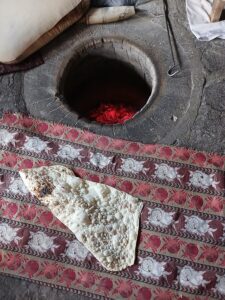
For Armenian food done seriously: Lavash on Tumanyan Street, Dolmama on Pushkin Street if you want the white-tablecloth version, Sherep near the Opera if you want a more modern take. Lavash takes reservations and you’ll need one on a weekend; budget 12,000 to 18,000 dram a head with wine. Dolmama is double that and the building is half the appeal. For a quicker meal: Tun Lahmajo near Mashtots Avenue does Yerevan-style flatbread pizzas and the local fruit moonshine, oghi, comes in mulberry, dogwood and pomegranate. For zhingyalov hats, the herb-stuffed flatbread that’s effectively the country’s national fast food, the cluster of stands on Teryan Street is reliable and cheap (under 1,000 dram for two).
The fountain show
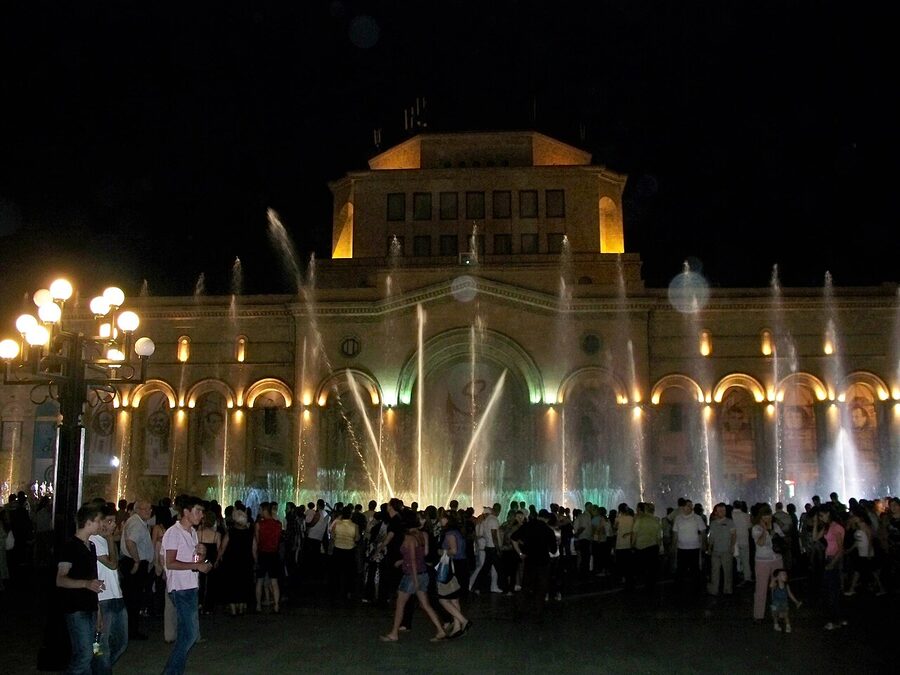
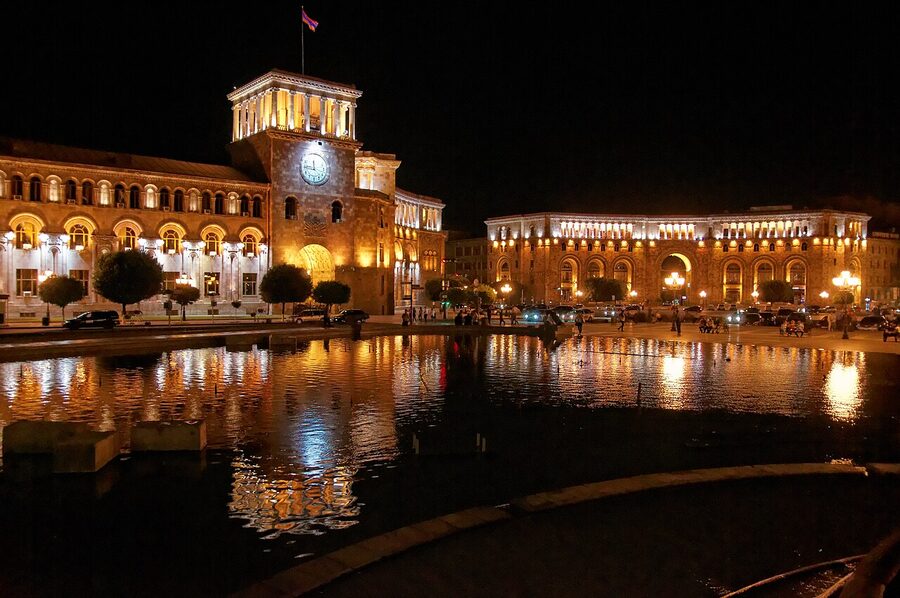
Walk to Republic Square for 9 pm sharp and find a spot on the south steps near the History Museum. The singing fountains run from 9 pm to 11 pm in season (roughly May to October, weather and maintenance permitting). The programme is a rotating mix: classical Khachaturian, Morricone, the Gladiator soundtrack, occasional Armenian pop, and at least one piece every night that sounds like it was chosen by a different person from the rest. The fountains are choreographed to the music and the buildings around the square light up in time. It’s free, it’s nightly in summer, and the crowd is half locals on a date and half tourists with cameras. Get there a few minutes early; the steps fill up.
Stay until you’ve had enough. Then walk back up to Saryan or Tumanyan for a last glass of something. Or push through to the Cascade base where the Wine Republic patio runs late on warm nights.
Day 2, morning: the quieter half of the centre
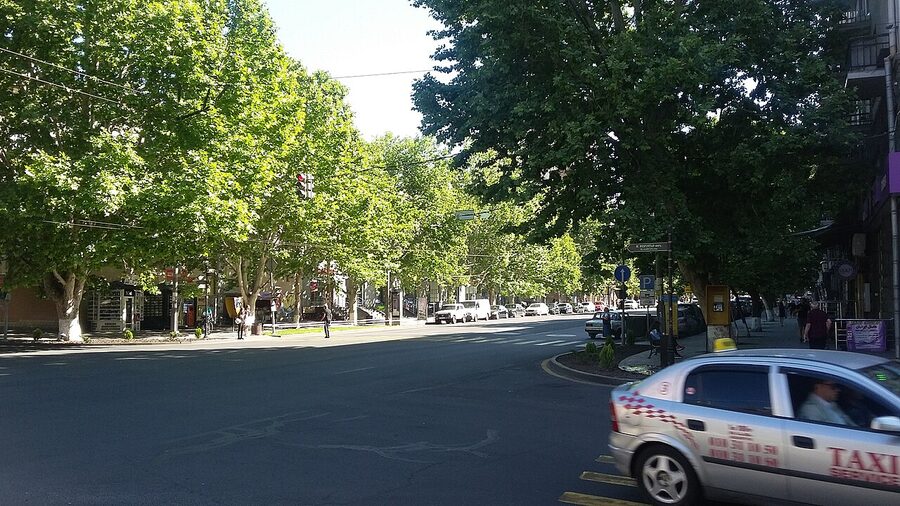
Day two starts west of where day one ended. You’re aiming to walk Mashtots Avenue from south to north, from the Blue Mosque up to the Matenadaran. It’s about a kilometre and a half end to end, and you’ll cross most of the city’s other personality on the way: the working markets, the older residential streets, the Soviet-era municipal architecture, the sense that Yerevan was a real city before it was a tourist one.
The Blue Mosque
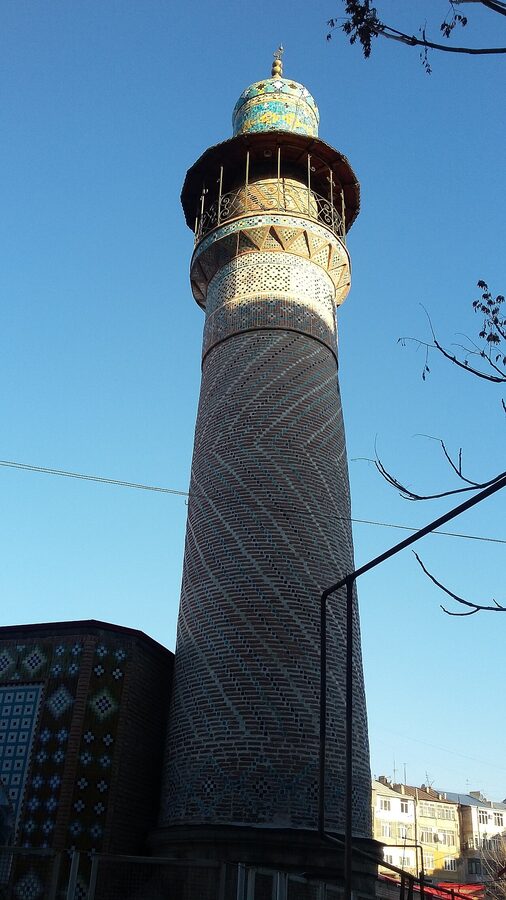
The Blue Mosque on Mashtots is the only working mosque in Armenia. It was built in 1764 by the Persian khan who governed Yerevan at the time, when the city had eight mosques and a sizeable Persian-speaking population. The Soviets shut it down and turned it into the natural history museum; after independence it was given back to Iran, restored, and reopened as a mosque in 1999. Iran funds the upkeep and runs the small library in the corner.
You walk in past a heavy iron gate into a tiled courtyard with a fountain, fruit trees, and a flowerbed running the full length. The prayer hall is at the back. Visitors are welcome outside prayer times; the courtyard is open from about 10 am to 6 pm, the prayer hall closes mid-afternoon. Free, donations welcome. Twenty minutes is enough. It’s the calmest spot in the centre and the easiest place to remember that Yerevan sits where the Caucasus, Persia and Anatolia meet.
The Saryan House Museum
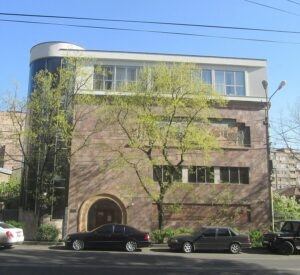
Five minutes north of the Blue Mosque, on Saryan Street, is the studio-house of Martiros Saryan, the painter who spent fifty years putting Armenia’s mountains and orchards onto canvas. The museum is one floor of the original studio and one purpose-built gallery wing; it holds about two hundred of his paintings, the working studio with brushes still on the table, and a small bookshop. Tickets in the low thousands of dram. We’ve covered it in detail in our Saryan House Museum piece. Allow forty-five minutes if you like Armenian painters, an hour if you don’t yet but might.
The Matenadaran
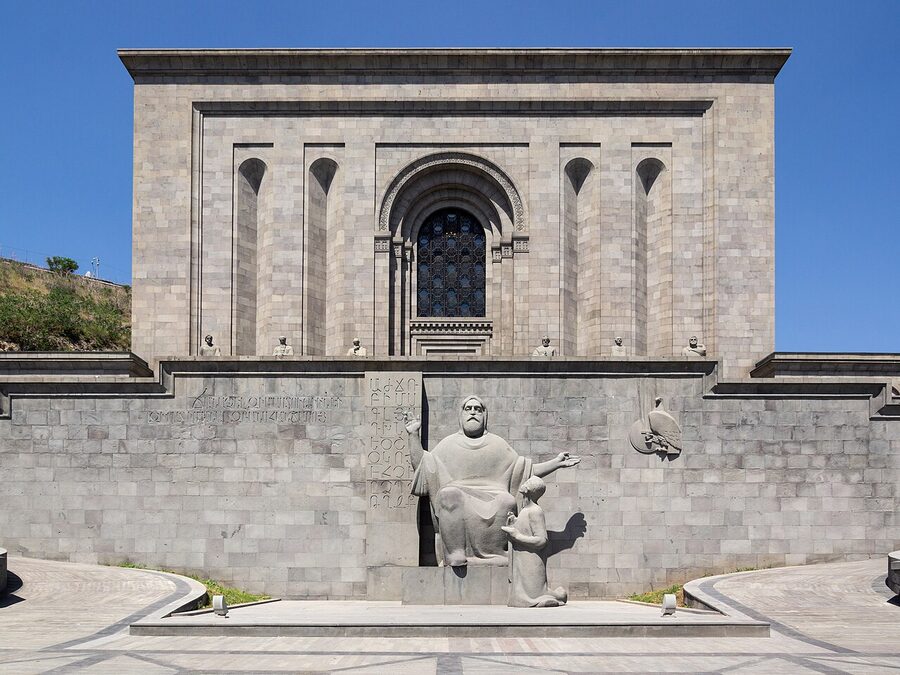
At the top of Mashtots Avenue stands the Matenadaran, the institute and museum that holds about 23,000 ancient and medieval Armenian manuscripts. The building is grey basalt, finished in 1957, and seven monumental statues of Armenian scholars line the steps out front. Inside, the public museum runs through twelve rooms in chronological order: the oldest manuscripts on display are from the 5th century, when the alphabet was barely a hundred years old. The largest book in the collection is the 13th-century Msho Chararntir, a homiliary so heavy that two priests had to share it across the Genocide and bury one half so the other could be carried out.
The museum is open Tuesday to Saturday, 10:30 to 4:30. Tuesday and Saturday tend to be busy with school groups; aim for Wednesday or Friday morning. English-language tours run on the hour during summer. Tickets for the standard exhibition are 1,500 dram, with extra fees for the rotating special exhibitions on the upper floor. An hour does it; ninety minutes if you read every label.
Day 2, afternoon: the choice
Both stops on the day-2 afternoon list, the Genocide Memorial at Tsitsernakaberd and the Yerevan Brandy Company across the Hrazdan gorge, sit five minutes apart by taxi. You can do both. Most people don’t. They sit on opposite sides of the same emotional line, and the right call depends on what mood you’re in.
Tsitsernakaberd
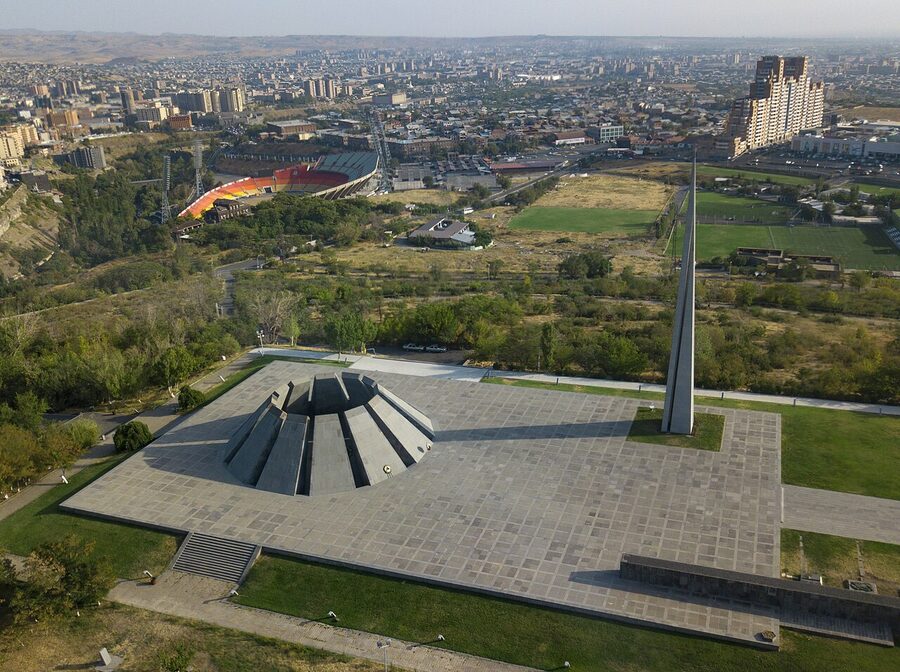
The Armenian Genocide Memorial Complex sits on a hilltop above the Hrazdan gorge, a ten-minute taxi ride from the centre. Twelve concrete slabs lean inward in a circle around an eternal flame; a forty-four metre stele stands beside them. The memorial was opened in 1967, the first year the Soviet authorities allowed any commemoration of the events of 1915, and the museum buried into the hillside opened on the eightieth anniversary in 1995. The displays move through Ottoman Armenia before the war, the deportation orders of April 1915, and the survivor diasporas afterwards. There’s no ticket; the museum is free, open every day except Mondays and the first Tuesday of the month, 11 am to 4 pm.
This isn’t a pretty stop. It isn’t designed to be. Allow ninety minutes for the museum and the memorial together, and don’t try to fit it into a packed schedule with no break afterwards. Coming straight up from a heavy lunch and going straight to brandy tasting is the wrong shape of a day. Either go in the morning instead and use the afternoon for something lighter, or do it last and let it be the last thing.
Yerevan Brandy Company
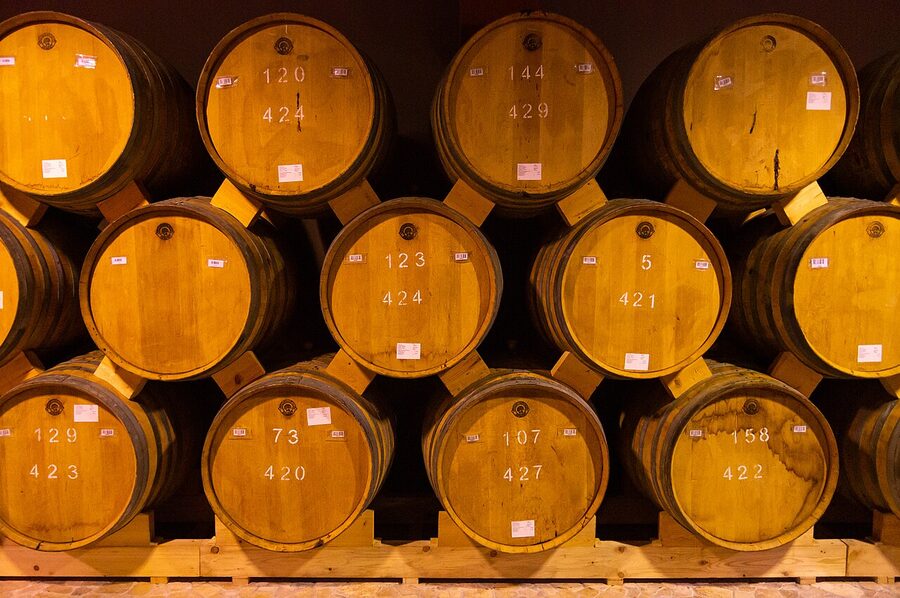
The Yerevan Brandy Company makes Ararat brandy in a stone factory on the lip of the Hrazdan gorge, about ten minutes by taxi from Republic Square (or fifteen on foot if you don’t mind crossing the Victory Bridge). The factory tour runs ninety minutes: a walk through the cellars where the older barrels sleep, a brief history of how an Armenian-fortified-wine tradition got rebranded as cognac, and a guided tasting at the end. Three pours come standard with the basic tour (around 8,000 dram); five pours if you upgrade (around 13,000 dram), with the older Akhtamar 10-year-old, Nairi 20-year-old, and Dvin 50% blend at the top of the range.
Tours run multiple times a day in English, Russian and Armenian. Reservations through the company website are required; walk-ins are turned away on busy days. Worth it if brandy is your thing or if you want a structured break in the afternoon. Skip if you don’t drink and don’t care about cellar architecture; the tour leans heavily on the tasting at the end.
Getting between them
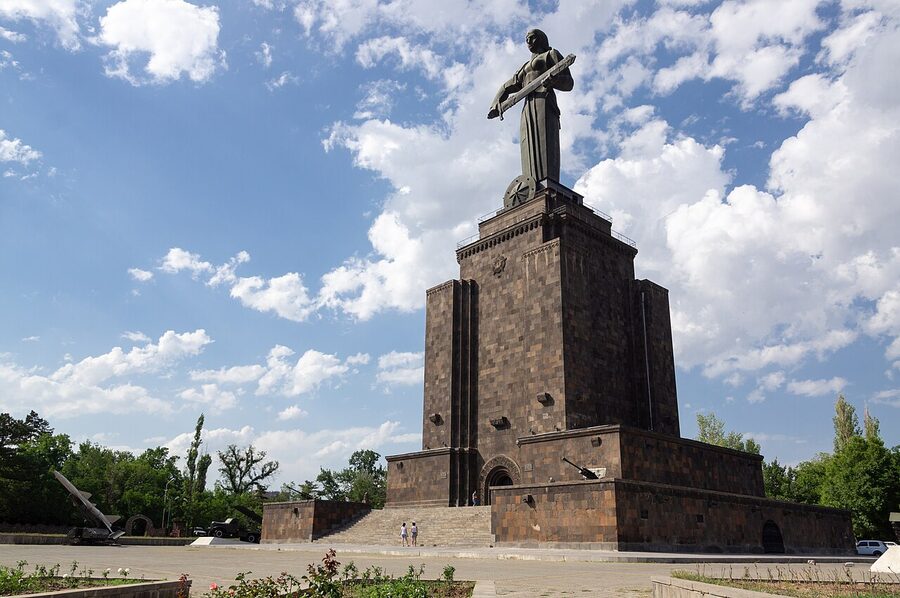
If you’re trying to hit both Tsitsernakaberd and the Brandy Company on the same afternoon: take a Yandex Go or GG taxi from Republic Square to the memorial first (1,000–1,500 dram), spend ninety minutes there, then take a second taxi across the gorge to the brandy factory (about 800–1,200 dram). From the brandy factory back to the centre is a fifteen-minute walk across the Victory Bridge. If you have spare time at the top of the Cascade, the Mother Armenia statue and Victory Park sit just behind the upper terrace; that’s not the same hill as Tsitsernakaberd but it’s the other big Soviet-era monument and worth knowing about.
Day 2, evening: a slower last walk
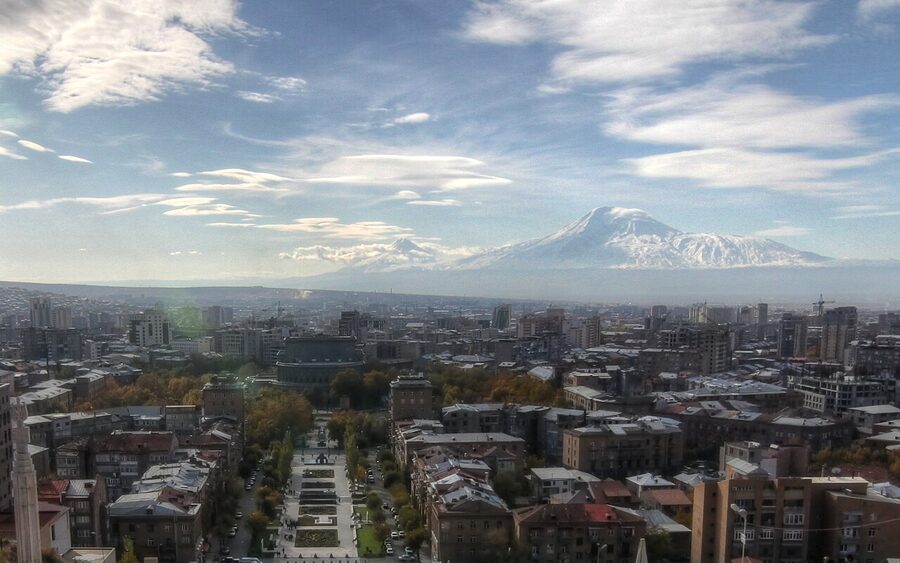
Two days in, you’ve earned a slower evening. The Cascade at sunset is the obvious move, and it’s fine; but it’s where everyone ends up, and on a warm Saturday in June you’ll be elbow-to-elbow on the top step. My alternative: walk the Cascade gardens at the base, stop at the Wine Republic terrace at the foot of the steps, and aim for the upper Cascade only after about 8:30 once the casual crowd has thinned. The view of Ararat is better at 9 pm than at 7.
The bars worth knowing
For wine, Saryan Street is still the best concentrated walk; In Vino has the deepest list and Wine Republic the biggest patio. For something stronger: Dargett, just east of Republic Square on Aram Street, is the city’s first proper microbrewery and does an apricot beer that turned out to be unexpectedly drinkable. Nakhshun Baji on Tigran Mets is a craft cocktail bar in a Soviet-era apartment block; the entrance is a heavy wooden door at the back of the courtyard. Mirzoyan Library on Mher Mkrtchyan is a bookshop-bar in a courtyard with mismatched furniture, lit by table lamps, where the local crowd in the next chair is reliably more interesting than the next chair at any tourist spot.
The last walk
If your last evening’s flight is early the next morning, do this: walk down from wherever you ate to Republic Square for the 9 pm fountains one more time. Then back up Mashtots to the Saryan-and-Tumanyan corner for a last glass. Then bed. The total walk from the square to Tumanyan is twenty minutes; you can do the whole loop in an hour and a half and not feel rushed. That’s the part I keep coming back to. Yerevan is a city you can leave on foot.
The practical scaffolding (read this first if you’re booking now)
The information that doesn’t fit anywhere else: how you actually arrive, get around, eat between stops, and avoid the closure problem. Skim it once before you book the trip and once again when you land.
Getting in from Zvartnots Airport
Zvartnots is twelve kilometres west of Republic Square. Three options: a Yandex Go or GG taxi (booked via the app, around 2,500–4,000 dram into the centre), a fixed-price airport taxi from the rank outside arrivals (5,000–7,000 dram and the drivers will quote you double), or the night-time #201 bus that runs roughly hourly and costs 300 dram but takes 45 minutes. Cleanest answer: the apps. Have one downloaded before you fly; Armenian SIMs are cheap (around 1,500 dram for a tourist data plan from Beeline or Ucom) but you can’t book a taxi until you’re connected. We’ve gone deeper on every leg of the journey in our getting around the country piece.
How to use the marshrutkas and the metro
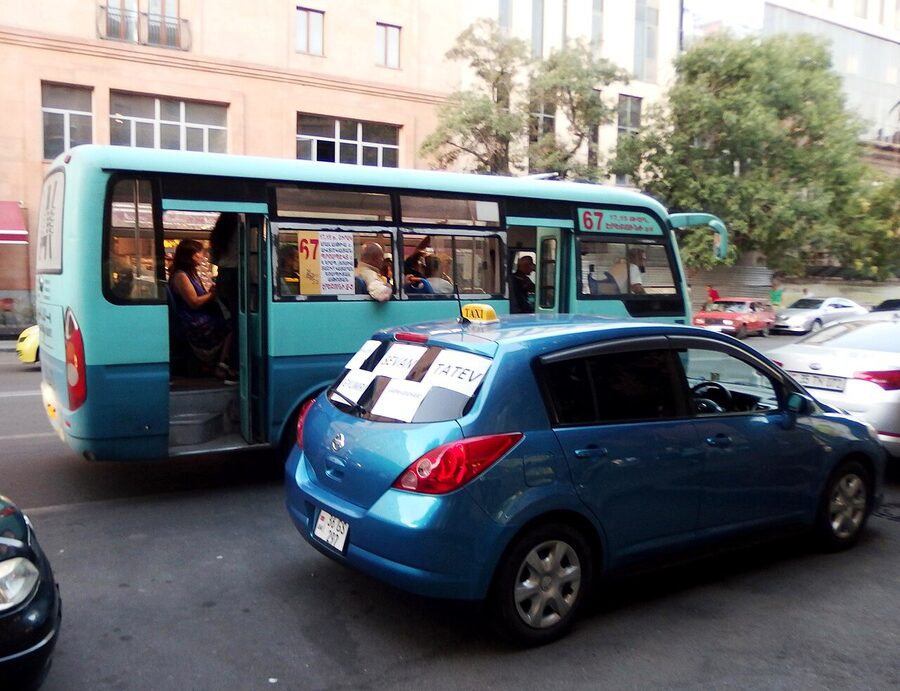
For two days in the centre you barely need either. But if you stay outside Kentron, both are easy. Marshrutkas are small white minibuses with route numbers on the windshield, AMD 100 paid to the driver, hand wave to flag one down, knock on the roof or shout “kangar” to stop. Metro is two lines (one of which is functionally short), AMD 100 token-or-card per ride, runs from 6:30 am to 11 pm. Buses are AMD 100, work like the marshrutkas. None of it takes credit cards.
The Monday closure problem
Most of Yerevan’s museums close one day a week, and unlike many capitals it isn’t a unified day. The History Museum closes Mondays. The Matenadaran closes Sundays and Mondays. The Saryan House Museum closes Mondays. Tsitsernakaberd is closed Mondays and the first Tuesday of every month. The Brandy Company runs seven days but with a reduced tour schedule on Mondays. If you’re landing Friday and leaving Sunday afternoon, you’re fine. If you’re landing Sunday night and leaving Tuesday afternoon, plan around it carefully: your only full Monday in the city is going to be a museum-light day, and your real museum window is Tuesday morning before your flight.
One half-day trip if you can’t help it
If you absolutely must leave the city, the cleanest half-day options are Garni Temple and Geghard Monastery (one route, four hours start to finish, taxis from Republic Square run 12,000–15,000 dram round trip with waiting), or Echmiadzin Cathedral as a shorter half-day west of the city. Don’t try to do Garni and Lake Sevan and the city in two days. Pick one of the three and do it well.
Where to stay
Stay between Mashtots Avenue and Charents Street, somewhere south of the Cascade and north of Republic Square. That’s a square kilometre of city that puts you within a fifteen-minute walk of everything in this article. Apartments on Tumanyan or Abovyan are cheaper than equivalent hotels; the Marriott on Republic Square is the splurge for a reason; Republica Hotel and Tufenkian Historic Yerevan are reliable mid-range picks. Avoid anything that lists itself as “Yerevan” but is actually in Davtashen or Erebuni; those are real neighbourhoods, just not the ones you flew here for.
What two days actually buys you
Two days in Yerevan gets you most of the centre on foot, two solid museums, the architecture all in one walk, the fountains, the singing fountains again if you push, the Cascade twice if you want, the Brandy Company or the memorial, lunch at one wine bar and dinner at another, and a sense of why Armenians who emigrated keep coming back. It does not get you the country. The country is what the country is, and you’ll need a longer trip for that.
What you’ll leave with, if the timing’s been kind, is a clear shortlist for next time. The day trip you didn’t take. The bar you found at midnight on the second night and didn’t have time to go back to. The brandy you bought a half-bottle of at duty free and want a full one of. The things Yerevan is best at, the slow café morning, the long evening on a wine-bar terrace, the random conversation in a Soviet-era apartment-block lobby, don’t reveal themselves on a forty-eight-hour clock. They show enough that you know what you missed. That’s not a bad outcome for a weekend.